
Vandaag of morgen in huis

Kwaliteit gegarandeerd

Welkomstaanbiedingen ontgrendelen: GRATIS bezorging | Tot 80% korting | Gratis 30 dagen JoyPlus-proefperiode
Download de app
A shoe rack seems like a simple purchase, until you get home with a model that wobbles, offers too little space or does not fit in the hallway. Online offers in particular often come with three common pitfalls:
A good shoe organiser should therefore suit the space you have available, the number of shoes you own and how you use them. Below are the key points to check.
Do not just measure the spot where the shoe rack will stand. Also take doors, skirting boards and walking space into account. In a narrow hallway, the depth is particularly important. For a wardrobe or the space beneath a bed, a compact shoe organiser may be more suitable than a freestanding rack.
Check the following on every product page:
A narrow shoe rack with several tiers makes good use of vertical space, while a low model is often more convenient next to a coat rack or bench.
A shoe rack for lots of shoes should provide enough space without forcing pairs on top of one another. A three-tier model is not automatically suitable for a large family. Check whether the stated capacity refers to pairs, individual shoes or a general estimate.
For a small household, a rack for six pairs may be sufficient. Families are more likely to need a tall shoe cabinet or a shoe rack with several tiers. A stackable shoe rack offers added flexibility: you can add another module later if your collection grows. Do check that the product is actually designed to be stacked.
A metal shoe rack is usually suitable for everyday use and has an open design. According to the product description, powder-coated metal can be wiped with a soft, slightly damp cloth. Wooden or chipboard components give a shoe cabinet a more enclosed look, but require greater care around moisture.
Also look out for:
Ideally, place a tall shoe rack where it cannot be knocked over. Always follow the manufacturer’s assembly and safety instructions.
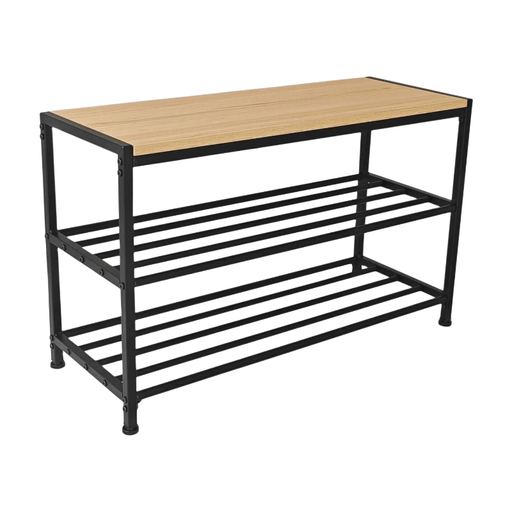
Why it suits this profile: This compact shoe rack is designed for up to 6 pairs and, measuring approximately 80 x 30 x 49.2 cm, fits in a hallway, bedroom or student room.
The stated capacity and dimensions make it clear in advance what the rack is designed for. Its open layout means you do not have to place your shoes in a cabinet that is too deep and difficult to keep organised.
Powder-coated metal frame, wooden top shelf and freestanding design. The top shelf provides extra space for a bag or small accessories.

Why it suits this profile: This enclosed shoe cabinet has six shelves and space for up to 18 pairs. The flap doors keep shoes out of sight and suit a calmly styled hallway or bedroom.
The capacity is clearly stated and the cabinet has fixed dimensions of 60 x 23.3 x 119.5 cm. Check in advance that the height suits your space.
Chipboard construction, six shelves, flap doors and a drawer. Self-assembly is required; the product information states FSC.
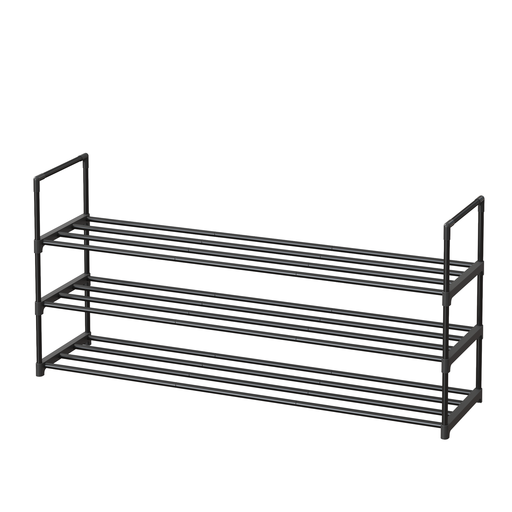
Why it suits this profile: This metal shoe rack is 117 cm wide, 30 cm deep and 55 cm high. According to the product specifications, it holds up to 18 pairs and can be placed upright, upside down or stacked.
The capacity is linked to three tiers, and the stated load capacity is 10 kg per tier, 30 kg in total. Place the rack on a level surface and follow the assembly instructions.
Tool-free assembly, metal tubes with plastic connectors and a stackable design. Suitable for the hallway, wardrobe or living room.
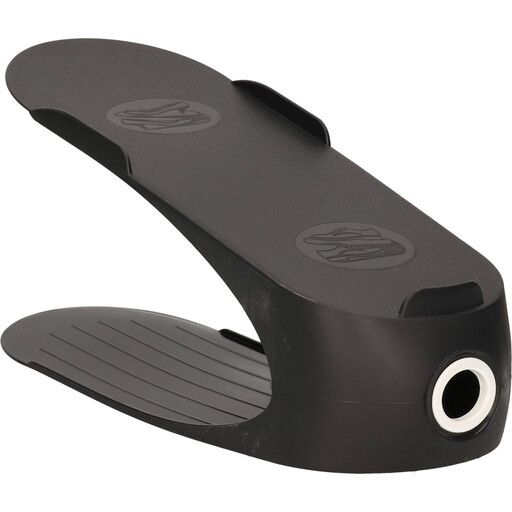
Why it suits this profile: Measuring 29.5 x 11.1 x 14 cm, this compact shoe organiser is designed for up to three pairs of shoes and can be used in a wardrobe, beneath a bed or against a wall.
The maximum capacity of three pairs is clearly stated. This makes it less likely that you will overload the small model.
Lightweight polypropylene, no assembly required and a raised edge that helps keep shoes in place.
We have compiled a complete, up-to-date list of products that fully meet these strict selection criteria and the applicable European safety regulations.
Place a freestanding rack on a level, stable floor. Tighten screws and connectors securely after assembly and check them again regularly. With a tall model, wall mounting can provide extra stability if recommended in the product information.
A metal rack can usually be cleaned with a soft cloth. When cleaning wood or chipboard, use as little moisture as possible and dry the surface immediately. Do not leave shoes that have become wet in an enclosed shoe cabinet for long periods; allow them to dry first according to the material’s care instructions.
This varies depending on the width, number of tiers and type of footwear. A compact model may hold three to six pairs, while tall racks or cabinets are often specified for 18 to 30 pairs. Allow for less effective capacity when storing wide trainers and boots.
A metal shoe rack is practical in a hallway, but check the finish and care instructions. Powder coating helps protect the surface, but prolonged contact with moisture can still affect the metal and any wooden components. Wipe away splashes immediately.
First check that the rack is level and that all connections are securely fastened. Distribute heavy shoes across the tiers and do not exceed the stated load capacity. With a tall shoe rack, wall mounting may be necessary if recommended by the manufacturer.
