
Vandaag of morgen in huis

Kwaliteit gegarandeerd

Welkomstaanbiedingen ontgrendelen: GRATIS bezorging | Tot 80% korting | Gratis 30 dagen JoyPlus-proefperiode
Download de app
A shoe rack seems like a simple purchase, until you find that it is too wide for the hallway, wobbles under a pair of boots or holds fewer shoes than expected. In many Dutch homes with a narrow entrance, limited wardrobe space or a small flat, every centimetre counts.
So do not just look at the number of tiers or an attractive offer. Check the dimensions, load capacity and how the shoe rack is assembled as well. Below are the most important pitfalls to avoid, along with practical options for different households.
A manufacturer may advertise a shoe rack for 18 or 30 pairs of shoes, but that figure depends on the type of footwear. Low-top trainers take up less space than tall walking shoes, ankle boots or children’s shoes with wide soles.
So look at:
For a household with several residents, a shoe rack for 16 to 30 pairs of shoes is often more practical than a small model. If you only need space for everyday shoes by the front door, a rack for 6 pairs may be enough.
The term “narrow shoe rack” says very little without exact measurements. A rack may be just 24.5 cm deep, but 138 cm high. This saves floor space, but requires sufficient vertical clearance and a stable surface.
Before buying, measure:
A shoe rack for the hallway should also not be placed where coats, doors or pushchairs could collide with the frame.
A metal shoe rack may feel sturdy, but the relevant specification is the maximum static load capacity. The JOYFURNOS models, for example, state a capacity of 10 kg per tier and 30 kg in total. This is easier to verify than a general description such as “extra strong”.
Also consider the rack’s own weight. A very lightweight freestanding shoe rack is easy to move, but may shift more readily when loaded with heavy shoes. Place tall models on a level surface and always follow the assembly instructions. Do not use a rack as a seat or step unless this is expressly permitted.
A metal shoe rack with an open design allows air to circulate around your shoes. This is useful when footwear still needs to air after wear. A metal frame with plastic connectors can be lightweight and assembled without special tools.
A shoe cabinet protects shoes from dust more effectively, but often takes up more visual and physical space. An open shoe organiser is more accessible, while a closed cabinet creates a calmer look in the hallway or living room.
For wooden components, check that the material is suitable for indoor use. The Practo model has a black powder-coated metal frame and an engineered wood top shelf. Its open design is intended to provide ventilation; however, do not leave the unit in a damp room for extended periods.
The right size depends on where you plan to place it:
A stackable shoe rack offers flexibility if the number of shoes changes later. However, check that the product is actually designed to be stacked. With individual plastic shoe risers, you must also observe the maximum load and recommended stacking height.
Tool-free assembly is useful in a rented home or if you plan to move the rack regularly. Check that all connectors are securely fastened before placing shoes on it. For tall models, wall fixing may be advisable if there is a risk of tipping, even when it is not always necessary for normal use.
Dust and dirt can usually be removed with a soft, dry cloth or a vacuum cleaner brush attachment. Dry metal and wooden components immediately after contact with moisture.
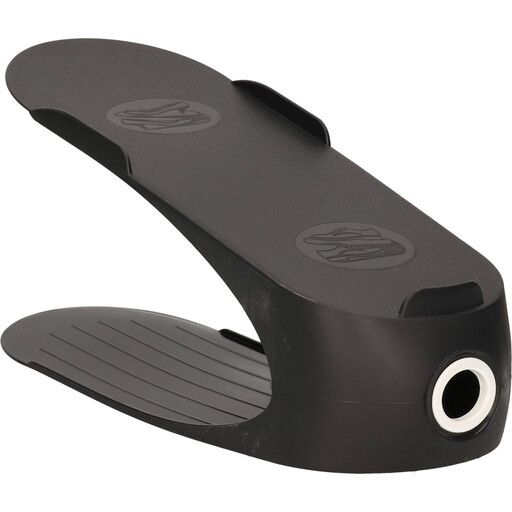
Why it suits this profile: This compact model is suitable for anyone who wants to organise a few pairs in a wardrobe, under the bed or against the wall.
The capacity is clearly limited to a maximum of 3 pairs of shoes. This makes it clear from the outset that it is not a solution for a large family.
Polypropylene construction, measuring just 29.5 x 11.1 x 14 cm, and suitable for shoe sizes up to and including 46 according to the product information.
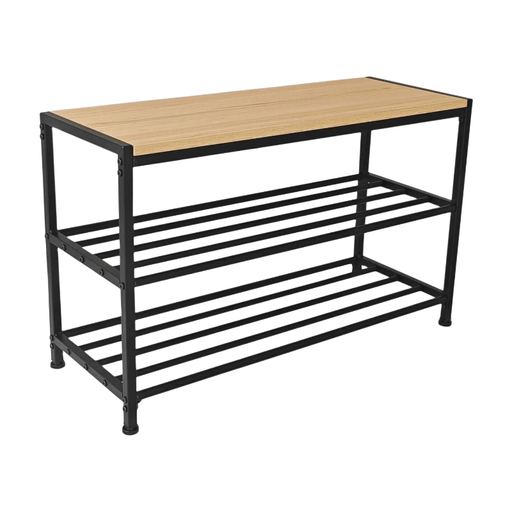
Why it suits this profile: The combination of a metal frame and wooden top shelf is ideal for a hallway where shoes and small accessories need a permanent home.
The product information states 6 pairs, 80 x 30 x 49.2 cm and a freestanding design. This means you can accurately assess the space required in advance.
Powder-coated metal frame, wooden top shelf, open ventilation and a product weight of 5.7 kg.

Why it suits this profile: This tall shoe rack is designed for households that want to store many pairs vertically while taking up just 24.5 cm of depth.
The stated capacity is 30 pairs and the dimensions are 65.5 x 24.5 x 138 cm. However, check the ceiling height and positioning to prevent the rack from tipping over.
Metal construction, space for 30 pairs and a tall, narrow design for efficient use of vertical space.
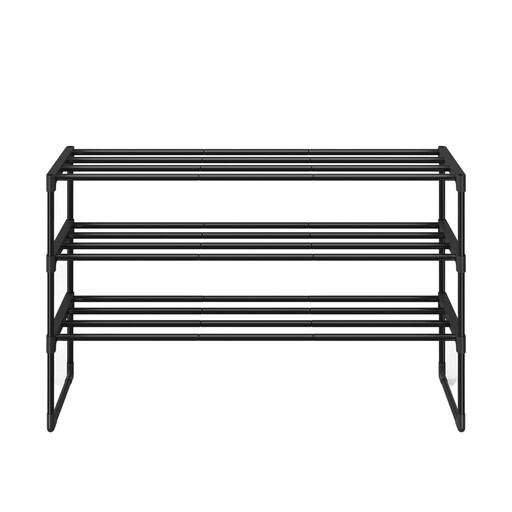
Why it suits this profile: With a width of 92 cm and a depth of 30 cm, it provides space for 16 to 20 pairs without requiring a deep shoe cabinet.
The dimensions, capacity and load are specified: 10 kg per tier and 30 kg in total. This allows you to match its use to trainers and lighter footwear.
Metal tubes, plastic connectors, three tiers and a design that can be used upright, upside down or stacked according to the product description.
We have put together a complete, up-to-date list of products that fully meet these strict selection criteria and the applicable European safety regulations.
This depends on the shelf width, the number of tiers and the type of shoes. A model for 6 pairs is suitable for everyday use by one person. For families, models for 16 to 30 pairs are more practical. With boots and wide trainers, allow for a lower practical capacity.
Yes, provided the depth and walking space are suitable. Measure the available area carefully and consider choosing a tall model with a small footprint. A tall freestanding shoe rack should stand on a stable surface. If you have children or the rack is near a busy passageway, additional wall fixing may be advisable.
Its lifespan depends on the material, load, assembly and moisture. A metal frame may be suitable for everyday indoor use, but the connections must be securely fastened and must not be overloaded. Check the rack regularly for bent components, cracks or loose connectors, and replace damaged parts when they cannot be repaired safely.
