
Vandaag of morgen in huis

Kwaliteit gegarandeerd

Welkomstaanbiedingen ontgrendelen: GRATIS bezorging | Tot 80% korting | Gratis 30 dagen JoyPlus-proefperiode
Download de app
A freestanding shoe rack in the hallway may seem straightforward, but small differences in dimensions, stability and layout determine whether it is convenient to use every day. A model that looks compact in the product photo may actually be too deep for a narrow hallway. A shoe cabinet with flap doors looks tidy, but does not always have room for tall footwear. And a shoe rack with a bench must be sturdy enough to sit on safely.
The Joybuy Product Recommendation Officer selects models below based on verifiable features, such as dimensions, material, capacity, adjustable shelves and assembly. This helps you distinguish marketing claims from information that is genuinely relevant to your home.
A statement such as “for 30 pairs of shoes” does not always indicate how spacious the compartments are. Trainers, women’s shoes and low-cut shoes generally fit differently from ankle boots or tall boots. So do not just check the capacity; also check the height between the shelves and the overall width.
Measure the place where the shoe rack will go at three points:
A narrow shoe rack is often suitable for a small hallway, but a tall model can still be impractical if it cannot be secured to the wall.
A lightweight metal shoe rack is easy to move, but it must stand on a level surface. For a tall shoe cabinet or coat rack, an anti-tip fitting is important. Always follow the assembly instructions and use the supplied fixings when required by the product description.
For a hallway with limited space, models with a depth of around 24 to 30 cm are practical. A shoe cabinet measuring 60 x 24 x 104.5 cm, for example, takes up less floor space than a wide bench with storage. A freestanding rack measuring 30 x 92 x 55 cm may be easier to place beneath a coat rack or inside a cupboard.
Also consider how your shoes are stored in the unit:
A metal shoe rack is often lightweight and easy to move. However, check the maximum load capacity for each shelf. With modular racks, plastic connectors can also affect stability.
Chipboard cabinets are heavier and offer enclosed storage. Pay attention to the assembly quality, level positioning and any wall fixings. For a shoe rack with a bench, the maximum static load capacity is particularly important. Do not use a bench above its stated limit, and do not automatically place heavy boxes on the top surface.
A shoe rack for 30 pairs of shoes is appealing for a large household, but first measure how many pairs you actually want to store. According to the product information, the 5five Shoe Rack has space for 30 pairs of shoes and measures 65.5 x 24.5 x 138 cm. It is a freestanding rack and is not designed for sitting on.
A closed 5five shoe organiser measuring 60 x 23.3 x 119.5 cm has six shelves, flap doors and a drawer. Its stated capacity is 18 pairs of shoes. This makes it suitable if you are looking for a combination of storage space and a more enclosed appearance.
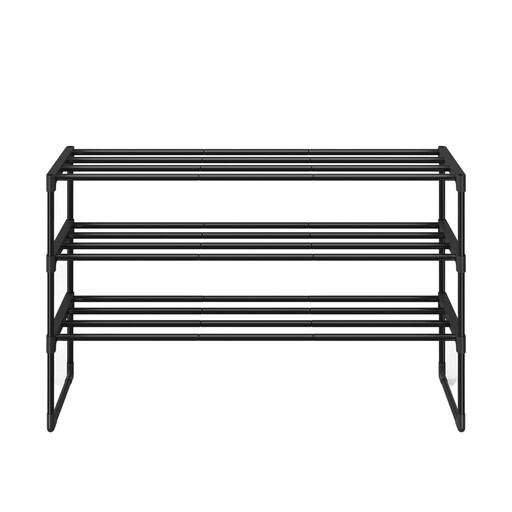
Why it suits this profile: This open rack is suitable for beginners who want to keep their shoes neatly organised without buying a large cabinet. With a depth of 30 cm, it fits in many hallways, cupboards and living rooms.
The product information states that it has three tiers, a total capacity of 30 kg and tool-free assembly. You can use the configuration upright, upside down or stacked.
Metal tubes, 92 cm wide, suitable for 16–20 pairs according to the product name and suitable for different types of footwear.
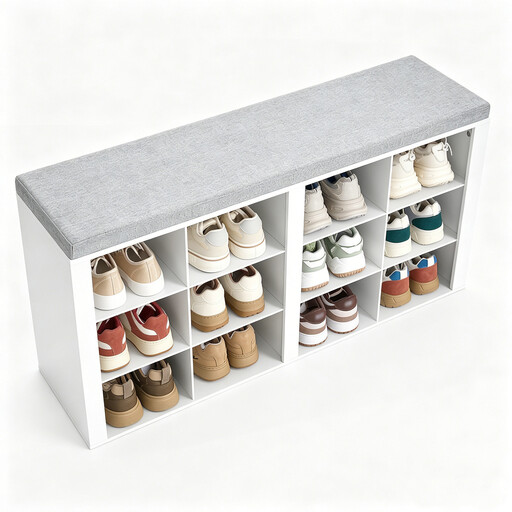
Why it suits this profile: This shoe rack with bench combines storage and seating. It is ideal for households that want a dedicated place to sit in the hallway while putting on their shoes.
According to the product description, the shelves are height-adjustable. The stated dimensions are 30.5 x 104.5 x 49.5 cm, and the seat cushion is removable.
12 compartments, adjustable shelves and a stated load capacity of 150 kg according to the product information.
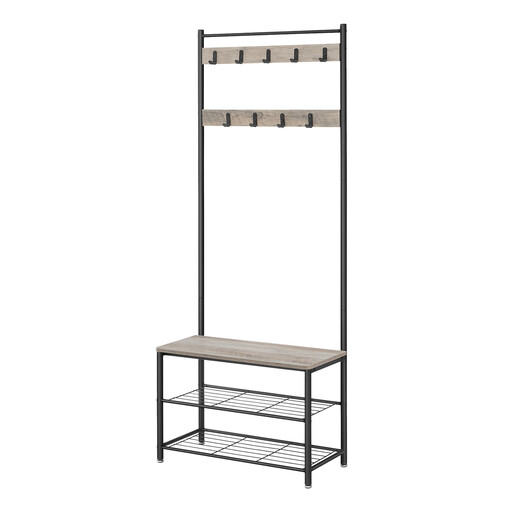
Why it suits this profile: If you want to combine coats, bags and shoes by the entrance, this coat rack with shoe bench gives you three functions in one piece of furniture.
The product details list four adjustable feet and an anti-tip kit. For safety, the unit must be secured to the wall according to the instructions.
Nine metal hooks with a stated capacity of 3 kg per hook, a bench rated for 136 kg and dimensions of 32 x 70 x 177 cm.
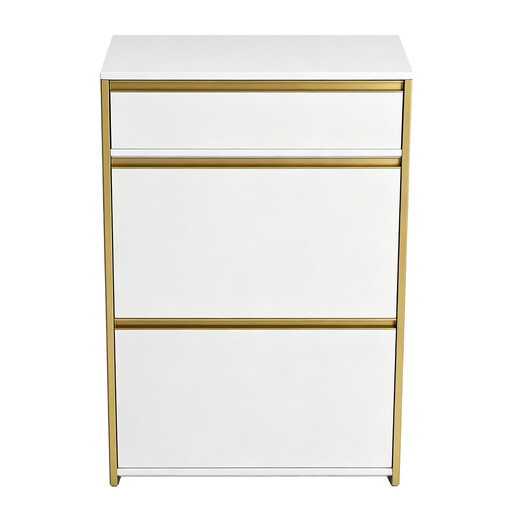
Why it suits this profile: This narrow shoe rack is designed for anyone who wants to keep shoes and small items out of sight. Its depth of 24 cm is suitable where floor space is limited.
The shelves are adjustable and removable. The product description also mentions an anti-tip fitting for securing the unit to the wall.
Dimensions of 60 x 24 x 104.5 cm, two doors, a drawer and space for up to 12 pairs according to the product information.
We have put together a complete, up-to-date list of products that fully meet these strict selection criteria and the applicable European safety regulations.
Before assembly, check that all parts and screws are present. Place a shoe cabinet on a level surface and tighten the connections if the unit wobbles. For tall cabinets and coat racks, wall fixing is advisable if there are children or pets in the home.
Use a shoe organiser only for its intended purpose. Do not place heavy boxes on a shelf specified for shoes only. With an open rack, regular wiping with a soft, slightly damp cloth helps keep it clean. Dry the metal parts afterwards to minimise moisture marks.
For a narrow hallway, a depth of around 24 to 30 cm is often practical, but always check the available walking space once the rack is in place. Allow for doors, skirting boards and protruding handles.
That depends on the free height of each compartment. Choose a model with adjustable or removable shelves if you want to store trainers, ankle boots and taller footwear together. Check the internal dimensions where these are available.
The stated capacity is a guideline. Chunky trainers, children’s shoes and boots take up more room than low-cut women’s shoes. So allow some extra space and check the shelf width and height before ordering.
