
Vandaag of morgen in huis

Kwaliteit gegarandeerd

Welkomstaanbiedingen ontgrendelen: GRATIS bezorging | Tot 80% korting | Gratis 30 dagen JoyPlus-proefperiode
Download de app
Loose shoes in the hallway, a wobbly rack or boots that do not fit between the shelves: a shoe rack may seem simple, but choosing the wrong one can quickly become frustrating. Three common pitfalls are especially worth avoiding:
So do not focus only on colour and price. Check the dimensions, material, maximum load and assembly method. That way, you can find a shoe organiser that suits your home and everyday needs.
Measure the area where the furniture will be placed, taking skirting boards, doors and walking space into account. For a hallway shoe rack, these measurements are particularly important:
An open rack is convenient if you wear your shoes frequently. A closed shoe cabinet keeps shoes out of sight and can create a calmer look in a living room or hallway.
A shoe rack with adjustable shelves is practical for households with different types of footwear. Check whether the shelves can genuinely be adjusted in height or removed. This creates room for trainers, children’s shoes, flip-flops and boots.
With fixed levels, the stated capacity is only a guideline. Wide sports shoes take up more space than slim ladies’ shoes. If you are looking for shoe storage for 12 pairs of shoes, it is worth checking the shelf width and usable internal space rather than looking only at the number of pairs stated on the product page.
A metal shoe rack often consists of tubes and connectors. This can be a lightweight, open solution for a wardrobe, bedroom or hallway. However, check the maximum static weight per shelf and for the unit as a whole.
Bamboo is a popular material for a bamboo shoe rack. It suits a light or Scandinavian-style interior and is suitable for normal indoor use. With any wooden or bamboo product, watch out for moisture: clean off mud or wet patches promptly and allow shoes to dry first.
With a shoe bench or shoe rack with a seat, load capacity is particularly important. Only use the seat within the stated weight limit and place the furniture on a level surface.
The right style depends on your daily routine:
For tall or narrow furniture, check whether anti-tip fittings are included. A shoe cabinet or hallway unit should be secured to the wall in accordance with the product instructions whenever this is specified.
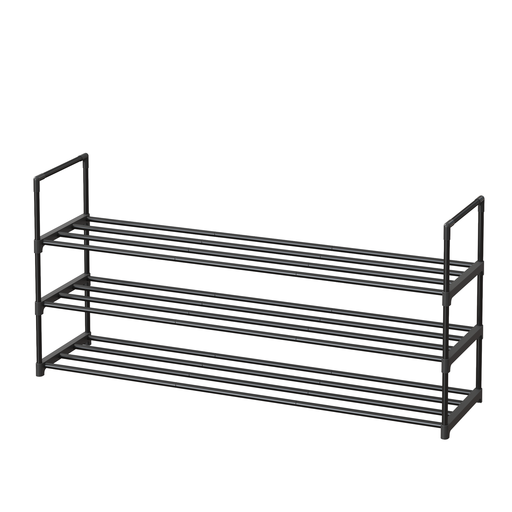
Why it suits this profile: This open metal shoe rack is an accessible choice for anyone looking to add storage space quickly in a hallway, wardrobe or bedroom. The stated dimensions are 30 x 117 x 55 cm.
The three tiers make the number of storage surfaces clear. According to the product specifications, the maximum static load is 10 kg per tier and 30 kg in total.
Metal tubes, a width of 117 cm and tool-free assembly according to the product description.
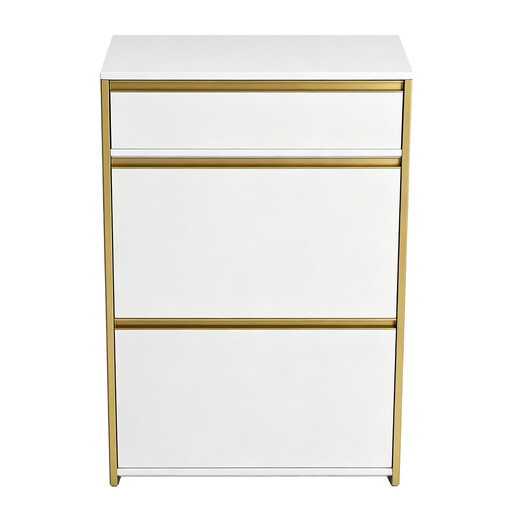
Why it suits this profile: Measuring 60 x 24 x 104.5 cm, this shoe cabinet fits in a relatively narrow hallway. The closed doors and adjustable shelves are ideal if you want to keep shoes out of sight.
According to the product specifications, the internal shelves are adjustable and removable. Before buying, check that the layout will accommodate your largest shoes.
A slim depth of 24 cm, two doors and a stated capacity of up to 12 pairs of shoes.
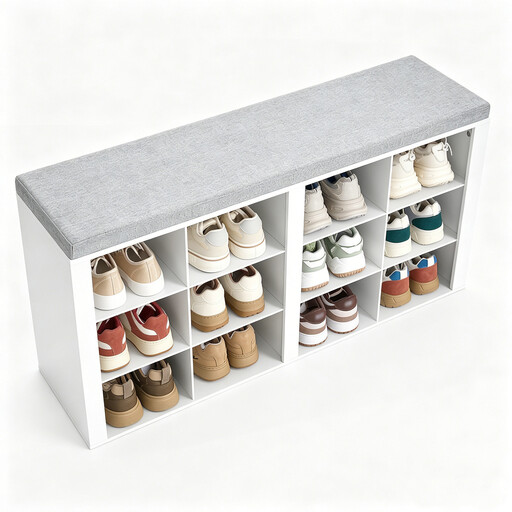
Why it suits this profile: This shoe bench combines seating with twelve compartments. Measuring 104.5 x 30.5 x 49.5 cm, it suits a household that wants to put on and store shoes in the hallway.
According to the product description, the shelves are height-adjustable. This allows you to adapt the layout for low shoes, trainers or taller models.
A seat, adjustable shelves and a stated load capacity of 150 kg. The cushion covers are removable according to the product specifications.
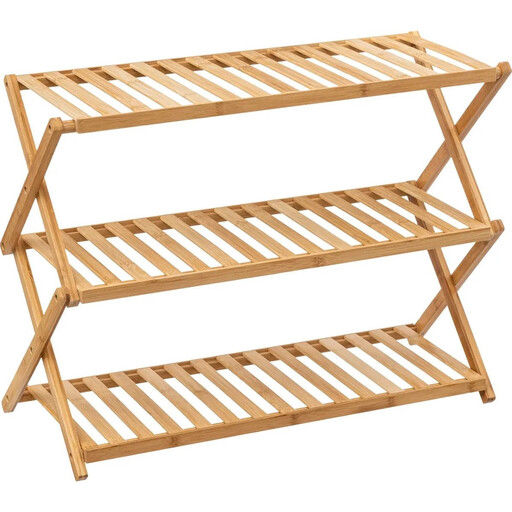
Why it suits this profile: This bamboo shoe rack measures 70.5 x 28.5 x 52.5 cm and has three tiers. It is suitable for a smaller hallway, bedroom or temporary storage.
According to the product information, the maximum total load is 15 kg. This makes it clear that the model is intended for everyday shoe storage, not heavy boxes.
Bamboo frame and shelves, three tiers and a foldable design. The product information states that it is FSC-certified.
We have put together a complete, up-to-date list of products that fully meet these strict selection criteria and the applicable European safety regulations.
When your order arrives, check that all parts are included and tighten the screws or connectors securely. Place the rack on a level surface. For a tall shoe cabinet, narrow console unit or coat rack with shoe storage, anti-tip fittings are important. Use them in accordance with the assembly instructions.
For maintenance, the following is usually sufficient:
A shoe rack will generally last longer when it is not overloaded and is not exposed to moisture for extended periods. Its service life depends on the material, assembly, frequency of use and conditions in the hallway.
That depends on the shoe sizes and types of footwear. In addition to the stated capacity, check the shelf width and depth. Twelve pairs of slim shoes take up less space than twelve pairs of wide trainers or boots.
An open shoe rack provides an immediate overview and ventilation. A shoe cabinet keeps shoes out of sight and protects them better from dust. For a small hallway, a slim model with doors may be more efficient; for everyday use, an open rack is often quicker to access.
Not every low rack needs to be anchored, but tall, narrow or combined hallway units can tip over. If the product information mentions an anti-tip kit, secure the furniture to a suitable wall according to the instructions. Also check that the wall and fixings are suitable for the installation.
