
Vandaag of morgen in huis

Kwaliteit gegarandeerd

Welkomstaanbiedingen ontgrendelen: GRATIS bezorging | Tot 80% korting | Gratis 30 dagen JoyPlus-proefperiode
Download de app
A shoe rack may seem like a simple piece of furniture, but you will quickly notice if you have chosen the wrong one. A rack that appears to hold plenty of pairs on paper may be too narrow for boots in practice. A shoe cabinet may look neat, but become awkward when wet or muddy shoes come through the door. And a shoe bench can take up more space than expected when you were only looking for somewhere to store everyday footwear.
As Joybuy Product Recommendation Officer, I therefore start by looking at verifiable features: dimensions, capacity, material, stability and intended use. This helps you avoid relying solely on an attractive photo or an impressive capacity claim.
“30 pairs of shoes” sounds generous, but the actual capacity depends on the type of footwear. Low-top trainers take up less space than ankle boots, children’s shoes or wide sports shoes. So do not just check the number of shelves; also look at the width, depth and clearance between shelves.
A shoe rack for a small space must fit without blocking a passageway, door or radiator. Measure the available space at three points: the maximum width, the available depth and the clear height. A tall, freestanding shoe rack can make good use of very little floor space, but it still needs sufficient stability.
An open metal shoe rack gives you a clear overview and allows ventilation. A shoe cabinet conceals footwear more effectively and can create a tidier look in the hallway or living room. However, a closed cabinet is not always practical for wet shoes. Choose an open model if shoes are often stored straight after you come in, or use a shoe cabinet for pairs that are worn less frequently.
First, note down the space you actually have available. Bear in mind that product dimensions may sometimes be listed in a different order, for example length × width × height. Also check whether the total height includes any top shelf.
A metal shoe rack is generally easy to wipe clean and often suits a modern hallway. However, steel or metal tubes cannot automatically be considered rust-resistant; check the product specifications and avoid prolonged exposure to moisture.
Wood, bamboo and engineered wood give a warmer appearance. With these materials, it is sensible to let wet shoes drain first and wipe away moisture immediately. An open design can help with air circulation, but it will not automatically prevent odours or moisture build-up.
Check whether the model requires self-assembly, which fixings are included and whether wall mounting is recommended. For tall or narrow models, an anti-tip device is important, particularly in households with children.
Place the rack on a level surface, tighten all connections securely and do not exceed the stated maximum load. The statutory guarantee for many of the products mentioned is at least two years under the applicable EU consumer rules; additional rights may apply under Dutch law.
The selection below is based on the stated capacity, dimensions, materials and features. Always check the current product page and the available space at home before ordering.
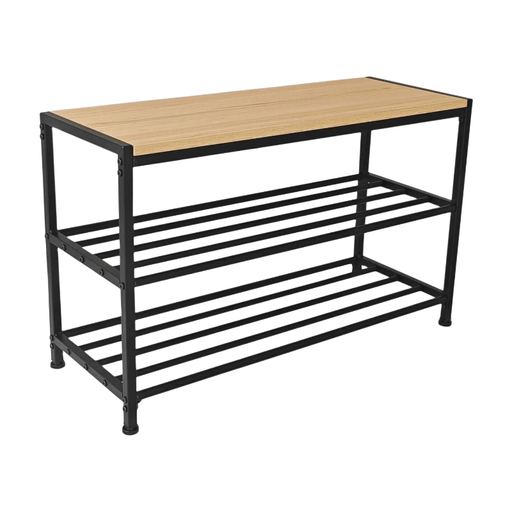
Why it suits this profile: This compact, freestanding shoe rack is designed to hold up to 6 pairs and has a wooden top shelf for small accessories or decorations.
The capacity and dimensions are clearly stated, making it easy to compare this model with the requirements of a small hallway or bedroom.
6 pairs; open design; black metal frame; wooden top shelf; dimensions 80 × 30 × 49,2 cm.

Why it suits this profile: This shoe bench combines storage with seating and is a good choice for shoppers who value materials and everyday comfort.
The seat height, overall dimensions and maximum load of 110 kg are stated, so you do not have to judge the seating function from a photo alone.
Bamboo; 90 × 34 × 45 cm bench; maximum load 110 kg; FSC mentioned in the product information.

Why it suits this profile: A household with lots of shoes gets generous storage capacity without requiring much depth.
The product information explicitly states 30 pairs, the dimensions and that the rack is not suitable for sitting on.
Metal frame; white finish; 30 pairs; 65,5 × 24,5 × 138 cm; self-assembly.
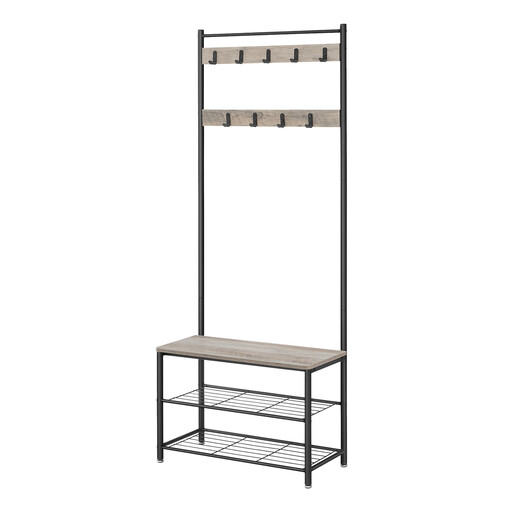
Why it suits this profile: This combination of shoe rack, bench and coat rack brings several functions together in a hallway unit measuring 32 × 70 × 177 cm.
The seat load of 136 kg, hook load of 3 kg and the inclusion of an anti-tip kit are specified. Wall mounting is recommended.
9 metal hooks; bench; mesh shelves; adjustable feet; anti-tip kit; steel and engineered wood.
We have put together a complete, up-to-date list of products that fully meet these strict selection criteria and the applicable European safety regulations.
Measure the available width and depth, leaving enough room for doors and walkways. For a narrow hallway, a shallow model may be practical, while a tall rack offers extra capacity. With a shoe rack for 30 pairs, also check whether the shelves are suitable for your type of footwear.
That depends on how you use it. A shoe cabinet keeps footwear more concealed, while an open shoe organiser is quicker to access and can create a more airy feel. For wet shoes, an open rack is often easier to use because moisture is less likely to remain trapped in a closed compartment.
Place the rack on a level surface, distribute heavier shoes across the lower levels and check all connections after assembly. With tall or narrow models, wall anchoring is advisable if the manufacturer recommends an anti-tip kit or other fixings. Never use a shoe rack with a bench as a seat unless this function is explicitly stated.
