
Vandaag of morgen in huis

Kwaliteit gegarandeerd

Welkomstaanbiedingen ontgrendelen: GRATIS bezorging | Tot 80% korting | Gratis 30 dagen JoyPlus-proefperiode
Download de app
A shoe rack seems like a straightforward purchase, until it does not fit in the hallway, wobbles or offers too little space for boots and high-top shoes. In many Dutch hallways and entrances, the available width is often limited. A narrow shoe rack can be useful, but only if the layout, stability and access to the shoes are right.
Also watch out for marketing language. A “space-saving” model may still be too deep for a narrow hallway, for example. And a shoe cabinet with lots of compartments is not automatically practical if the compartment height is unsuitable for trainers, ankle boots or clogs. Use the following checkpoints to compare shoe storage solutions based on useful features rather than appearance alone.
Do not just measure the space where the shoe rack will go. Also check the space in front of the unit. With a shoe cabinet with flap doors or hinged doors, you must be able to open the doors fully without blocking a passageway.
A 30 cm-deep model may be suitable for a hallway, while a wider shoe rack may fit better beneath a coat rack or along a long wall. Make a note of the following in advance:
The stated number of pairs is usually a guideline. Adult trainers take up more room than thin slippers. High-top shoes, walking shoes and clogs can also partially block a shelf. That is why you should look at the distance between the shelves, not just the promised number of pairs.
A shoe rack with storage space on top can also serve more than one purpose. You can place keys, gloves or a basket on it, but only if the top shelf has sufficient load-bearing capacity and does not become overcrowded.
A tall shoe cabinet or narrow model has a relatively small footprint. An open metal shoe rack is often lightweight, but it can shift when shoes are taken out. Check whether it has non-slip feet, a sturdy back panel or an anti-tip feature.
For a tall cabinet, wall anchoring is important. Use the supplied fixings according to the instructions and check that they are suitable for your type of wall. Do not allow children to climb on a shoe rack or hang from open drawers and doors.
For a shoe rack for small spaces, depth is often the deciding factor. Measure the foot length of the largest shoes in your household and allow extra room so that they can be taken out easily. A shoe rack for a hall or hallway should also keep the walking route clear.
A closed shoe cabinet keeps shoes out of sight and sometimes offers extra protection from dust. An open shoe rack provides a quicker overview and better ventilation. Choose a shoe bench if you want to put your shoes on while seated. In that case, check the maximum load for the seat and the strength of the joints.
A metal shoe rack with tubular bars is generally lightweight and easy to move. Check the connections between the bars and fittings, as this is where looseness can develop. A wooden shoe rack or shoe cabinet made from engineered wood often looks more like a piece of furniture and provides enclosed or decorative storage. Check whether the shelves are adjustable and whether damp shoes will be left on the material for long periods.
For products with an FSC statement, this information is included in the product details. It says something about the stated certification of the material’s origin, but does not automatically cover every property of the furniture. Always check the full specifications, assembly instructions and warranty terms.
A shoe storage unit that is quick to assemble saves time, but check that the structure remains stable after assembly. Tighten fixings evenly and place heavier shoes at the bottom. Adjustable shelves are useful in a closed cabinet if you want to store different types of shoes.
Remove mud and moisture as soon as possible. A dry microfibre cloth is suitable for dust; for stains, use only a slightly damp cloth and a mild cleaning product if permitted by the product information.
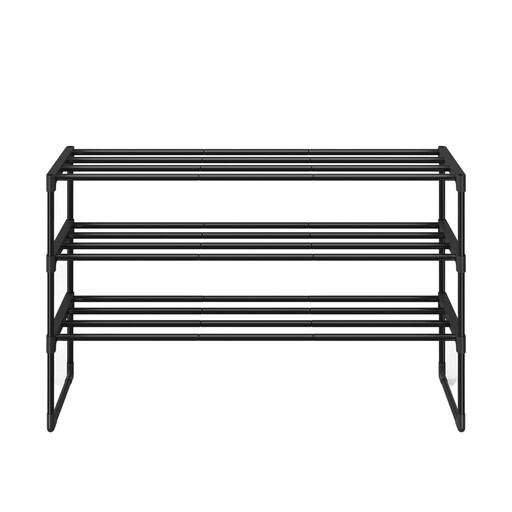
Why it suits this profile: This open model is ideal if you want to see your shoes at a glance and do not need a closed shoe cabinet. At 30 cm deep, it fits in many narrow entrances, cupboards and hallways.
The dimensions and load capacity are clearly stated: 30 x 92 x 55 cm and a maximum of 10 kg per tier, with 30 kg in total. This allows you to assess the load in advance.
Metal bars, three tiers, stackable or reversible positioning, and tool-free assembly according to the product description.
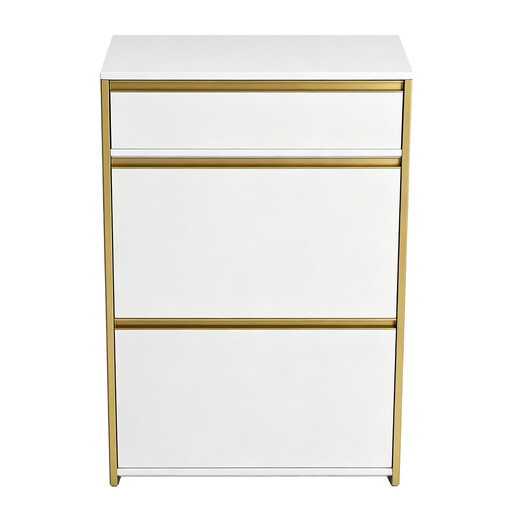
Why it suits this profile: This tall, narrow shoe cabinet combines enclosed shoe storage with a drawer and a top shelf. It is ideal for households that want to keep their hallway calm and clutter-free.
The depth is 24 cm, and the internal shelves are adjustable and removable according to the product information. This helps accommodate different shoe sizes and storage needs.
Stated capacity of up to 12 pairs, four shelves, a drawer and an anti-tip feature for wall mounting.

Why it suits this profile: This model combines a shoe rack with a seat. It is practical in a hallway where you want to put your shoes on while seated and where an additional bench would take up too much space.
The maximum load of 110 kg is stated. This makes it easier to assess the seat’s suitability for everyday use than with a rack that has no specified load capacity.
Bamboo frame and shelves, dimensions of 90 x 34 x 45 cm, space for shoes, slippers and clogs, and an FSC statement in the product details.
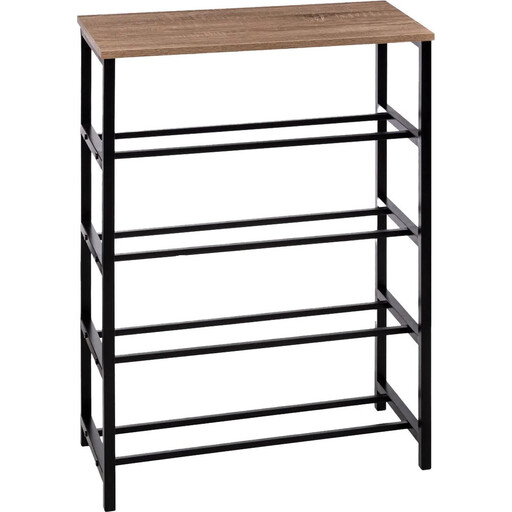
Why it suits this profile: This tall shoe storage unit works as both a shoe rack and a console table for a hall or hallway. The product information states that it holds 12 pairs and is suitable for low-cut and high-top shoes.
The instructions specify wall fixing because of the tall, narrow design. This makes the stability step clear instead of leaving it up to the buyer.
Steel structure, engineered wood storage shelves, two tiers and a top shelf; assembly and care instructions are included in the product information.
We have compiled a complete, up-to-date list of products that fully meet these strict selection criteria and the applicable European safety regulations.
That depends on your shoes and the available walking space. Measure the largest shoe and check that the door, flap or shelf does not protrude into the passageway. A narrow shoe rack approximately 24 to 30 cm deep may be suitable for a compact hallway, as long as the shoes do not press against the wall or door.
An open rack gives you a quick overview and is convenient for shoes you wear every day. A shoe cabinet creates a tidier appearance and protects its contents from dust more effectively. Ventilation is important for damp shoes; allow them to dry first before putting them in a closed cabinet.
Place the unit on a level surface, put heavier shoes at the bottom and use the supplied anti-tip feature. Secure the cabinet to a suitable wall according to the instructions. After assembly, check that the doors and drawers open smoothly without the unit moving.
