
Vandaag of morgen in huis

Kwaliteit gegarandeerd

Welkomstaanbiedingen ontgrendelen: GRATIS bezorging | Tot 80% korting | Gratis 30 dagen JoyPlus-proefperiode
Download de app
A shoe rack may seem like a straightforward purchase, until it does not fit in the hallway, tips over when loaded with a pair of boots or holds fewer shoes than promised. Especially in Dutch flats and narrow entrances, dimensions and stability matter more than an eye-catching product photo.
When comparing shoe racks, look out for these common pitfalls:
Measure the space where the shoe rack will go using a tape measure. In a narrow hallway, the depth is especially important. A model approximately 28 to 30 cm deep may be more practical than a wider rack that blocks the passageway.
Also check the clearance between the shelves. A shoe rack for a wardrobe may be suitable for low shoes, but inconvenient for boots. With a shoe cabinet with doors, you also need to allow for handles and the space required to open the doors.
Look beyond the number in the product name. A shoe rack for 12 to 20 pairs of shoes only offers that capacity when the shoes fit compactly next to one another. Larger sizes, sports shoes and ankle boots reduce the practical capacity.
A three-tier rack is useful if you want to organise shoes by person or occasion. A shoe storage rack with two spacious tiers may work better for larger footwear. Whenever recommended by the manufacturer, place heavier pairs on the bottom.
A metal shoe rack with tubes and plastic connectors can be lightweight and easy to assemble. In that case, check the maximum weight per tier and for the rack as a whole. With a bamboo shoe rack, the finish, folding mechanisms and permitted total load are relevant.
A tall shoe cabinet or console-style model has another key consideration: anti-tip protection. If the furniture is narrow and tall, use the supplied anti-tip fixing whenever instructed. Always place a rack on a level surface and do not use it as a seat or step.
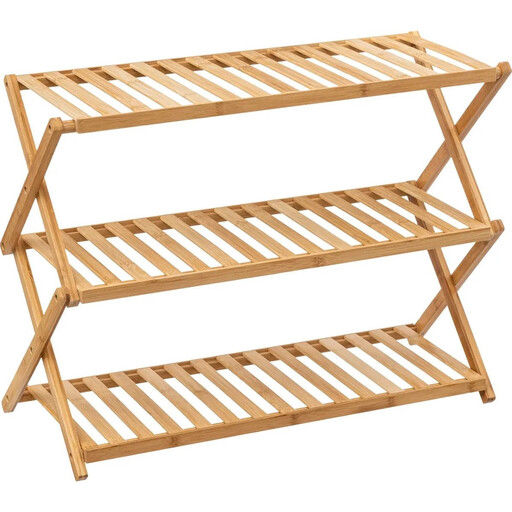
Why it suits this profile: This compact rack is designed for indoor use and has three tiers. Its folding design is practical when you want to store the shoe rack away temporarily.
The dimensions and maximum total load of 15 kg are specified. However, note the difference between the product name, which states 9 pairs, and the specification, which states 12 pairs; check the layout you need before buying.
Bamboo frame and shelves, three tiers, 70.5 cm wide and can be assembled without fixing materials. The product states that it has FSC certification.
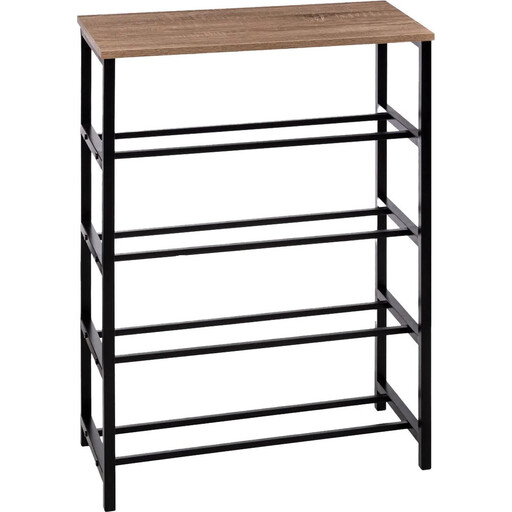
Why it suits this profile: This tall shoe cabinet is ideal if you want to combine shoe storage with a top surface for keys or accessories. Its 30 cm depth is suitable for a relatively narrow entrance.
The assembly instructions mention wall anchoring because of the tall, narrow design. This makes the stability requirements clearer than with a low, freestanding rack.
Steel structure, two storage tiers, a top surface and space for 12 pairs of shoes. The unit is 90 cm tall and requires self-assembly.
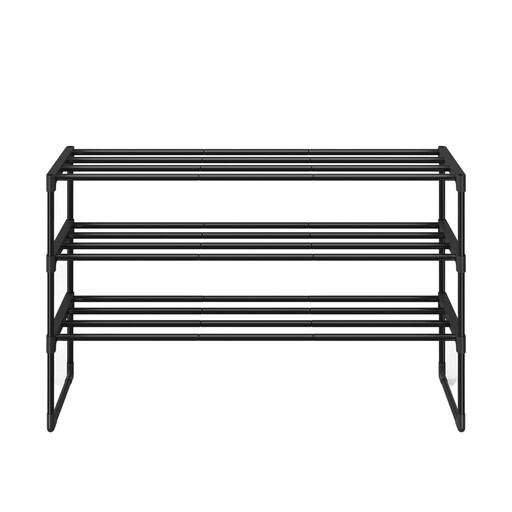
Why it suits this profile: This space-saving shoe rack is 30 cm deep and, according to the product description, can be positioned upright, upside down or stacked. This makes it suitable for a hallway, wardrobe or living room with a flexible layout.
The stated load is 10 kg per tier and 30 kg in total. This makes it easier to distribute the weight, rather than focusing solely on the claimed number of pairs.
Metal tubes, plastic connectors, tool-free assembly and a width of 92 cm. The product information states that it can hold 16 to 20 pairs of shoes.
Use this quick checklist before ordering:
A shoe rack for 12 to 20 pairs of shoes is not automatically suitable for every household. For two people who mainly wear low shoes, a wide rack may be enough. A family or household with lots of boots may need more tiers or a second shoe storage area.
We have put together a complete, up-to-date list of products that fully meet these strict selection criteria and the applicable European safety regulations.
Measure the available width and depth. In a hallway, leave extra room to walk past and check that doors can open fully. A narrow shoe rack approximately 28 to 30 cm deep can be practical, but also consider the length of your shoes.
That depends on where it will be placed and how you plan to use it. Tubular metal is often lightweight and suitable for a stackable arrangement. Bamboo works well in interiors featuring natural materials and may have a folding design. Always compare the stated load capacity, assembly requirements and care instructions.
Place the rack on a level surface, distribute heavier shoes across the bottom tier and follow the assembly instructions. With a tall shoe rack or shoe cabinet, wall anchoring is important whenever required by the manufacturer. Do not use the furniture as a seat or step.
