
Vandaag of morgen in huis

Kwaliteit gegarandeerd

Welkomstaanbiedingen ontgrendelen: GRATIS bezorging | Tot 80% korting | Gratis 30 dagen JoyPlus-proefperiode
Download de app
A shoe rack might seem like a straightforward piece of furniture, but the wrong choice can quickly lead to a cluttered hallway, wobbly shelves or shoes that simply don't fit. In British homes and flats, the available space is often limited. That's why it's not just the number of shoes that matters, but also the width, depth, height, stability and layout.
When comparing a shoe rack, also watch out for three common pitfalls:
Capacity that doesn't match reality
A stated number of pairs might be based on low-top trainers. Ankle boots, wide sports shoes and children's shoes take up a different amount of space.
A slim design that isn't stable enough
A tall shoe storage unit with a small footprint can be handy, but check whether the product needs to be fixed to the wall or has an anti-tilt device.
Dimensions that only work on paper
Don't just measure the available wall space; also consider skirting boards, doors and walking space. A narrow shoe rack can still be too deep for a small hallway.
Before you buy, note down the maximum width, depth and height. In a hallway, allow for the door opening and enough room to walk past the furniture comfortably. A shoe rack for a cupboard, for example, doesn't need to be as deep as a shoe storage unit for the hallway.
Also look at the internal dimensions of the compartments. A shelf that is 30 cm deep isn't automatically suitable for every shoe; the shape of the back panel and the position of the shoe can limit the usable space.
With a metal shoe rack, the tubes, connections and feet determine the stability. Check whether the manufacturer states a maximum static load. Place heavy shoes on the bottom and distribute the weight evenly.
A tall shoe cabinet or shoe storage cupboard for the hallway must stand firmly on a level surface. Some models come with an anti-tilt kit. Use it when the product information recommends it, especially in a household with children.
An open rack keeps shoes visible and accessible. This is practical for daily use, but the shoes remain on show. A shoe cabinet with doors creates a calmer look and can also store small accessories.
Shoe boxes are suitable when you want to protect individual pairs from dust. Always check the internal dimensions and compare them with the length and width of your shoes. Ventilation openings can be useful, but clean the boxes regularly and never store damp footwear straight away.
When assembling, follow the included instructions. Tighten connections evenly and only position the furniture permanently after checking that all parts are correctly fitted.
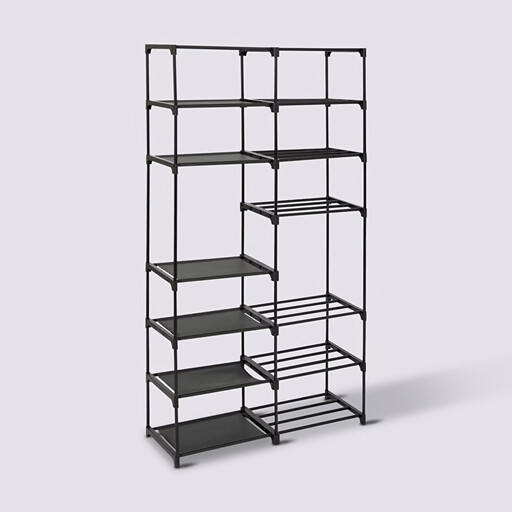
Why this fits the profile: This tall model offers 16 shelves on a footprint of 87 x 30 cm. That makes it ideal for starters, students and households wanting to make use of vertical space.
The exact dimensions and number of shelves are stated, so you can compare the required height and capacity in advance. Self-assembly is required.
16 shelves, 30 cm depth, polypropylene and steel, suitable for indoor use.
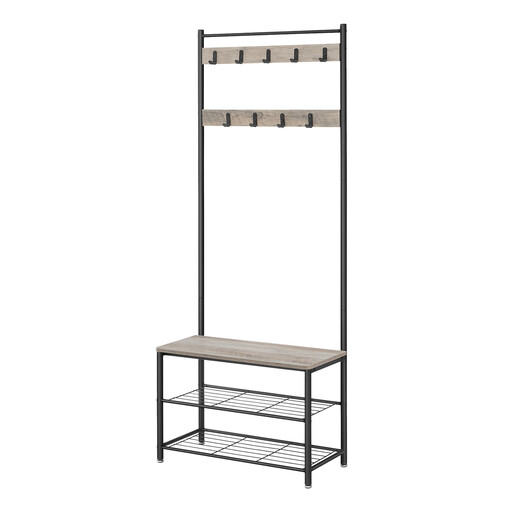
Why this fits the profile: For anyone wanting one hallway piece for coats, bags, shoes and seating. The combination of coat rack, bench and shoe storage suits busy families.
The product information mentions an anti-tilt kit, adjustable feet and maximum loads. Fixing it to the wall is important for safety, according to the description.
Dimensions of 32 x 70 x 177 cm, nine metal hooks, two mesh shelves and a bench with a stated static load of 136 kg.
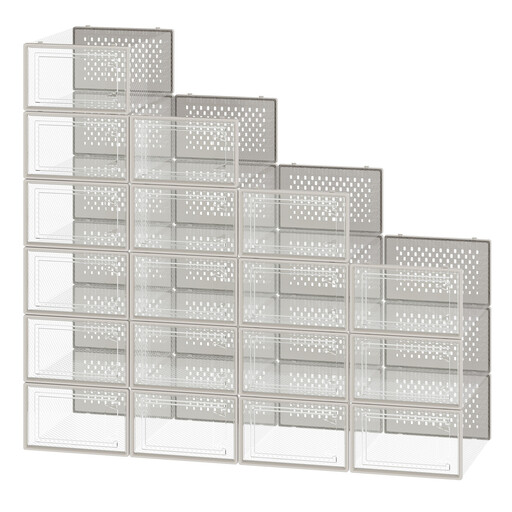
Why this fits the profile: A practical shoe storage solution for trainer enthusiasts, wardrobes and households wanting to keep pairs visible and separate.
The internal dimensions of 31.2 x 22.5 x 13.5 cm are stated. Measure your shoes beforehand; tall boots or wide styles may not fit.
18 boxes, transparent doors, stacking grooves and ventilation openings; made from polypropylene and polystyrene.
Use this short checklist when comparing:
For a very narrow hallway, a metal shoe rack with multiple tiers may be enough. For an entrance where you also want to store coats and bags, a shoe cabinet with a bench is more practical. If you store seasonal shoes, you could choose stackable shoe boxes in a cupboard or storage room.
We've put together a full, up-to-date list of products that fully meet these strict selection criteria and current European safety regulations.
That depends on the number of pairs and the type of shoes. Measure the available space and then check the shelf width. Wide sports shoes and boots need more room than low-top trainers. Also allow for skirting boards and doors.
An open shoe rack offers quick access and is suitable for shoes you wear every day. A shoe cabinet hides the contents and works better when you want a tidy hallway. For damp shoes, ventilation is important; don't store them away in an enclosed space straight away.
Place the furniture on a level surface, distribute heavy shoes across the lower levels and follow the assembly instructions. If an anti-tilt kit is supplied or recommended, fix the shoe rack to the wall according to the instructions.
