
Vandaag of morgen in huis

Kwaliteit gegarandeerd

Welkomstaanbiedingen ontgrendelen: GRATIS bezorging | Tot 80% korting | Gratis 30 dagen JoyPlus-proefperiode
Download de app
By Joybuy Product Recommendation Officer
Shoes left lying around in the hallway can quickly take up space. But the first shoe rack that looks tidy isn’t necessarily right for your household. A slim shoe rack, for example, may not be deep enough for high-top trainers, while a shoe cabinet can be inconvenient if you use several pairs every day.
The main pitfalls usually have less to do with appearance and more to do with dimensions, load capacity and ease of use. Read on to find out what to look for before buying a shoe storage solution.
A retailer may list a shoe rack as holding 30 pairs, but that capacity is often based on low-cut shoes placed side by side. Ankle boots, wide sports shoes and size 45 or above take up more room. So check not only the number of tiers, but also the width, depth and clearance on each tier.
Measure the available space in three places: width, depth and height. If you’re choosing a shoe rack for the hallway, also consider skirting boards, doors and the route through the space. A rack that’s 24.5 cm deep may fit in a corridor, but a cabinet door or drawer could still be blocked.
A tall, lightweight rack can tip over if several shoes are placed on one side. Check its weight, the surface it will stand on and whether it can be anchored. If you have children at home or a narrow passageway, it’s sensible to take extra precautions against tipping. Never use a product as a seat or step unless this is expressly permitted.
First decide how many pairs you want to store day to day. A shoe rack for 6 to 12 pairs may be enough for a small collection. If you’re looking for a shoe rack for 30 pairs, a tall model with several tiers may be a better fit. Allow for future purchases too, but don’t buy a large cabinet if some of the space will go unused.
An open metal shoe rack makes it easy to see your shoes and allows air to circulate. A shoe cabinet with drop-down doors keeps shoes out of sight and creates a tidier look in the living room or hallway. For a wardrobe, stackable shoe boxes or a hanging shoe organiser are often more efficient than a freestanding unit.
Measure the largest shoes you want to store. When choosing a shoe storage solution, look out for:
An over-door model frees up vertical space, but check beforehand that the door will still close properly and that the hinges can support the weight.
A metal shoe rack is generally lightweight and well suited to an open layout. Check that the joints are firmly secured and the feet sit level. A bamboo shoe rack works well with a natural interior, but check the stated maximum load and protect the material from prolonged exposure to moisture.
For plastic shoe boxes, the internal dimensions matter more than the external measurements. Product descriptions for transparent organisers say that ventilation holes can help air circulate, but this is a product feature, not a guarantee of any particular condition for your shoes. Always measure your shoes before buying a set of boxes.
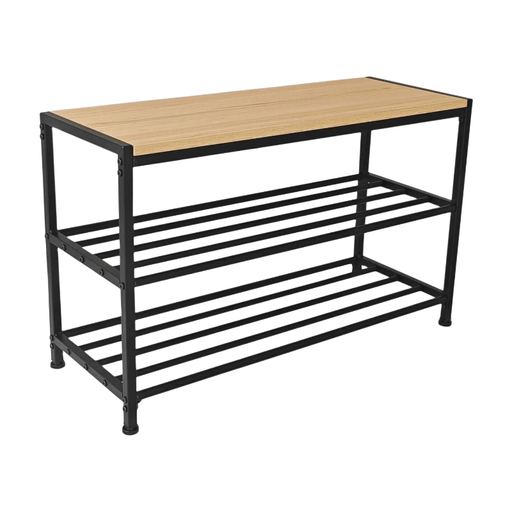
Why it suits this need: Its compact design is ideal for a small hallway, bedroom or corridor where you want to store a few pairs for everyday use.
The capacity and dimensions are clearly stated: 6 pairs and approximately 80 x 30 x 49.2 cm. That means you won’t end up buying a large piece of furniture for a small collection.
Powder-coated metal frame, wooden top shelf and open design. The top provides extra space for small accessories.

Why it suits this need: This enclosed model is ideal for households that want to keep shoes out of sight and prefer a furniture-like look.
You can check the dimensions and 18-pair capacity in advance. Be sure to measure the available depth, as this model is taller than a low rack.
Six shelves, drop-down doors and a drawer. It’s made from chipboard, and the product description states that it is FSC-certified.

Why it suits this need: For families or households with lots of shoes, this tall open rack offers space for up to 30 pairs, according to the product information.
The full dimensions are listed: 65.5 x 24.5 x 138 cm. This helps you plan for a tall but relatively slim space.
Freestanding metal rack with white plastic parts, supplied for self-assembly. Place it on a level surface and check the joints regularly.
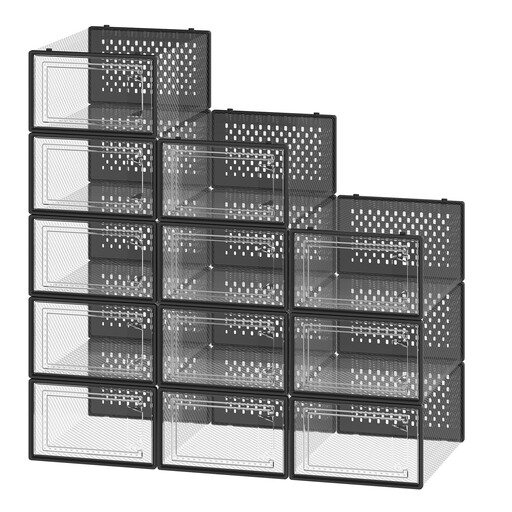
Why it suits this need: These stackable shoe boxes make use of the height of a wardrobe or alcove, keeping each pair separate and visible.
Check the internal dimensions against your shoes beforehand. This helps ensure larger styles will fit, even with a generous set size.
12 boxes per set, with transparent panels and ventilation holes according to the product description. The boxes can be stacked for use in a wardrobe or dressing room.
We’ve put together a complete, up-to-date list of products that meet these strict selection criteria and the applicable European safety regulations.
After assembly, check that all the joints are fully tightened. Place a freestanding shoe rack on a level surface and distribute heavier shoes evenly. Wall fixing can provide extra stability for a tall model; always follow the manufacturer’s instructions.
Clean with a soft, slightly damp cloth, then dry metal or wooden parts. Avoid abrasive cleaners. For plastic boxes, check regularly for cracks in the panels or joints. According to their product information, the products mentioned come with a minimum two-year statutory guarantee in the EU; you may have additional rights under applicable Dutch law.
It depends on how many pairs you have and how much wall space is available. Measure the space, including skirting boards, and leave room for doors and for people to pass. A model about 80 cm wide is suitable for a small collection; a 65.5 cm-wide tall rack can store more pairs vertically.
An open shoe rack gives you an immediate overview and makes it easy to grab a pair. A shoe cabinet keeps the contents out of sight and is a better choice if you want a tidier look. Open storage is often more convenient for shoes you wear every day, while a cabinet may be more practical in a living room.
Its lifespan depends on the material, load, moisture and assembly. Don’t exceed the stated load capacity, make sure the rack is stable and retighten the joints if needed. Prolonged exposure to moisture is particularly damaging to bamboo and chipboard.
