
Vandaag of morgen in huis

Kwaliteit gegarandeerd

Welkomstaanbiedingen ontgrendelen: GRATIS bezorging | Tot 80% korting | Gratis 30 dagen JoyPlus-proefperiode
Download de app
A hallway can quickly become cluttered with trainers, boots, coats and bags. A shoe rack may seem like a simple purchase, but small differences in dimensions, load capacity and layout determine whether the furniture works well every day. The wrong choice can result in a rack that wobbles, does not fit the available space or holds fewer shoes than expected.
Pay particular attention to these three common pitfalls:
Measure not only the width, but also the depth and height of the space. For a narrow hallway, a slim shoe rack approximately 30 cm deep may be a suitable solution. Also check that doors, skirting boards and walkways will not be obstructed.
A low rack works well beneath a coat rack or inside a cupboard. A tall combination of coat rack and shoe storage makes better use of vertical space, but requires more attention to stability and wall mounting.
A metal shoe rack often consists of metal tubes with plastic connectors. This can be a lightweight and flexible solution for trainers and everyday shoes. Always check the load capacity per shelf as well as for the complete rack.
For a chipboard shoe cabinet, the construction, hinges and adjustable shelves are important. Furniture with adjustable shelves offers greater flexibility for ankle boots, high-top shoes and storage boxes. Place heavy items low down where possible and follow the maximum load stated in the product information.
The product descriptions for the models below state the following details:
An open shoe rack gives you a quick overview and makes shoes easy to reach. It is practical for everyday use, but shoes remain visible. A closed shoe cabinet creates a calmer appearance and can also keep small items out of sight.
A shoe bench combines storage with a seat for putting on your shoes. This is useful in a hallway where there is no room for a separate chair or stool. For an upholstered seat, check whether the cover can be removed for cleaning.
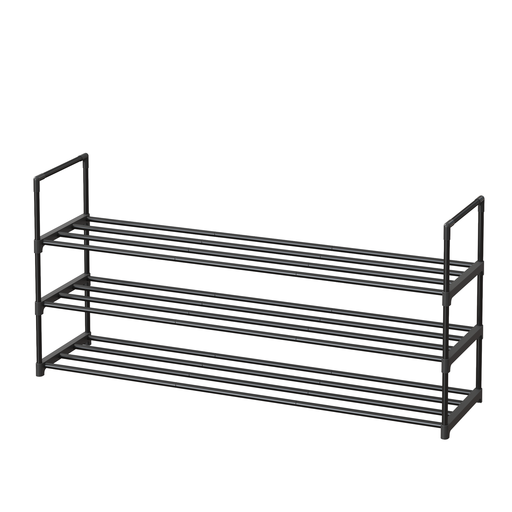
Why it suits this profile: This open metal rack is ideal for anyone who wants to quickly add an organised shoe storage solution to a hallway, cupboard or living room without using tools.
The dimensions of 30 x 117 x 55 cm and the metal construction make the space requirements clear. The rack can be positioned upright, turned upside down or stacked; when stacking, check the stability of the chosen arrangement.
Three tiers, a maximum of 10 kg per tier and a maximum of 30 kg in total according to the product description. Tool-free assembly.
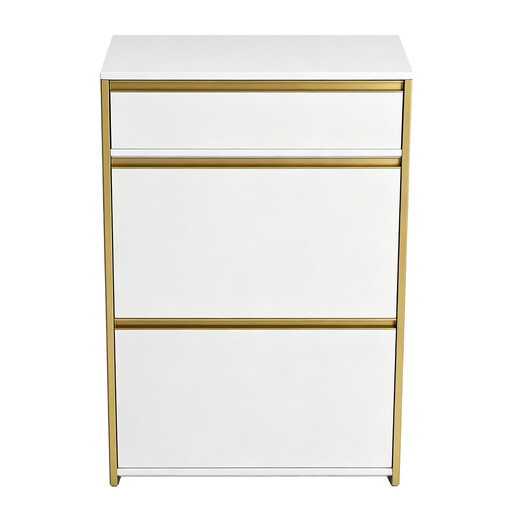
Why it suits this profile: This closed shoe cabinet is ideal for interiors where shoes and small items can be kept out of sight. Its width of 60 cm and depth of 24 cm make it suitable for a relatively narrow wall.
The four adjustable and removable shelves make it easier to organise shoes of different heights. Securing the anti-tip feature to the wall helps reduce the risk of the cabinet toppling over.
Closed storage space, a drawer and a stated capacity of up to 12 pairs of shoes according to the product description. Dimensions: 60 x 24 x 104.5 cm.
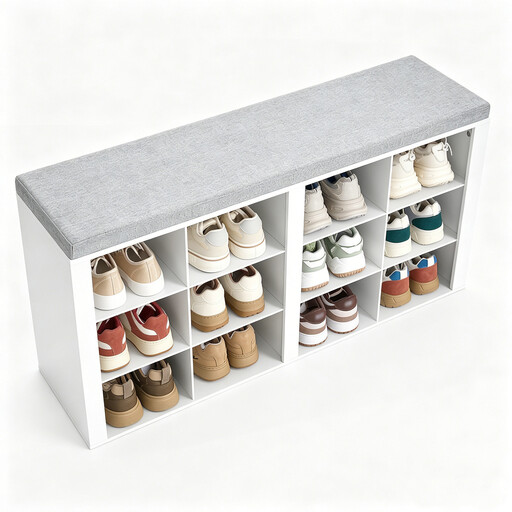
Why it suits this profile: This shoe bench combines seating with storage, making it a good choice for families or households that want to create a permanent place for shoes in the hallway.
The adjustable shelves prevent a fixed layout that may not accommodate high-top shoes. The removable seat cover can be cleaned separately.
Dimensions of 30.5 x 104.5 x 49.5 cm and a stated load capacity of 150 kg according to the product description. Materials: chipboard, sponge, cotton and linen.
A coat rack with shoe storage is a practical choice when you want to keep coats, bags and shoes together in one place. According to the product description, the Ochama Coat Rack Hall Tree has 9 metal hooks, a bench and mesh shelves. Its dimensions are 32 x 70 x 177 cm. According to the specifications, each hook can hold up to 3 kg.
At 177 cm tall, this type of hallway furniture is particularly suitable for a corridor with sufficient vertical space. Secure the furniture according to the instructions using the supplied anti-tip kit. See the Ochama Coat Rack Hall Tree with Shoe Storage Bench for the full product specifications.
A lower model, such as a shoe bench, takes up less vertical space and can also be used in a bedroom or living room. For an open layout, you could also consider a stackable shoe rack. When stacking, always check that the surface is level and that the connections are suitable for the chosen configuration.
We have put together a complete, up-to-date list of products that fully meet these strict selection criteria and the applicable European safety regulations.
That depends on the number of shoes and the available wall space. Measure the area first and take skirting boards and doorways into account. A rack approximately 30 cm deep may be suitable for a narrow hallway, but check that your shoe sizes and wider styles fit comfortably.
A metal shoe rack can be suitable for everyday footwear when its load capacity matches your needs. Check the load per shelf, the total capacity and the quality of the connectors. Place a tall or stacked rack securely and follow the assembly instructions.
An open rack gives you a quick view of your shoes and makes them easy to grab. A shoe cabinet keeps the hallway looking tidier and may provide extra space for small items. If you also want to put your shoes on while seated, choose a shoe cabinet with a bench or a shoe bench with adjustable shelves.
