
Vandaag of morgen in huis

Kwaliteit gegarandeerd

Welkomstaanbiedingen ontgrendelen: GRATIS bezorging | Tot 80% korting | Gratis 30 dagen JoyPlus-proefperiode
Download de app
A shoe rack may seem like a simple product, but choosing the wrong one can quickly become frustrating. A rack that supposedly holds lots of pairs may turn out to be too narrow for trainers. A shoe cabinet may look stylish, but offer too little ventilation. And a shoe organiser for a small space can take up more room than expected because of protruding doors.
So don’t focus solely on colour or price. The dimensions, layout, stability and assembly method determine whether a shoe rack works well in practice.
A description such as “for 30 pairs” does not always tell you how large each compartment is. High-top trainers, women’s shoes with heels and ankle boots need more room than low-cut shoes. So check whether the stated capacity suits your shoe collection and whether the compartment height is suitable.
For a household with lots of shoes, a shoe rack for 12 to 30 pairs can be practical. For a smaller collection, a compact model holding six pairs may be enough.
Don’t just measure the available width. Depth and height are also important, especially in a narrow hallway. Take skirting boards, doors and walking space into account. A narrow shoe rack may be suitable for a hallway, but a tall model may be less convenient beneath a coat rack or next to a door.
Also check the order in which the dimensions are listed. Always confirm which measurement refers to the width, depth and height.
Many shoe racks are supplied flat-packed. Check whether tools are required, whether all parts are included and whether the rack needs to stand on a level surface. Stability is particularly important for a tall rack. Follow the assembly instructions and use any wall fixing if recommended in the product information.
For a shoe rack for a small space, models with limited depth are often useful. A rack approximately 24 to 30 cm deep may fit in many hallways, but measure the passageway and the space by the front door first.
Also consider the design:
Metal is generally easy to wipe clean and is often used for open racks. Plastic is lightweight and can be useful for modular systems or shoe boxes. Wood and engineered wood create a more furniture-like appearance, but require more care around moisture, for example in an entrance where wet shoes are placed.
For a shoe cabinet, check whether the shelves are adjustable. This is useful when storing different types of shoes. With a fabric or mesh shoe organiser, it’s practical to check how the material should be cleaned.
A rack needs to stand firmly when you take shoes out every day. So check the stated load capacity for each shelf or compartment. Place heavier shoes at the bottom and distribute the weight evenly.
Also, don’t use a rack as a step or seat unless it has been specifically designed as a bench. A level surface is important for a tall shoe organiser. Wall fixing can provide extra stability when stated for the product.
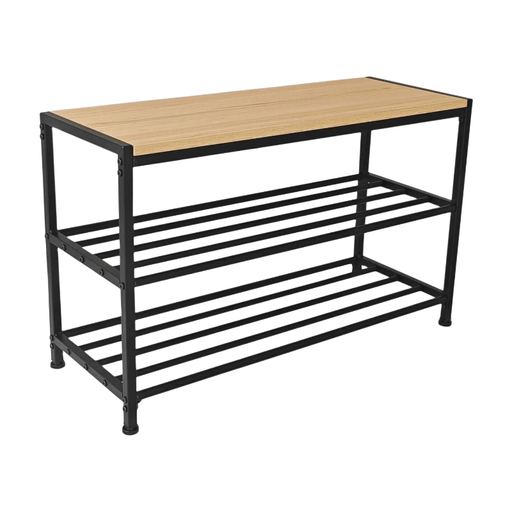
Why it suits this profile: This compact model holds 6 pairs of shoes and has a wooden top shelf for small accessories. It is therefore well suited to a tidy hallway or bedroom with a smaller collection.
The dimensions and capacity are clearly stated, so you can decide in advance whether six pairs will be enough. The open design prevents shoes from being stored in enclosed compartments.
80 x 30 x 49,2 cm; metal frame with wooden top shelf; suitable for hallways, corridors or bedrooms.
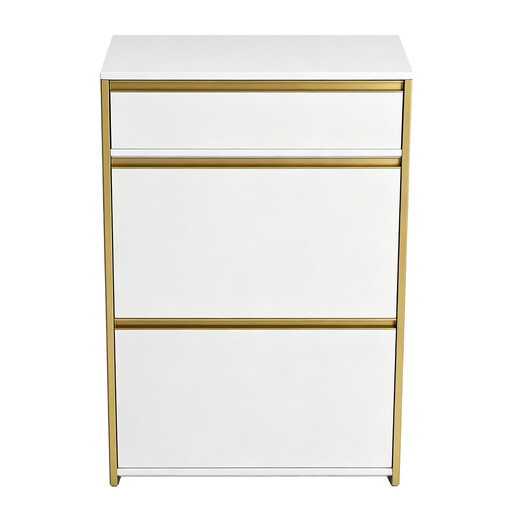
Why it suits this profile: This enclosed shoe cabinet is designed for anyone who wants to keep shoes out of sight. Measuring 60 x 24 x 104,5 cm, it holds up to 12 pairs according to the product information.
The adjustable, removable shelves make it easier to store different types of shoes. However, check beforehand that your taller shoes fit within the available compartment height.
24 cm deep; adjustable shelves; two doors and a drawer; fitted with an anti-tip device according to the product description.
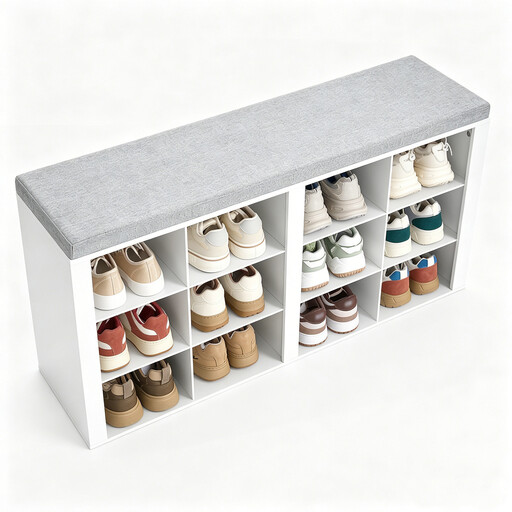
Why it suits this profile: A family can use this shoe rack with bench as a dedicated place to put shoes on. The adjustable shelves provide room for trainers, shoes and taller styles.
The capacity, dimensions and stated load capacity of 150 kg are provided. Only use the seat in accordance with the product specifications and check the assembly carefully.
104,5 x 30,5 x 49,5 cm; 12 compartments; adjustable shelves; removable cushion covers.
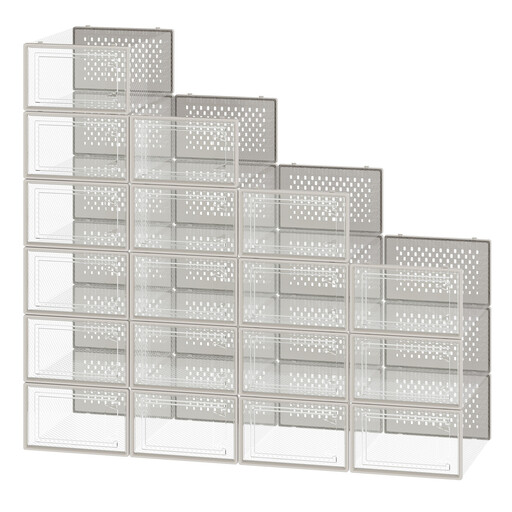
Why it suits this profile: Transparent shoe boxes keep a collection visible without having to open every box. The set of 18 is ideal for anyone who wants to organise lots of pairs individually.
The internal dimensions of approximately 31,2 x 22,5 x 13,5 cm are stated. Measure your trainers beforehand, as shoe sizes and styles can vary.
18 boxes; transparent doors; stackable design; ventilation openings according to the product information.
We’ve put together a complete, up-to-date list of products that fully meet these strict selection criteria and the applicable European safety regulations.
Use this short checklist when buying:
That depends on the model and the type of shoes. A compact Practo rack is specified for 6 pairs, while some tall racks can hold between 16 and 30 pairs. Wide trainers take up more room than low-cut shoes. So, as well as the overall capacity, look at the width and height of each compartment.
An open shoe rack provides immediate access and keeps shoes visible. This is useful for everyday use in the hallway. A shoe cabinet keeps shoes out of sight and may suit a tidy interior better. For wet shoes, an open design can be more practical, as moisture is less likely to remain trapped in an enclosed compartment.
Assemble the rack according to the instructions and place it on a level surface. Distribute shoes evenly and put heavier pairs at the bottom. For a tall model, wall fixing may be advisable if recommended by the manufacturer. After assembly, regularly check that all connections are still secure.
