
Vandaag of morgen in huis

Kwaliteit gegarandeerd

Welkomstaanbiedingen ontgrendelen: GRATIS bezorging | Tot 80% korting | Gratis 30 dagen JoyPlus-proefperiode
Download de app
A shoe rack may seem like a straightforward purchase, until shoes start toppling over, shelves begin to bow or the rack turns out to be too deep for your hallway. In flats and narrow entrances especially, every centimetre counts. Families often need more capacity than a product photo suggests, too.
When comparing products, look beyond colour and price. The following pitfalls are common:
Measure the area where the rack will stand and leave a little clearance around it. For a hallway shoe rack, depth is especially important: a rack that sticks out a few centimetres too far can obstruct the passageway.
A tall cabinet makes good use of vertical space, while a low model can also serve as additional storage. With a stackable shoe rack, also check that the construction is actually designed to be turned or stacked. This is not stated in every model’s product information.
A household with children’s shoes needs a different layout from someone with high-top shoes and boots. A model with a stated capacity of 30 pairs is practical for a larger household, but also check the distance between the levels.
For a shoe rack for 30 pairs, a tall, narrow design is often a sensible choice. If you are looking for a shoe rack with plenty of storage space, it may be better to consider several shelves, a bench or additional hooks for bags and coats.
A metal shoe rack generally offers an open design and is easy to wipe clean. According to the product description, metal tubes and plastic connectors can provide sufficient support, but the stated maximum load remains the key guideline.
For other rooms, a plastic storage rack may be more practical. An open rack is easily accessible in the bathroom or shed. Place every rack on a level surface and distribute heavy items evenly. With a tall model or a rack in a household with children, wall mounting may be particularly sensible.
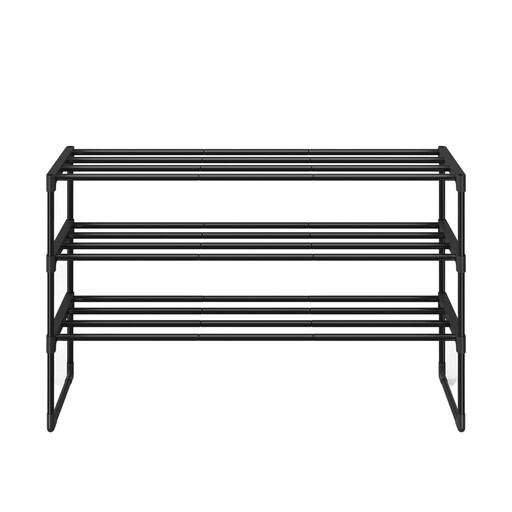
Why it suits this profile: Measuring 30 x 92 x 55 cm, this narrow shoe rack is suitable for a hallway, wardrobe or living room where floor space is limited. According to the product information, it holds approximately 16 to 20 pairs of shoes.
The dimensions and load capacities are clearly specified: a maximum of 10 kg per level and 30 kg in total. According to the product description, the construction can be positioned upright, upside down or stacked.
Metal tubes, plastic connectors and tool-free assembly. The open design keeps shoes within easy reach.
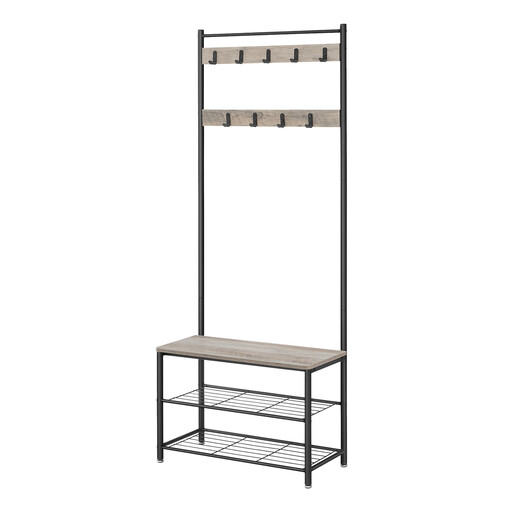
Why it suits this profile: This combination of coat rack, shoe rack and bench is ideal for households that want to create a complete dressing area in the hallway. The unit measures 32 x 70 x 177 cm and has nine hooks.
The product information specifies a steel frame, adjustable feet and an anti-tip safety feature. Attach the unit to the wall using the supplied kit, following the instructions.
The bench has a stated static load capacity of 136 kg. According to the specifications, the hooks are suitable for a maximum of 3 kg per hook.
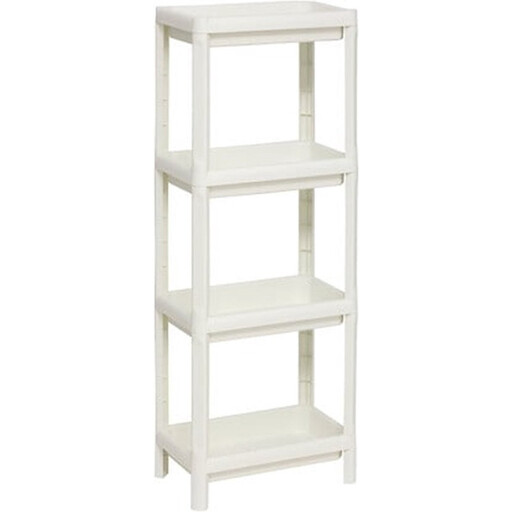
Why it suits this profile: This plastic storage rack is designed for the bathroom, but can also be used in a shed or loft. Measuring 37 x 22 x 100 cm, it takes up very little floor space.
The maximum load is specified as 20 kg per shelf. According to the product information, the rack clicks together without tools, keeping assembly straightforward.
Four open levels, a plastic construction and quick assembly according to the product description. Place the rack on a level surface.
A tall rack is a sensible choice if you have limited floor space and want to make use of the available wall height. According to the product specifications, the white 5five model holds 30 pairs of shoes and is 138 cm tall. It is a freestanding rack and is not designed for sitting on. Place it on a stable surface and regularly check that all the connections remain secure.
If you want to put your shoes on in the hallway, a shoe cabinet with bench or a hall unit with shoe shelves is likely to be a better choice. In that case, consider not only the bench’s maximum load capacity, but also whether wall mounting is needed for a tall unit.
We have put together a complete, up-to-date list of products that fully meet these strict selection criteria and the applicable European safety regulations.
First count the pairs of shoes used every day and allow extra room for boots or seasonal footwear. A model holding 16 to 20 pairs is suitable for a smaller household. For a family, a shoe rack for 30 pairs or a combination of two racks may be more practical.
Place the rack on a level surface, distribute the weight across the shelves and put heavy shoes at the bottom. With a tall model, wall mounting is advisable if the manufacturer supplies an anti-tip kit. Always follow the assembly instructions and do not exceed the stated load capacity.
Its lifespan depends on the material, load, moisture and assembly. Keep metal surfaces dry and check the connections regularly. Only use a bathroom rack in the conditions for which the product is intended, and load each shelf according to the stated limit.
