
Vandaag of morgen in huis

Kwaliteit gegarandeerd

Welkomstaanbiedingen ontgrendelen: GRATIS bezorging | Tot 80% korting | Gratis 30 dagen JoyPlus-proefperiode
Download de app
A stray pair of shoes in the hallway may seem harmless, but several pairs can quickly take up a lot of floor space. A shoe rack can be the answer, provided the model suits your space and collection. A narrow shoe rack for a student room needs different features from a shoe rack for 30 pairs in a family home.
Pay particular attention to these three common pitfalls:
Don’t just measure the width, but also the depth and height. When choosing a shoe rack for the hallway, allow for walking space, skirting boards and doors. For example, a rack that is 65.5 cm deep may protrude too far into a narrow passage, while a 30 cm deep model is easier to fit beside a cupboard.
For a wardrobe or small alcove, a wardrobe shoe rack, stackable shoe rack or individual shoe stackers can be practical options. Check beforehand that the wardrobe door can still close fully.
A shoe rack for 30 pairs sounds spacious, but compare the layout with your own shoes. Open shelves are suitable for shoes used every day and make it easy to see different styles at a glance. A shoe cabinet with flap doors conceals the contents more effectively, but each shelf must be high enough for your footwear.
Check the product specifications for:
A metal shoe rack is usually lightweight and easy to move. Pay attention to the combination of metal tubes, connectors and any plastic fittings. A metal frame with wooden or chipboard shelves may look more like a shoe cabinet, but is generally heavier.
Self-assembly is standard. Check whether fixings are included. For example, the 5five rack for 30 pairs is listed as requiring assembly, with fixings not included. Place a tall rack like this on a stable, level surface and follow the supplied instructions. If there is a risk of it tipping over, additional anchoring to the wall is advisable.
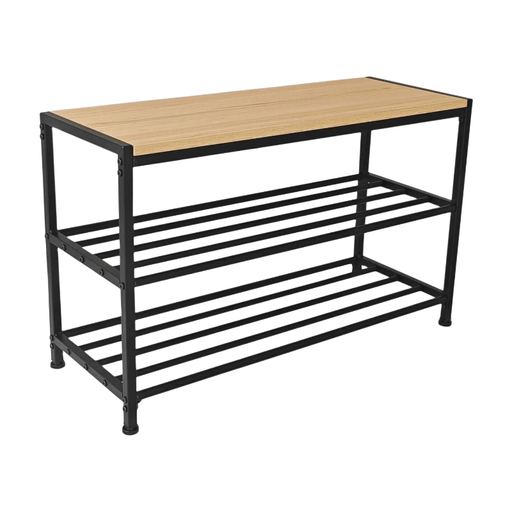
Why it suits this profile: This compact model holds six pairs and has a wooden top shelf for small accessories. It is therefore suitable for a student room, bedroom or small hallway.
The capacity and dimensions are clearly stated. You won’t end up buying a large rack for a small collection, and you can measure the space in advance.
Space for 6 pairs; dimensions 80 x 30 x 49.2 cm; black metal frame with wooden top shelf.

Why it suits this profile: This closed shoe cabinet is ideal for households that want to keep shoes out of sight. It has six shelves, flap doors and is designed for indoor use.
The dimensions are 60 x 23.3 x 119.5 cm and the capacity is stated as 18 pairs. This allows you to match the cabinet to your alcove and collection.
Capacity for 18 pairs; six shelves; chipboard construction; FSC listed in the product specifications.
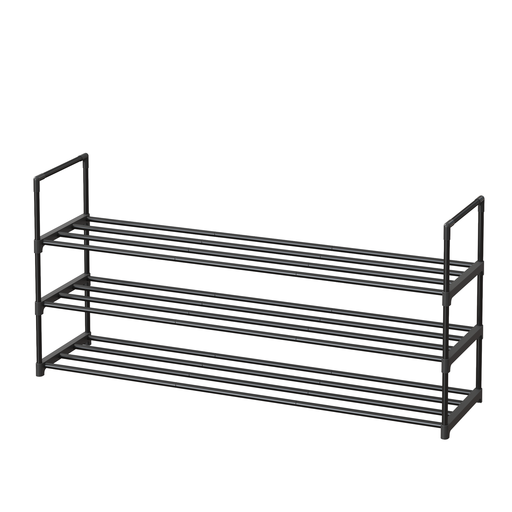
Why it suits this profile: This metal shoe-rack solution is designed for a collection that is used regularly in the hallway, wardrobe or living room. The three tiers can be positioned upright, upside down or stacked.
The stated load is 10 kg per tier and 30 kg in total. This gives you a specific point to check rather than just a general load-capacity claim.
Dimensions 117 x 30 x 55 cm; metal tubes with plastic connectors; tool-free assembly according to the product information.

Why it suits this profile: This shoe organiser makes use of the door instead of the floor. That is useful in a small bedroom, student room or wardrobe with little free space.
You don’t need to place a tall tower on a narrow floor space. However, check that the door and frame can support the hanging system, and do not exceed the load per pocket.
24 pockets; dimensions approx. 18.9 x 2.76 x 67.2 inches; metal frame and mesh fabric; foldable according to the product description.
We have put together a complete, up-to-date list of products that fully meet these strict selection criteria and the applicable European safety regulations.
Assemble a freestanding shoe rack empty first, then check all the connections. Tighten the fixings again after some time, especially if the rack is moved frequently. Use a level surface and place heavier shoes at the bottom. A tall rack with lightweight shoes at the top will generally remain tidier.
Clean metal surfaces with a soft, slightly damp cloth and dry them immediately. With wood-effect boards, it is best to avoid moisture. You can carefully wipe mesh or vacuum it with a soft brush attachment. Do not use a shoe rack as a seat or step, unless the manufacturer explicitly states that it is suitable for this purpose.
That depends on the type of shoes and the layout you want. Don’t base your decision solely on the number of pairs; also measure the width of trainers, boots and larger sizes. A tall model saves floor space, while a wider cabinet is often easier to access.
An open rack provides quick access and allows air to circulate between the shoes. A shoe cabinet keeps the hallway looking tidier, but needs space for its flap doors and may be heavier. Choose based on ventilation, accessibility and the depth available.
Its lifespan depends on the material, load, assembly and exposure to moisture. Regularly check that the connections are still secure and that there are no visible cracks, bends or damage. Follow the stated maximum load and replace any unstable component or rack in good time.
