
Vandaag of morgen in huis

Kwaliteit gegarandeerd

Welkomstaanbiedingen ontgrendelen: GRATIS bezorging | Tot 80% korting | Gratis 30 dagen JoyPlus-proefperiode
Download de app
Loose shoes in the hallway, a cabinet that is not deep enough or a rack that starts wobbling after a few weeks: buying a shoe rack may seem straightforward, but there are major differences in size, layout and stability. Product titles featuring terms such as “space-saving” or “large capacity” can also give an incomplete picture.
Use these checks to compare a shoe rack, shoe cabinet or shoe storage unit based on practical features, rather than appearance alone.
A stated capacity does not always match the number of shoes you can actually store. High-top trainers, ankle boots and shoes with wide soles take up more space than low-cut women’s shoes. So, when choosing a shoe rack for lots of shoes, do not just look at the total number of compartments. Also check the height and depth of each tier.
The same applies to shoe storage boxes. A box that is suitable for a particular shoe size may be too tight for wide trainers or models with a high sole. Always check the internal dimensions of the box and compare them with the longest and tallest shoes in your collection.
A narrow shoe rack is useful in a flat, a narrow corridor or a hallway next to the front door. However, a tall rack can become impractical if doors, skirting boards or radiators are in the way. Measure the available space at three points:
Also pay attention to the order of the measurements. Product pages may list length, width and height in a different order. Compare the dimensions with the product image and check which side indicates the depth.
An open metal or plastic shoe rack is often easy to move, but a tall structure may be less stable on an uneven floor. A shoe cabinet with doors and drawers also has a different centre of gravity from an open rack. Check whether assembly is required, whether wall fixings are included and whether the manufacturer mentions an anti-tip feature.
With tall furniture, securing it to the wall is particularly important in households with children. Ideally, place heavier shoes on the lower levels and follow the assembly instructions.
A rack approximately 30 cm deep may be suitable for a small hallway. If you mainly want to store everyday shoes, a low shoe storage unit with a few tiers is often sufficient. For families, a taller model or a combination of racks may be more practical.
A shoe rack with a bench combines storage space with somewhere to sit while putting on your shoes. Do not just look at the number of compartments. Also consider:
A metal shoe rack often has an open design, allowing air to circulate around your shoes. Metal can be suitable for everyday use, but check that the joints can be secured firmly and whether the rack specifies a maximum load per shelf.
Polypropylene is a lightweight plastic that is easy to clean. A combination of polypropylene and steel can be a practical middle ground for a tall rack. Wooden or wood-effect panels create a more furniture-like appearance, but require greater care around moisture and mud. Wipe away wet shoes and dirt as soon as possible.
A product with lots of compartments is not automatically suitable for heavy boots. Check the maximum load per shelf or compartment whenever this information is available. With a shoe storage unit made up of stackable boxes, you should also consider the overall height and the stability of the stack.
A transparent door makes it easier to find a pair. Ventilation openings can be useful for storage, but allow wet footwear to dry first before keeping it in a closed box for an extended period.
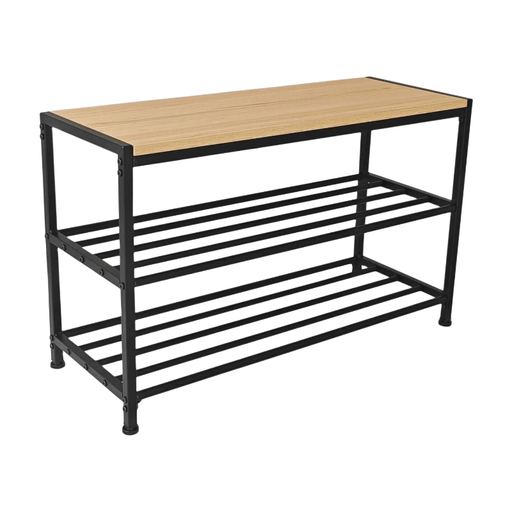
Why it suits this profile: This compact model is designed to hold up to 6 pairs of shoes and, thanks to its depth of approximately 30 cm, fits in a hallway, corridor or bedroom.
The capacity and dimensions are clearly stated, so you can match the rack to a small collection rather than relying on a general marketing claim.
Black powder-coated metal frame, wooden top shelf, open design and compact dimensions of approximately 80 x 30 x 49,2 cm.
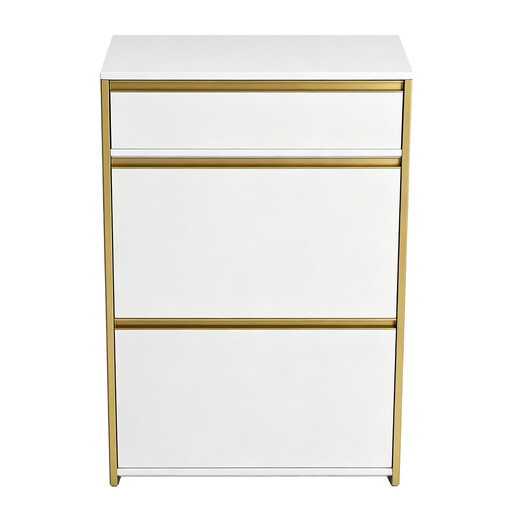
Why it suits this profile: This closed shoe cabinet is ideal if you want to keep your shoes out of sight and use the top for small items or decorations.
The adjustable, removable shelves make room for different types of shoes. The stated dimensions are 60 x 24 x 104,5 cm.
Enclosed storage space, drawer, adjustable shelves and an anti-tip feature for securing the cabinet to the wall.

Why it suits this profile: This tall freestanding rack is designed for households that want to store lots of shoes in one place without installing a deep shoe cabinet.
The product information states a capacity of 30 pairs and the exact dimensions of 65,5 x 24,5 x 138 cm. However, check the ceiling height and available wall space beforehand.
Metal construction, white finish, 30 stated shoe spaces and self-assembly. Wall fixing is recommended where there is a risk of tipping.
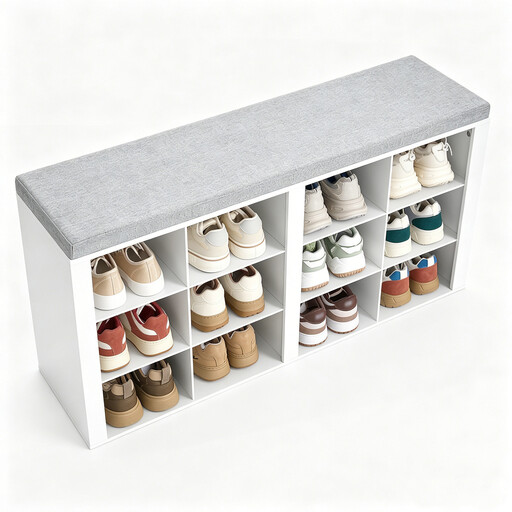
Why it suits this profile: A shoe rack with a bench is practical for families who want to sit down while putting on their shoes and keep several pairs neatly organised at the same time.
The shelves are adjustable, so high-top shoes and trainers are not restricted by a fixed layout. The stated product dimensions are 30,5 x 104,5 x 49,5 cm.
Bench, 12 storage compartments, adjustable shelves and a stated load capacity of 150 kg. The seat has removable upholstery.
We have put together a complete, up-to-date list of products that fully meet these strict selection criteria and the applicable European safety regulations.
Place the rack on a level surface and, after assembly, check that all the joints are securely fastened. With a tall model, securing it to the wall is advisable if the product information includes provision for this. Keep the bottom shelf clear for heavier shoes and prevent children from climbing on a rack or shoe cabinet.
You can wipe an open metal rack with a soft, slightly damp cloth. Do not use abrasive products on plastic shoe storage units. Do not keep leather or fabric shoes damp in closed shoe storage boxes for extended periods; allow them to dry completely first.
That depends on the number of shoes and the available wall space. Measure the area and allow for skirting boards, doors and room to walk past. A model approximately 80 cm wide may be sufficient for a small collection. Families often benefit from a taller rack, several stackable shoe boxes or a shoe cabinet with adjustable shelves.
Not always. Check the internal dimensions of each box and compare them with the length, width and height of your shoes. The JOYFURNOS boxes are stated to fit sizes up to UK 11, but wide trainers or high-top models may need more room. Use ventilation openings and only store wet shoes once they are dry.
Its lifespan depends on the material, load, assembly and maintenance. A metal shoe rack may be suitable for everyday storage under normal use, while plastic boxes rely largely on careful stacking and opening. Regularly check screws, connectors and any wall fixings. According to the product information, the 5five models are covered by a minimum two-year legal guarantee under EU consumer legislation; additional rights may apply under Dutch law.
