
Vandaag of morgen in huis

Kwaliteit gegarandeerd

Welkomstaanbiedingen ontgrendelen: GRATIS bezorging | Tot 80% korting | Gratis 30 dagen JoyPlus-proefperiode
Download de app
A shoe rack might seem like a simple purchase, but you'll quickly notice if you've made the wrong choice. A rack that claims to hold many pairs of shoes might turn out to be too deep for your hallway. A narrow model, on the other hand, may not offer enough space for boots or larger shoe sizes. And with cheap plastic options, it's not always clearly stated how much weight or how many shoes the product can handle.
To avoid this, watch out for three common pitfalls:
The right shoe storage solution, therefore, starts with the space you have available and the type of shoes you want to store.
Measure your space in three places before you order:
For a narrow corridor, a slim shoe rack with a limited depth is often more practical than a wide shoe cabinet. For example, a model that is 30 cm deep can fit more easily next to a door or inside a wardrobe than a cabinet of 40 cm or more.
Also, consider the layout. A tall, open unit offers a lot of capacity on a small footprint. A low shoe storage unit is more accessible and can potentially be placed under a coat rack or bench. If you want to keep shoes out of sight, a shoe cabinet with doors is a better fit for a living room or bedroom.
A household with several people will often get more use out of a shoe rack for 18 to 30 pairs of shoes than from separate storage units. Be sure to check how the manufacturer describes the capacity. The available space per shelf can vary, and tall shoes take up extra room.
A rack for 30 pairs is a great choice for an extensive collection, while a cabinet for 18 pairs may be sufficient for a smaller household. If in doubt, allow for extra space so your shoes don't have to be crammed in at an angle or on top of each other.
A metal shoe rack typically has an open design and is easy to wipe clean. Check that the connections are secure and place the rack on a level surface. For a tall model, additional wall mounting may be wise if there is a risk of it tipping over.
A plastic shoe storage unit is lightweight and handy for a wardrobe, under the bed or on a low shelf. Pay close attention to the maximum load. The 5five model below, for example, states a capacity of up to three pairs of shoes per unit. This makes it suitable as a supplementary storage solution, not as a complete cabinet for a large household.
Engineered wood, such as particle board, can provide a closed and tidy appearance. With this type of shoe cabinet, check the weight, assembly and ventilation. It's best to let wet shoes dry first before placing them in an enclosed cabinet.
A stackable shoe rack saves space if you want to expand later. Check whether the product is actually designed to be stacked. A rack that is merely reversible should not automatically be placed on top of another one.
Also, pay attention to the assembly:
According to the product information, the metal JOYFURNOS models are assembled without tools. The white 5five rack requires self-assembly and does not come with fittings. After assembly, regularly check that all connections are still secure.
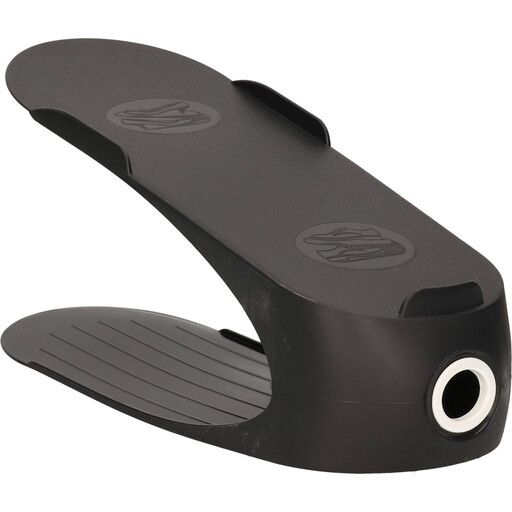
Why it's a good fit: This compact plastic shoe storage unit is suitable for a wardrobe, under the bed or on a low shelf. Its dimensions are 29.5 x 11.1 x 14 cm.
The maximum load is clearly stated: up to three pairs of shoes per unit. This makes it easier to estimate the capacity compared to a storage unit with only a general claim.
Lightweight plastic model weighing 120 grams, suitable for shoe sizes up to 46 according to the product information. The raised edge helps to keep shoes in place.

Why it's a good fit: This enclosed shoe cabinet is perfect for anyone who wants to keep shoes out of sight in the hallway, bedroom or living room. The model has six shelves and space for 18 pairs.
The dimensions, number of shelves and capacity are clearly stated. This allows you to compare it more effectively with an open shoe rack.
Particle board construction, drop-down doors, a drawer and FSC certification, according to the product details. The depth is approximately 23.3 cm.

Why it's a good fit: This tall shoe rack is designed for households with a larger collection. Measuring 65.5 x 24.5 x 138 cm, the model makes excellent use of vertical space.
The stated capacity of 30 pairs and the full dimensions make it clear that this is a tall model. Place it on a level surface and check the connections after assembly.
Metal frame, white finish and space for up to 30 pairs, according to the product description. The rack is intended for standing use and is not suitable for sitting on.
We've put together a complete, up-to-date list of products that fully meet these strict selection criteria and comply with current European safety regulations.
In the EU, products are generally covered by statutory consumer rights. The 5five products mentioned come with a legal guarantee of at least two years. Always check the current terms and seller information at the time of purchase.
That depends on the number of pairs and the type of shoes. First, measure the available space and consider door movements and walkways. For a small hallway, a model with a limited depth is often more important than maximum width.
A metal shoe rack can be suitable for daily use when assembled correctly and placed on a level surface. For a tall or heavily loaded model, wall mounting can provide extra security. Always follow the product's assembly and safety instructions.
The lifespan depends on the load, moisture, assembly and use. Do not exceed the stated capacity, place the product indoors if it is intended for indoor use, and regularly check for loose connections, cracks or damage. This helps prevent minor damage from becoming a safety issue.
