
Vandaag of morgen in huis

Kwaliteit gegarandeerd

Welkomstaanbiedingen ontgrendelen: GRATIS bezorging | Tot 80% korting | Gratis 30 dagen JoyPlus-proefperiode
Download de app
A shoe rack seems like a straightforward purchase, until the hallway is once again full of loose shoes, boots and slippers. A model that promises to hold plenty of pairs on paper may be too narrow for larger sizes in practice. Open shelves can also look untidy, or you may find that a tall shoe cabinet is difficult to position securely.
When buying a shoe rack, it pays to look beyond the number of shelves. In particular, check the overall dimensions, support structure, accessibility and material. This will help you avoid having to search for another shoe storage solution a few months later.
A shoe rack for 30 pairs of shoes sounds spacious, but the actual capacity depends on the type of footwear. Low-top trainers take up less room than ankle boots or wide walking shoes. So don’t just check the stated number of pairs; also consider the distance between the levels and the depth of the rack.
The internal dimensions also matter when it comes to stackable shoe boxes. A shoe box may look large from the outside, while tall or wide shoes may not fit properly inside.
A shoe rack for the hallway needs to fit within the available width and depth. Measure the space from the skirting board to any doors, radiators or coat racks. With a tall model, it is also important to check the clear space above the rack.
Pay attention to the order in which the measurements are given. Manufacturers do not always use the same labels for width, depth and height. Check the product image and specifications before placing your order.
A plastic shoe rack may be easy to move, but the connections and the surface it stands on also affect its stability. A metal shoe rack often has a sturdy frame, but it still needs to be assembled correctly.
For a tall rack, it is advisable to follow the supplied assembly instructions and regularly check that the connections are still secure. Place the rack on a level surface. If there is an increased risk of it tipping over, wall mounting may be particularly suitable, even if it is not included as standard.
Choose the capacity based on your current collection, not just an attractive maximum figure. For a small household, a compact shoe rack for 6 pairs may be enough. Families or shoe enthusiasts may need a shoe rack for 30 pairs of shoes.
Also consider the layout:
A metal shoe rack with a powder-coated finish is practical for everyday use and can be cleaned with a soft, slightly damp cloth. Dry metal parts after wiping them down to help prevent moisture marks.
A plastic shoe rack or plastic shoe storage unit is generally lightweight and easy to clean. However, check that the shelves are suitable for the weight of your shoes. With transparent shoe boxes, the advantage is that you can quickly identify the contents without opening every box.
A narrow shoe rack for the hallway saves floor space, but a tall version must stand securely. A low model can also serve as an additional shelf for accessories. Check whether the product needs to be assembled and whether tools or fixings are required.
The following products illustrate different use cases. The features listed are based on the available product information.
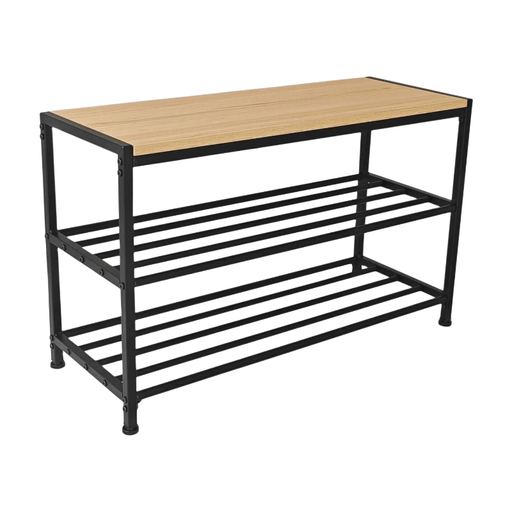
Why it suits this profile: This low model is suitable for a small collection in a hallway, entrance area or bedroom. It holds 6 pairs of shoes and, at approximately 80 x 30 x 49,2 cm, takes up little vertical space.
The capacity and overall dimensions are clearly stated. However, check the listed height: the product name states 49,5 cm, while the specification gives 49,2 cm.
Black powder-coated metal frame, wooden top shelf, open design and compact dimensions.
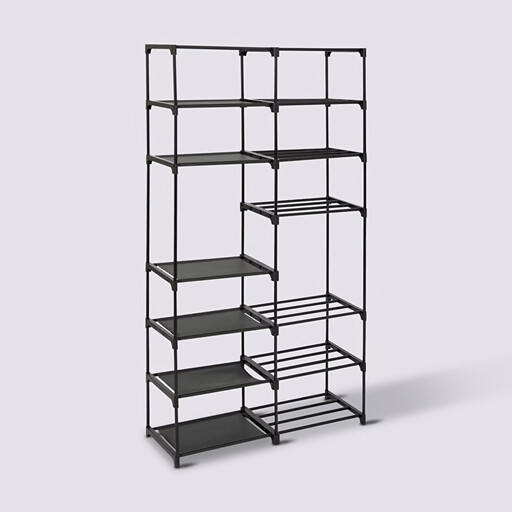
Why it suits this profile: With 16 levels and a height of 155 cm, this design provides plenty of vertical storage for households looking to keep their floor space clear.
The height, width, depth and number of levels are clearly specified. The rack cannot be extended and requires self-assembly, so bear this in mind beforehand.
16 shelves, a width of 87 cm and a polypropylene and steel construction.

Why it suits this profile: According to the product information, this freestanding shoe rack can hold up to 30 pairs of shoes. It is suitable for families or users with a larger shoe collection.
The capacity is stated explicitly. Before buying, check the order of the measurements on the product page, as the supplied measurements do not consistently identify the width and depth in the same way.
Metal construction, white finish, room for 30 pairs and a height of 138 cm.
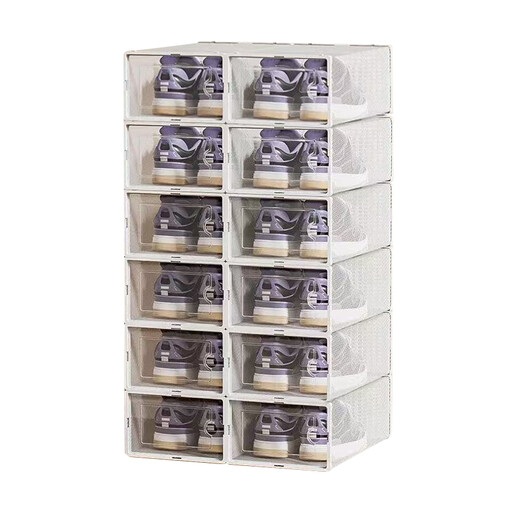
Why it suits this profile: This set is designed for individual storage. Its stackable design can be useful in a dressing room, wardrobe or shoe wall where you want to keep pairs visible and separate.
The transparent design lets you see the contents. However, check the internal dimensions before storing larger shoes or boots.
12 plastic boxes, a stackable design and a transparent finish for quickly identifying the contents.
We have put together a complete, up-to-date list of products that fully meet these strict selection criteria and the applicable European safety regulations.
Ideally, place an open shoe rack somewhere that allows shoes to air easily while keeping the route through the hallway clear. In a narrow hallway, a compact shoe rack with a shallow depth may work better than a wide model. Put heavier shoes on the bottom and check after assembly that the rack does not wobble.
A level surface is important for stackable boxes. Do not stack them higher than permitted by the construction and product information. Also consider the total height if the boxes are to be placed inside a wardrobe or underneath a shelf.
This depends on the width of the shelves and the type of footwear. A low rack may hold a few pairs, while a tall model may, according to the product specifications, accommodate up to 30 pairs. Trainers generally fit more efficiently side by side than boots or wide shoes.
Metal can be used in a hallway, but prolonged exposure to moisture may cause marks or corrosion, depending on the finish. Wipe off any wet areas and dry them immediately. Do not use abrasive cleaning products on a powder-coated frame.
Transparent shoe boxes keep shoes more out of sight while still making the contents easy to identify. An open rack gives you quicker access to your shoes and may allow more air to circulate. The right choice depends on the available space, your cleaning routine and whether you wear the shoes every day.
