
Vandaag of morgen in huis

Kwaliteit gegarandeerd

Welkomstaanbiedingen ontgrendelen: GRATIS bezorging | Tot 80% korting | Gratis 30 dagen JoyPlus-proefperiode
Download de app
A shoe rack may seem like a straightforward purchase, until you discover that boots do not fit between the shelves, a narrow shoe cabinet offers too little space or a lightweight model starts wobbling as soon as it is full. In Dutch hallways, student rooms and compact flats in particular, every centimetre counts.
When comparing options, therefore, do not only look at how many shoes the product title claims it can hold. Also check the overall dimensions, shelf height, stability and how it is assembled. This will help you avoid buying a shoe organiser that turns out to be impractical after just a few weeks.
A shoe rack for 30 pairs sounds spacious, but the actual layout may be less flexible. High-top trainers, ankle boots and children’s shoes do not all require the same amount of vertical space. Check whether the shelves are adjustable and whether the stated capacity suits the types of shoes you own.
A hallway shoe rack does not only need to fit against the wall. Also measure the walking space, skirting boards, doors and any coat rack beside it. A high-capacity model can become an obstruction in a narrow corridor. Pay attention to the order of the dimensions: width, depth and height are not presented in the same way by every retailer.
An open metal shoe rack is easy to access, but a tall model can become top-heavy. Place it on a level surface and check whether wall fixing is recommended. With a shoe cabinet, the quality of the hinges, wall fixing and shelf load capacity also play a role.
First measure the area where you plan to place the shoe organiser. In a narrow hallway, a depth of around 25 to 30 cm is often easier to accommodate than a deep cabinet. Also leave enough room to take off your shoes and open doors.
A tall cabinet makes use of vertical space, while a low shoe bench with storage combines two functions. For a bedroom or walk-in wardrobe, a wider model may be more practical than a tall rack in the hallway.
Look beyond the stated number of pairs. Ask yourself:
A shoe cabinet with adjustable shelves is suitable when its contents change regularly. A fixed rack is often simpler and lighter, but offers less flexibility.
A metal shoe rack is generally easy to wipe clean and works well in a modern hallway. However, check how the joints are constructed and make sure the rack stands on a level floor. For metal surfaces, a soft, slightly damp cloth is usually sufficient; dry the surface afterwards to help prevent moisture marks.
With chipboard cabinets, the construction, back panel and anti-tip feature are important. Follow the assembly instructions and distribute heavy items evenly. A stated load capacity is a product specification, not a guarantee that every surface or assembly method will provide the same level of stability.
The options below have been selected based on the stated dimensions, materials, capacity and features. Always check the latest product information, dimensions and included components before buying.
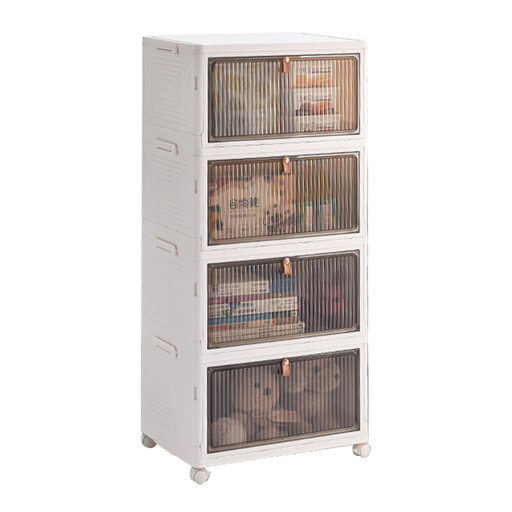
Why it suits this profile: This model is not described solely as a shoe cabinet, but according to the product title it can also store trainers and other items. That makes it useful for students or those starting out who want one flexible storage solution for a bedroom or office.
The four tiers make organising your shoes more straightforward than using separate boxes. However, check beforehand that the overall dimensions and compartment height are suitable for your shoes.
Four tiers; foldable design according to the product name; suitable for several types of storage.
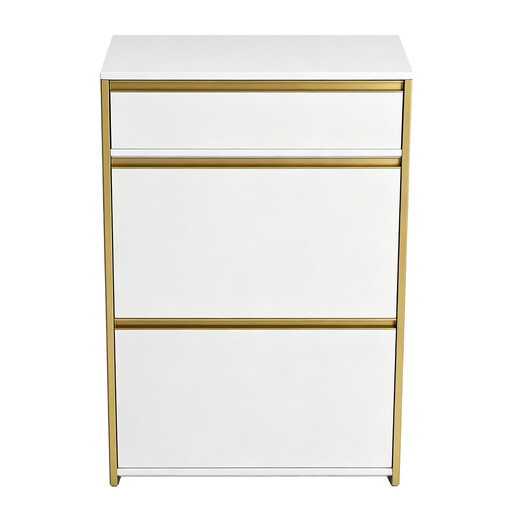
Why it suits this profile: The combination of closed doors, a drawer and adjustable shelves suits style-conscious households that want to keep shoes out of sight. The cabinet measures 60 x 24 x 104,5 cm, making it suitable for a relatively narrow space.
The adjustable and removable shelves prevent the layout from being completely fixed. Use the stated anti-tip feature and secure the cabinet according to the instructions.
Four adjustable shelves; drawer and top surface; room for up to 12 pairs according to the product description.

Why it suits this profile: Families with lots of shoes can benefit from the stated capacity of 30 pairs. With a depth of 24,5 cm, this tall freestanding rack makes good use of vertical space in a hallway or storage area.
The stated capacity makes comparisons easier. The rack is not designed to be sat on; position it securely and consider wall fixing if there is a risk of it tipping over.
Room for 30 pairs according to the product specification; metal construction; dimensions of 65,5 x 24,5 x 138 cm.
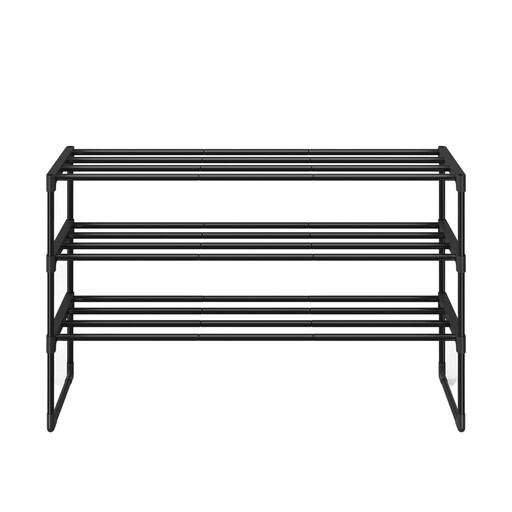
Why it suits this profile: This slim model is designed for hallways, cupboards or living rooms and, according to the product description, can be positioned upright, upside down or stacked. This makes it suitable for rented homes or spaces whose layout may change later.
The stated size of 30 x 92 x 55 cm helps when planning a compact space. When stacking, take extra care to use a level surface and ensure a secure connection between the sections.
Metal tubes; tool-free assembly according to the product description; capacity of 16–20 pairs; maximum total static load capacity of 30 kg.
We have put together a complete, up-to-date list of products that fully meet these strict selection criteria and the applicable European safety regulations.
Measure the available width, depth and height, and leave additional walking space. Also check the position of doors and skirting boards. A model that is 24 to 30 cm deep may fit in a narrow hallway, but the space required depends on the actual overall dimensions and positioning.
Its lifespan depends on the material, assembly, load and moisture levels. Periodically tighten the joints on a metal shoe rack and do not place it on an uneven floor. With a shoe cabinet, it is advisable to distribute heavy items evenly and use an anti-tip feature if one is supplied.
An open rack gives you quick access and is often easy to clean. A shoe cabinet keeps the hallway looking tidy by hiding shoes from view, and may provide additional drawers or storage space. Choose based on the available space, ventilation, number of shoes and preferred layout.
