
Vandaag of morgen in huis

Kwaliteit gegarandeerd

Welkomstaanbiedingen ontgrendelen: GRATIS bezorging | Tot 80% korting | Gratis 30 dagen JoyPlus-proefperiode
Download de app
A collection of shoes left lying around can quickly make a hallway look untidy. Yet buying a shoe rack is not as straightforward as it may seem. A model may look spacious in photos but turn out to be too narrow for boots in practice. Plastic connectors, a lightweight construction or an unclear maximum load can also cause problems.
So look beyond the colour or number of tiers. The key factors are the available space, actual capacity, construction and how you intend to use the rack.
A manufacturer may state the capacity based on slim ladies’ shoes or children’s shoes. Trainers, wider sports shoes and ankle boots take up more room. Therefore, check the width and depth of each tier rather than relying solely on the number of pairs in the product name.
For example, a shoe rack for 30 pairs of shoes can be useful for a family, but only if there is enough vertical wall space. For larger shoes, the practical capacity may be lower.
A narrow shoe rack fits well in a hallway or wardrobe, but a tall, lightweight construction can be more prone to wobbling. Place the rack on a level surface and check that the connections are securely fastened. With a tall model, securing it to the wall may be advisable if there is a risk of it toppling over.
A metal shoe rack is generally easy to wipe clean and suits a modern interior. A bamboo shoe rack creates a warmer look, but is intended for indoor use and requires cleaning with a lightly damp cloth. With both materials, check the maximum load and do not place heavy boxes on tiers that are not designed to support them.
First, measure the space where you plan to place the shoe rack. Allow for skirting boards, doors and walking space. For a hallway shoe rack, depth is particularly important: a rack that projects too far forwards could block a passageway.
Also look at:
For example, a compact model measuring 30 x 92 x 55 cm is laid out differently from a tall rack measuring 65.5 x 24.5 x 138 cm.
Pay attention to the difference between the load capacity per tier and the total load capacity. Some metal models specify a static load of 10 kg per tier and 30 kg in total. This is a verifiable product specification, but make sure you distribute the weight evenly.
A bamboo model may specify a total maximum load of 15 kg. Do not stand on it or use the furniture as a bench unless the product information explicitly states that it is suitable for this purpose.
A stackable shoe rack can be useful when your collection grows. However, check that the construction is actually designed for stacking and that the components are suitable for this purpose. A model with tool-free assembly can save time, but check after assembly that all the connectors fit together properly.
A folding rack is practical when you want to store it temporarily. Make sure the locking mechanisms are fully secured before placing any weight on the rack.
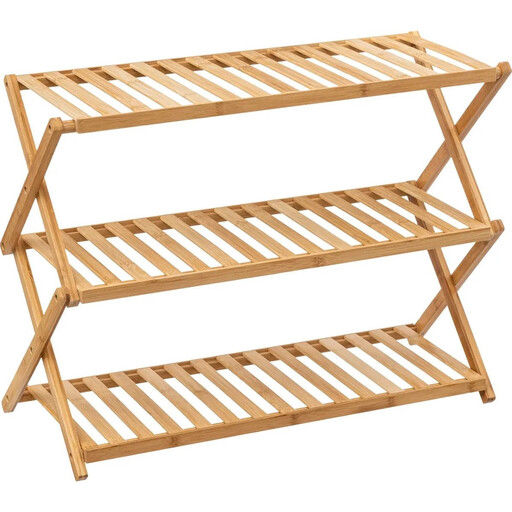
Why it suits this profile: This folding model is suitable for a smaller collection and households that occasionally want to put the rack away. The bamboo finish complements natural or Scandinavian-style interiors.
The dimensions and total load capacity are stated, so you can assess in advance whether the model suits your shoes. Before buying, check the layout you want; the product information refers to both 9 and 12 pairs.
3 tiers, folding design, bamboo frame and assembly without fixings.
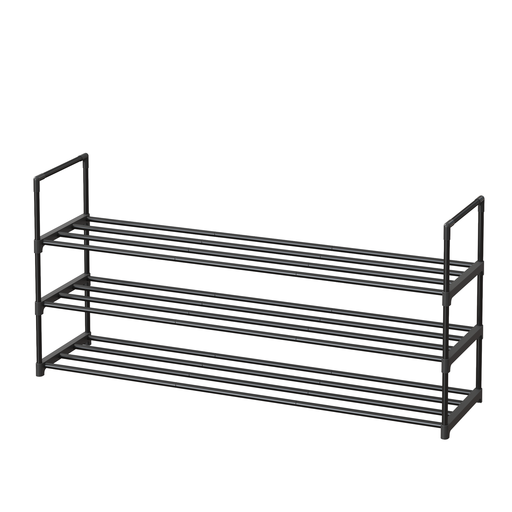
Why it suits this profile: This metal shoe rack offers flexibility for a hallway, cupboard or living room. According to the product description, the construction can be positioned upright, upside down or stacked.
The dimensions of 30 x 117 x 55 cm and the stated load capacity of 10 kg per tier make it easier to compare models than relying solely on a capacity claim.
Metal tubes, plastic connectors, 3 tiers and tool-free assembly.

Why it suits this profile: The tall layout is designed for households with lots of shoes. Its shallow depth can work well in a wardrobe or hallway where floor space is limited.
The capacity of 30 pairs and the exact height are stated. As the rack is 138 cm tall, you should check its stability and the available space in advance.
Metal construction, stated capacity of 30 pairs and a vertical layout.
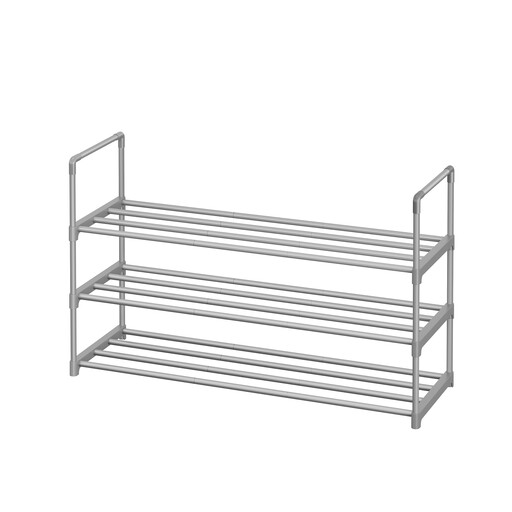
Why it suits this profile: With a width of 92 cm and a depth of 30 cm, this model provides storage without completely filling a narrow passageway. It can be used in an entrance hall, cupboard or living room.
The stated load capacity of 10 kg per tier and 30 kg in total helps you distribute your shoes. When stacking, check that the arrangement remains level and stable.
Metal tubes, 3 tiers, stackable configuration according to the product information and tool-free assembly.
Place frequently worn shoes at eye level and spare pairs at the bottom. Put heavy shoes on the lower tiers and distribute the weight across the different levels. Shoes can remain more visible on an open rack, while a shoe cabinet keeps them more concealed. Ventilation is important for damp shoes; do not store wet footwear in an enclosed space for long periods.
After a few weeks, check the connectors and readjust any adjustable feet if the rack is no longer level. Use a soft, lightly damp cloth on metal surfaces and dry the material afterwards. The same simple cleaning method is suitable for bamboo, provided you avoid prolonged contact with water.
We have put together a complete, up-to-date list of products that fully meet these strict selection criteria and the applicable European safety regulations.
That depends on the number of shoes and the type of footwear. Measure the width of several pairs placed next to each other and allow extra room for wider trainers or boots. A shoe rack for 30 pairs is intended for a larger collection, but the practical layout may vary depending on shoe size.
Not necessarily. Stability depends on the dimensions, weight, connectors and surface it stands on. A metal model may have a stated load capacity of 10 kg per tier, while a bamboo model may specify a total load of 15 kg. Always compare the official product specifications.
Its lifespan depends on assembly, load, moisture and daily use. Place the rack indoors on a level surface, do not exceed the stated load capacity and check the connectors regularly. This will help limit unnecessary wear and tear.
