
Vandaag of morgen in huis

Kwaliteit gegarandeerd

Welkomstaanbiedingen ontgrendelen: GRATIS bezorging | Tot 80% korting | Gratis 30 dagen JoyPlus-proefperiode
Download de app
A shoe rack may seem like a simple purchase, but the wrong size or layout can quickly become frustrating. In practice, a rack may be too deep for the hallway, offer insufficient space for boots or become unstable when all the shelves are full. If you only consider the number of shoes or an attractive product photo, you may overlook important details.
Pay particular attention to these common pitfalls:
Measure the available space before ordering a shoe rack or shoe cabinet. At a minimum, note down:
A narrow shoe rack measuring around 24 to 30 cm deep is often practical in a compact hallway. A taller model makes use of vertical space, but it must stand securely. A low shoe storage rack may be a better fit beneath a coat rack or in a walk-in wardrobe.
Also consider the layout. Adjustable shelves make a shoe cabinet more flexible when you want to store different types of footwear. With a fixed metal shoe rack, it is a good idea to check in advance how much space there actually is between the levels.
The choice of material affects both maintenance and placement:
A stated load capacity is more useful than a general claim about sturdiness. For example, the JOYFURNOS model specifies a maximum static load of 10 kg per level and 30 kg in total. This gives you a more concrete basis for everyday use. Always place a rack on a level surface and distribute heavy shoes evenly.
Also check whether assembly tools are included. The 5five model for 30 pairs of shoes states that no assembly materials are supplied. You will therefore need suitable tools. According to the product information, wall fixing is recommended where there is a risk of tipping over. This is particularly relevant for a tall shoe rack in the hallway.
An open shoe rack gives you an instant overview and keeps frequently worn shoes within easy reach. The downside is that shoes remain visible and may collect dust. A closed shoe cabinet creates a tidier appearance and can also hide small items, but it usually requires more space per compartment and often some additional assembly.
A cabinet with adjustable shelves is worth considering if you want to combine shoes and accessories. Do bear the capacity in mind: according to the product description, the Halupiet cabinet is designed to hold up to 12 pairs of shoes. The internal shelves are adjustable and removable, allowing you to customise the layout. The product description also states that an anti-tip device is included; use it in accordance with the assembly instructions.
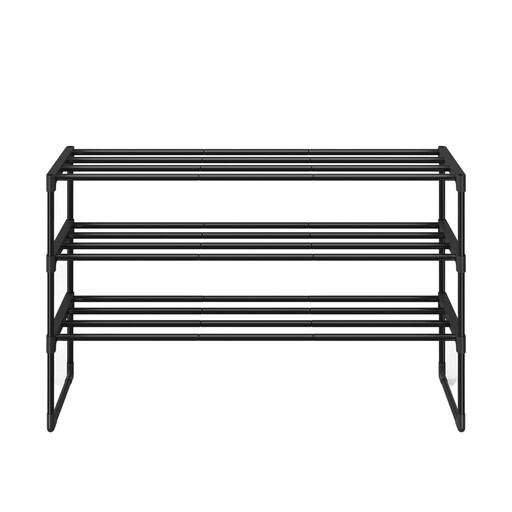
Why it suits this profile: This open model is suitable if you are starting out on a limited budget and want a tidy place to store shoes in the hallway, cupboard or living room. The dimensions are 30 x 92 x 55 cm.
The specifications state a total static load capacity of 30 kg and tool-free assembly. This makes the capacity and installation easier to assess than with a rack that only makes general advertising claims.
Metal tubes, plastic connectors, three levels and a stackable or reversible configuration.
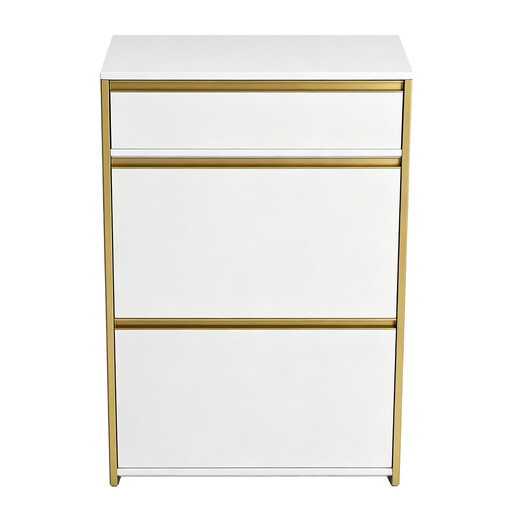
Why it suits this profile: This closed shoe cabinet is ideal for a tidy interior and, according to the product description, can also be used in a corridor, hallway or living room. The cabinet measures 60 x 24 x 104,5 cm.
The product description mentions adjustable and removable shelves. This lets you alter the compartment height instead of being restricted to a single layout.
Two doors, one drawer, four adjustable shelves and a top surface for small items or decorations.

Why it suits this profile: This tall shoe rack is designed for households with a larger collection. The stated dimensions are 65,5 x 24,5 x 138 cm, with a capacity of 30 pairs of shoes.
The stated capacity and external dimensions are clearly specified. Do bear the height in mind and check the connections regularly after assembly.
Metal construction, space for 30 pairs and a compact depth of 24,5 cm.
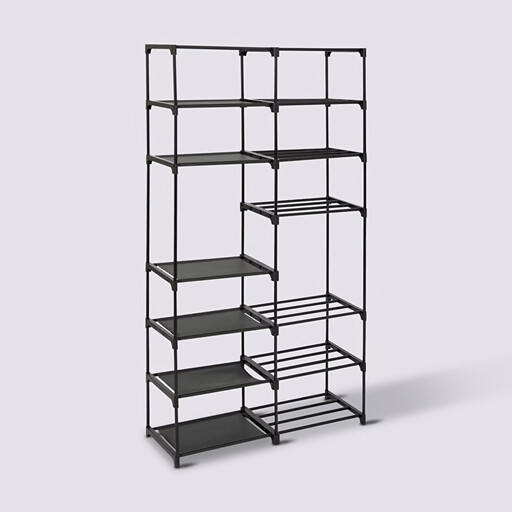
Why it suits this profile: With 16 shelves, this model is suitable if you want to organise a large number of shoes vertically and have sufficient height available.
The shelf layout is clearly specified in advance. Check that a height of 155 cm is suitable and allow for self-assembly.
16 shelves, a combination of polypropylene and steel, and a weight of 2,59 kg.
We have put together a complete, up-to-date list of products that fully meet these strict selection criteria and the applicable European safety regulations.
First assemble the shoe rack loosely, then only tighten all the connections once the frame is straight. Afterwards, check that the rack does not wobble. With a tall model, wall fixing is a sensible precaution if children or pets can reach it.
For maintenance, a soft, slightly damp cloth is usually sufficient for metal, plastic and painted surfaces. Dry the surface afterwards. Do not use abrasive products, and if you assemble the rack yourself, regularly check that the connections are still secure. According to the product information, the 5five models mentioned come with a minimum of two years’ statutory guarantee within the EU; statutory rights may vary by situation and country and may provide additional protection.
First measure the clear space between the wall and the walkway. A model around 24 to 30 cm deep is often suitable for a narrow hallway, but also check how far the toes of your shoes protrude and allow for doors and skirting boards.
This depends on the shelf width, the type of footwear and how you position your shoes. A rack advertised for 30 pairs may be less practical for wide trainers or boots. So do not just look at the stated capacity; also check the distance between the shelves.
Not necessarily. Stability depends on the construction, connections, surface, height and distribution of the weight. Compare the dimensions, weight and stated load capacity. With a tall or heavily loaded rack, wall fixing can provide additional peace of mind.
