
Vandaag of morgen in huis

Kwaliteit gegarandeerd

Welkomstaanbiedingen ontgrendelen: GRATIS bezorging | Tot 80% korting | Gratis 30 dagen JoyPlus-proefperiode
Download de app
Shoes left loose in the hallway, pairs that keep falling over and a wardrobe that fills up quickly: a shoe rack may seem simple, but the wrong size or design can soon become frustrating. An open rack won’t necessarily fit boots, and a shoe cabinet that promises space for lots of pairs may be awkward to use if the compartments are too low.
So look out for these three common pitfalls:
Capacity without clear measurements
A stated number of pairs doesn’t tell you much if you don’t know the width, depth and height of each compartment. Check whether it can accommodate high-top trainers, wide-fitting women’s shoes or ankle boots.
A narrow shoe rack that isn’t stable
A hallway shoe rack should not only take up little space, but also remain sturdy when you reach for your shoes every day. Tall models and shoe cabinets can topple if they aren’t positioned correctly or secured to the wall.
Materials that aren’t suited to where you’ll use the rack
Metal is often practical for an open hallway rack, while plastic shoe storage boxes are easy to wipe clean. Wood and engineered wood need more care around moisture, for example beside an external door.
Measure not just the width, but also the depth, height and clearance for doors. For a narrow shoe rack in a hallway, a depth of around 18 to 30 cm can be useful. Make sure the shoes won’t stick out and that there’s enough room to walk past.
A shoe rack for a wardrobe or bedroom needs to fit between shelves, doors and other furniture. A low model can sit beneath a coat rack, while a taller shoe rack makes better use of floor space.
Check the capacity per shelf or compartment rather than relying on the product title alone. An open rack is suitable for shoes you wear every day, while a shoe cabinet with doors keeps footwear more discreetly stored. For a larger household, models with multiple compartments or a stackable shoe rack may be more practical.
Look out for the following:
With transparent boxes, it’s a good idea to measure your shoes beforehand. A set may offer plenty of storage space, but only if the internal dimensions are suitable for your footwear.
A rack made with metal tubes, plastic connectors or engineered wood may be suitable for everyday use, but the maximum load varies between models. Check the weight capacity per shelf as well as the overall capacity. Put heavy boxes on the bottom and never use a tall model as a step stool.
An anti-tip device is important for a tall shoe cabinet or a five-tier shoe rack. Follow the assembly instructions and secure the unit to the wall if the manufacturer recommends it. This is particularly important in households with children.
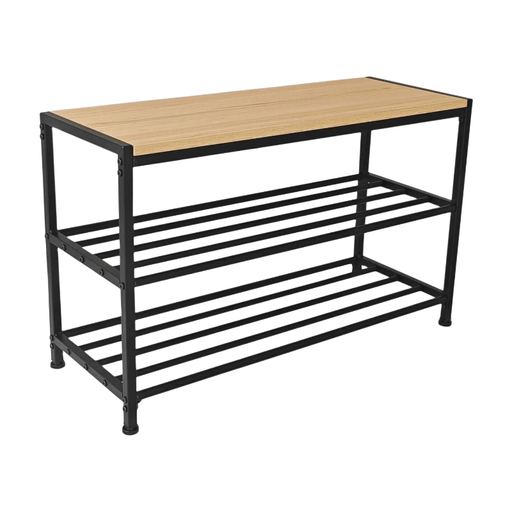
Why it suits this buyer: This compact model holds up to 6 pairs and has a wooden top shelf for small accessories. Its dimensions make it suitable for a hallway, bedroom or narrow passageway.
The capacity and external dimensions are clearly stated, so you can work out in advance whether the rack is big enough.
Powder-coated metal frame, wooden top shelf, open design and a width of 80 cm.
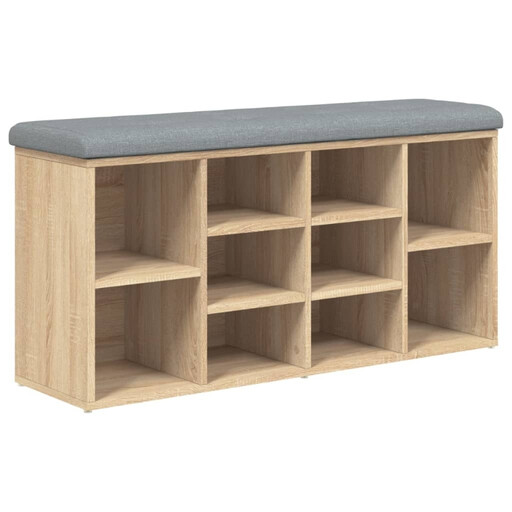
Why it suits this buyer: This shoe bench combines storage with a place to sit. It’s practical if you want to sit down to put your shoes on in the hallway.
The dimensions, material and stated weight capacity of 110 kg are provided. Be sure to check the floor surface and assembly requirements.
Seat cushion, 102 cm wide, 32 cm deep and suitable for a hallway or living room.
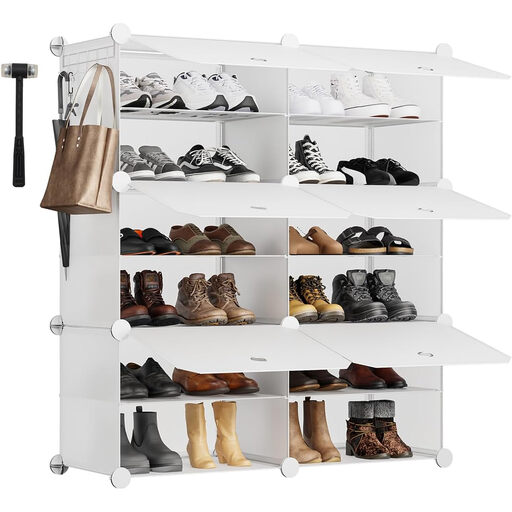
Why it suits this buyer: Families with lots of shoes get six enclosed compartments and a stated capacity of up to 24 pairs. The PP material can be wiped clean with a damp cloth.
The compartments make it easier to keep things organised than with a single open shelf. Secure the tall cabinet as instructed to reduce the risk of it tipping over.
6 compartments, holds up to 24 pairs according to the product information, ventilation and a stated load capacity of 5 kg per shelf.
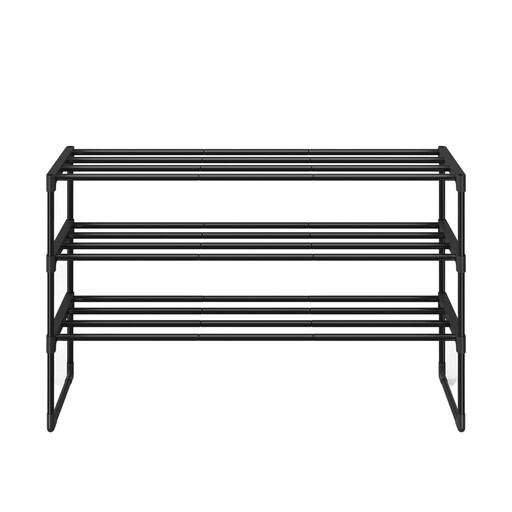
Why it suits this buyer: At 30 cm deep and 92 cm wide, this open rack fits in many hallways and wardrobes. According to the product information, it can be assembled upright, upside down or stacked.
The external dimensions and load capacity are clearly stated: 10 kg per tier and 30 kg in total, according to the product information. This helps you plan the layout in advance.
Metal tubes, tool-free assembly, an open design and a stated capacity of 16 to 20 pairs.
Another option for small spaces is shoe storage boxes. Transparent models let you see what’s inside and can be stacked. Check the internal dimensions and ventilation openings, and make sure there’s enough room to open the doors. For a wardrobe, separate boxes can sometimes be more flexible than a fixed shoe rack.
We’ve put together a complete, up-to-date list of products that meet these strict selection criteria and the applicable European safety regulations.
First measure the available wall space, allowing for doors and walkways. A narrow shoe rack around 18 to 30 cm deep may work well in a tight hallway. Also check that the shoes won’t stick out beyond the rack.
It depends on how you’ll use it. An open shoe rack gives you quick access and allows air to circulate around your shoes. A shoe cabinet keeps footwear more discreetly stored and helps protect it from dust. For enclosed compartments, check the height and depth carefully.
Place the rack on a level surface, put heavier shoes on the bottom and follow the assembly instructions. Use the anti-tip kit supplied, or secure the cabinet to the wall if recommended. Never use a shoe rack as a step stool.
