
Vandaag of morgen in huis

Kwaliteit gegarandeerd

Welkomstaanbiedingen ontgrendelen: GRATIS bezorging | Tot 80% korting | Gratis 30 dagen JoyPlus-proefperiode
Download de app
A shoe rack may seem simple, but you will quickly notice if you have made the wrong choice. The rack may be too deep for the hallway, offer less space than expected or wobble as soon as you place boots and heavier shoes on it. If you only consider the price or number of tiers, you may end up having to buy a replacement unnecessarily.
The three most common pitfalls are:
Measure the spot where the shoe rack will stand and leave a few centimetres of clearance around it. Pay particular attention to:
A shoe rack for the hallway therefore does not need to have the same dimensions as one for a wardrobe. For a bedroom or walk-in wardrobe, a stackable shoe rack may be more practical, as you can adjust the layout later.
Compare the stated capacity with your own shoe collection. A shoe rack for 18 pairs is practical for a smaller household, while a shoe rack for 30 pairs is a better fit when several family members keep their everyday shoes by the entrance.
Pay attention to the height between the tiers. Low shelves are suitable for trainers, loafers and flip-flops. For ankle boots or taller shoes, adjustable shelves or an open shoe organiser with extra room are more useful.
A shoe cabinet with flaps or doors keeps shoes out of sight and can provide additional space on top for keys, bags or decorations. An open metal shoe rack, on the other hand, makes it easier to see what you have and often takes up less visual space.
A metal shoe rack generally has an open frame and is easy to wipe clean. Check that the connections are firmly secured and whether the manufacturer states a maximum load. The JOYFURNOS model in the selection, for example, has a stated maximum static load of 10 kg per tier and 30 kg in total.
A bamboo shoe rack suits a natural or Scandinavian-style interior. With wooden materials, check whether the rack is intended for indoor use only and avoid prolonged contact with moisture. The 5five Sicela has three tiers, is foldable and states a maximum total load of 15 kg.
A chipboard shoe cabinet offers a closed look, but must be assembled carefully. With tall or narrow cabinets, an anti-tip device is important. Follow the assembly instructions and place the furniture on a level surface.
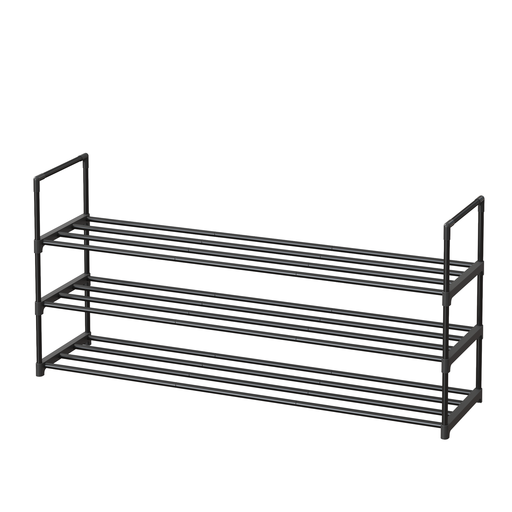
Why it suits this profile: This open rack offers three tiers and is designed for the hallway, cupboard or living room. According to the product information, it can be assembled without tools.
The dimensions of 30 x 117 x 55 cm and the stated load of 10 kg per tier make the required space and weight capacity easy to check.
Metal tubes, plastic connectors, three tiers and a stackable design according to the product description.

Why it suits this profile: This enclosed shoe cabinet is ideal if you want to keep shoes out of sight and need extra storage space in the hallway or wardrobe.
The product details mention six shelves, a drawer and flap doors. The capacity is specified as 18 pairs of shoes.
Dimensions of 60 x 23,3 x 119,5 cm, chipboard used for the construction and shelves, and an FSC statement in the product information.

Why it suits this profile: If you want to store lots of shoes together, this tall freestanding shoe rack offers capacity for 30 pairs according to the product listing.
The listing gives dimensions of 65,5 x 24,5 x 138 cm and recommends wall mounting where there is a risk of tipping. This makes positioning and safety an important part of the decision.
Metal construction, white design, capacity for 30 pairs according to the product details and an open layout.
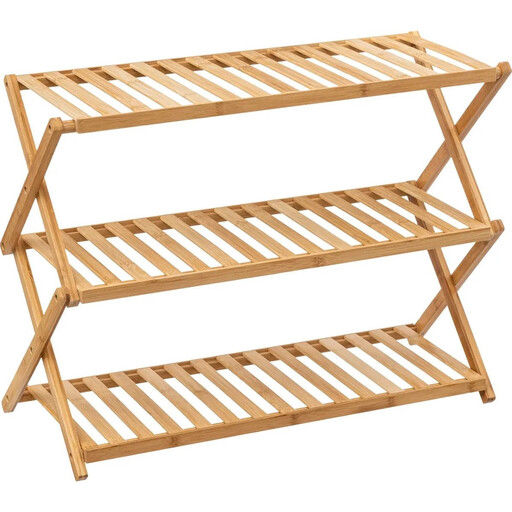
Why it suits this profile: This bamboo shoe rack is 70,5 cm wide, 28,5 cm deep and 52,5 cm high. The foldable design is useful if you sometimes want to change the layout.
The stated maximum load of 15 kg and the warning to place the rack on a level, stable surface provide clear limits for use.
Bamboo shelves and frame, three tiers, foldable design and an FSC statement in the product information.
We have put together a complete, up-to-date list of products that fully meet these strict selection criteria and the applicable European safety regulations.
After assembly, check that all connections are securely fastened. Do not use a tall rack as a seat or step and follow the manufacturer’s safety instructions. If you are unsure about the available dimensions, a few extra centimetres of clearance is wiser than a rack that presses against the door or wall.
That depends on the model. At a minimum, measure the total width, depth and height of the available space. Also leave room for doors, drawers and movement. A shoe rack approximately 24 cm deep may fit in a narrow hallway, while a 30 cm model requires more walking space.
A shoe cabinet is suitable if you want to keep shoes out of sight and can make use of the additional cupboard surface. An open shoe rack gives you a quicker overview, allows ventilation through its open structure and is usually easier to access. The right choice depends on your interior, available space and the type of shoes.
Its lifespan depends on the material, load, assembly and maintenance. Place the rack on a level surface, do not exceed the maximum load and check the connections regularly. Keep wooden or chipboard parts as dry as possible and wipe metal components with a soft, slightly damp cloth.
