
Vandaag of morgen in huis

Kwaliteit gegarandeerd

Welkomstaanbiedingen ontgrendelen: GRATIS bezorging | Tot 80% korting | Gratis 30 dagen JoyPlus-proefperiode
Download de app
A shoe rack seems like a straightforward purchase, until you find that the shelves are too low for boots, the construction wobbles or the unit does not fit in your hallway. If you are searching online for a shoe rack, shoe cabinet or compact shoe organiser, it is worth looking beyond the number of pairs stated on the product page.
Pay particular attention to these three common pitfalls:
Measure more than just the wall. Take skirting boards, doors and walking space into account too. For a hallway shoe rack, the depth is particularly important: a model that sticks out too far can make a corridor feel narrower.
A tall model makes good use of vertical space, while a low shoe rack for the bedroom can also serve as an extra shelf. If floor space is limited, look for a narrow shoe rack, a hanging shoe organiser or stackable shoe boxes.
Also consider the surface it will stand on. A shoe rack should be placed on a flat, stable floor. For self-assembly models, all connections should be tightened properly and checked regularly.
First, count how many pairs of shoes you genuinely want to store. Remember seasonal footwear, boots and sports shoes. A shoe rack for 30 pairs is practical for a larger household, but only if the available compartments are suitable for your shoe sizes and styles.
A shoe cabinet often creates a tidier look because the shoes are concealed. An open shoe rack, on the other hand, provides better ventilation and makes everyday use easier. For a wardrobe or dressing area, stackable shoe boxes may work better, as you can adjust the layout for each pair.
A metal shoe rack often has an open design and is relatively easy to clean with a soft, slightly damp cloth. Dry metal surfaces afterwards to help prevent water marks. Polypropylene and steel are practical choices for a lightweight, moveable construction.
With a model featuring wooden or wood-effect components, it is best to avoid prolonged contact with moisture. Also check whether assembly tools and fixings are included. The product information for some models states that they are not.
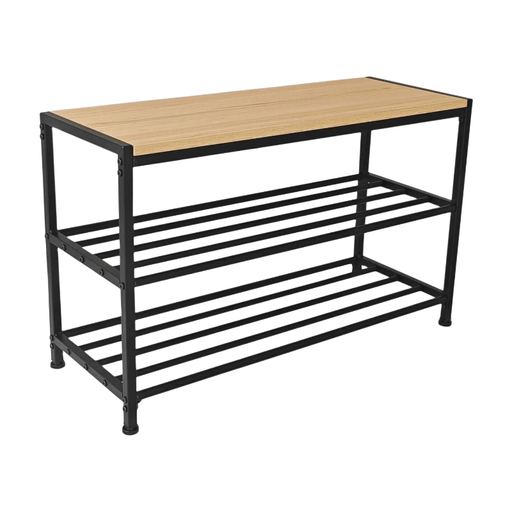
Why it suits this profile: This compact model holds 6 pairs of shoes and, measuring approximately 80 x 30 x 49,2 cm, fits in a hallway, corridor or bedroom where space is limited.
The capacity and dimensions are clearly stated, so you can assess in advance whether the model suits your household.
Black powder-coated metal frame, wooden top shelf and open design for easy visibility.
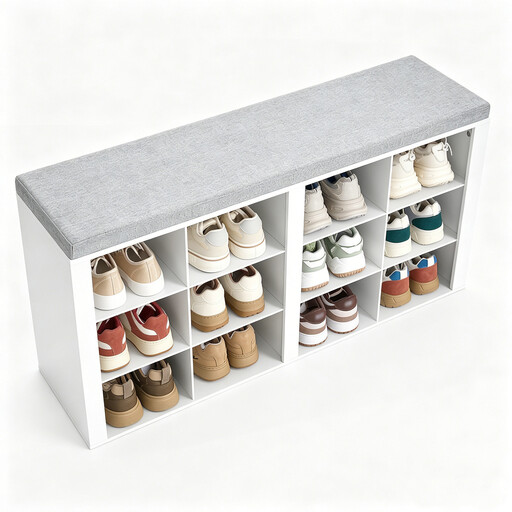
Why it suits this profile: If you prefer to put your shoes on while seated, this combines storage and seating for the hallway, bedroom or corridor.
The adjustable shelves accommodate different types of footwear. Only use the bench within the stated weight limit and never as a step.
12 compartments, adjustable shelves, removable cushion covers and a stated load capacity of 150 kg.

Why it suits this profile: This tall freestanding shoe rack is designed for households that want to organise lots of pairs in one place, with a stated capacity of 30 pairs.
The overall dimensions of 65,5 x 24,5 x 138 cm and the freestanding design make planning easy. The rack is not designed for sitting on.
Metal construction, modern white finish and plenty of vertical storage space. Self-assembly is required.

Why it suits this profile: If you do not want to sacrifice floor space, this organiser makes use of a door or wardrobe space with 24 pockets.
The pocket layout is clearly specified. However, check that the door has enough clearance and that your shoes fit in each pocket.
24 pockets, a foldable design and a combination of mesh fabric and metal frame.
We have put together a complete, up-to-date list of products that fully meet these strict selection criteria and the applicable European safety regulations.
Not every home has the same storage needs. Consider these solutions:
Measure the full width, depth and height of the available space. Also allow for doors, skirting boards and walking space. For a narrow shoe rack, depth is particularly important; for a tall rack, check that the ceiling and any wall shelves will not create an obstruction.
Place the rack on a flat surface, distribute heavier shoes evenly and follow the assembly instructions. With a tall model, or in a household with children, fixing it to the wall can provide extra stability. Never use the rack as a ladder or step.
Its lifespan depends on the material, load, moisture and assembly. Check the connections regularly, avoid overloading the rack and clean its surfaces according to the product instructions. The statutory guarantee for the models mentioned is at least two years under European consumer rules; additional rights may apply under Dutch law.
