
Vandaag of morgen in huis

Kwaliteit gegarandeerd

Welkomstaanbiedingen ontgrendelen: GRATIS bezorging | Tot 80% korting | Gratis 30 dagen JoyPlus-proefperiode
Download de app
Shoes scattered around the hallway, a wobbly rack or a cabinet that holds fewer pairs than promised: a shoe storage solution may seem simple, but the wrong choice can become a daily annoyance. When shopping online, three pitfalls are particularly common:
So the right choice isn’t just about looks or price. Focus on capacity, dimensions, material, assembly and the types of shoes you want to store.
First, measure the available width, depth and height. Allow for skirting boards, the front door opening outwards and enough room to walk past. Depth is particularly important for a slim shoe rack. A model around 18 to 25 cm deep may suit a narrow hallway, while a wider rack offers more room for larger shoe sizes.
Check the height between the shelves too. Low shelves are handy for slippers and low-top trainers, but may not fit boots or high-top sports shoes. If you’re choosing a shoe cabinet with doors, make sure they can open fully.
A label such as shoe rack for 20 pairs of shoes or shoe rack for 30 pairs of shoes is a guide, not a guarantee that every type of shoe will fit. Ask yourself:
A rack with open shelves is generally easy to access. A closed shoe storage unit keeps shoes more out of sight, but may be less flexible when it comes to unusual shoe shapes.
A metal shoe rack is often practical for everyday use and can have a light, open look. Check that the joints are sturdy and that the rack stands on a level surface. A plastic shoe rack or PP cabinet is easy to wipe clean and can be useful in a storage area or hallway where damp and dirt are common. Its stability will depend on the construction, connectors and whether it’s fixed to the wall.
Wood or engineered wood often works well in a living room or bedroom. Check the care instructions for these models and avoid prolonged contact with moisture. A closed model protects shoes from dust, while open shelves allow more air to circulate around them.
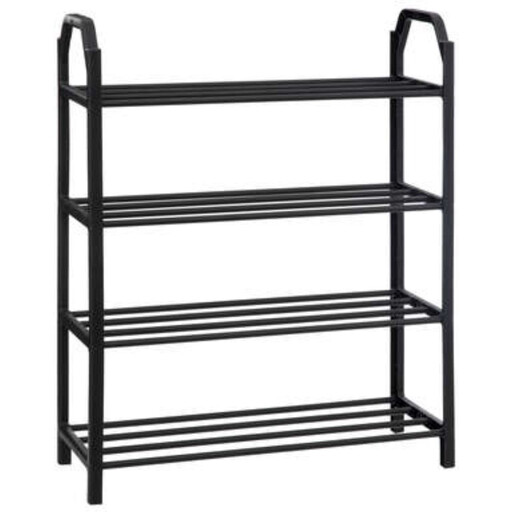
Why it suits this shopper: This compact model is designed to hold up to 8 pairs of shoes and measures 50 x 18,5 x 64 cm according to the product specifications. That makes it a good fit for a small hallway, bedroom or wardrobe.
The dimensions and capacity are clearly stated. Check that 8 pairs will be enough, and bear in mind the stated maximum load of 1 kg.
Steel shelves, a polypropylene frame and a relatively shallow depth.
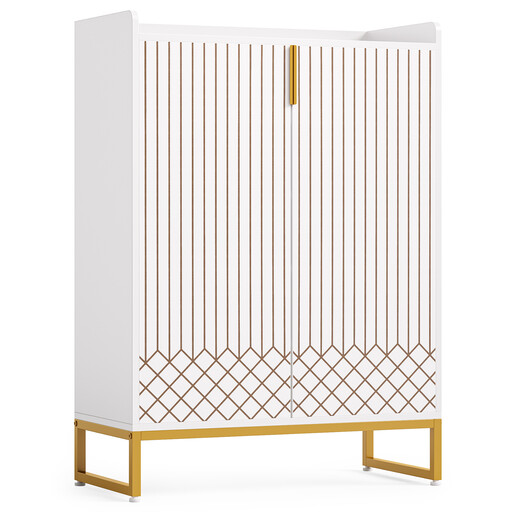
Why it suits this shopper: If you want to keep shoes out of sight, this closed cabinet has five tiers, an open bottom shelf and, according to the product description, space for around 22 to 25 pairs.
The doors keep clutter and dust out of sight, while the stated capacity gives you a clear point of comparison. Measure the available space beforehand and check the assembly instructions.
Enclosed storage, wooden construction, metal legs and a surface for displaying ornaments.
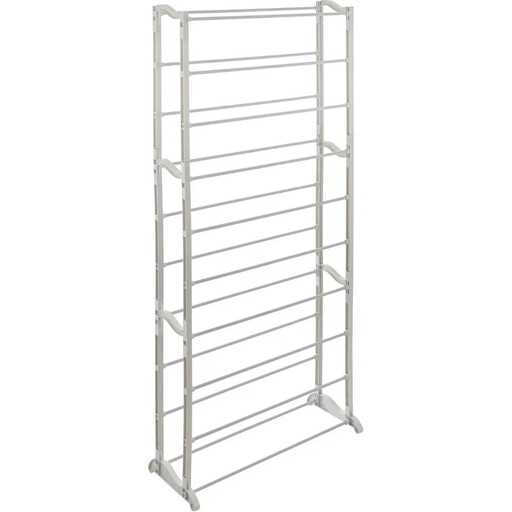
Why it suits this shopper: According to the product specifications, this freestanding rack holds up to 30 pairs of shoes and measures 65,5 x 24,5 x 138 cm. It’s a good fit for families or anyone with a large collection.
Its high capacity is paired with specific dimensions. At 138 cm tall, it needs to stand on a level surface; wall fixing is recommended if there’s a risk of it tipping over.
Metal construction, white finish, vertical design and space for up to 30 pairs according to the product information.
For almost any shoe rack, check whether self-assembly is required. Sort the parts beforehand, and don’t fully tighten the joints until the frame is straight. Place the rack on a level floor and check the joints again after a few days.
Don’t use a tall shoe cabinet or stackable shoe rack as a step stool. Follow the instructions for an anti-tip kit and secure the unit to the wall if recommended in the product information. With a cabinet that has doors, correct alignment is important to prevent them from sticking or hanging unevenly.
We’ve put together a complete, up-to-date list of products that meet these strict selection criteria and current European safety requirements.
Measure the space in three directions: width, depth and height. Leave extra room for skirting boards, doors and opening a shoe cabinet. Compare these measurements with the product specifications, not just the photo.
It depends on where you’ll use it. Metal works well for an open rack in the hallway and is usually easy to wipe clean. Plastic or PP is a practical choice if you’re looking for a lightweight, moisture-resistant shoe storage solution that’s easy to clean. Always check the joints and maximum load.
Its lifespan depends on the material, load, assembly and conditions of use. Make sure the rack stands securely, don’t exceed the stated load and check the screws or connectors regularly. Clean metal, plastic and wooden parts according to the manufacturer’s care instructions.
