
Vandaag of morgen in huis

Kwaliteit gegarandeerd

Welkomstaanbiedingen ontgrendelen: GRATIS bezorging | Tot 80% korting | Gratis 30 dagen JoyPlus-proefperiode
Download de app
Loose shoes in the hallway, pairs disappearing behind a cupboard, and a rack that wobbles after just a few weeks: a shoe rack might seem simple, but the wrong choice can quickly take up more space than you expect. Households with several family members, limited hallway space, or a larger shoe collection would do well to check a few specifications beforehand.
Don’t just look at the number of pairs stated. The available width, the height of your shoes, and the stability all determine whether a shoe organiser actually works well in practice.
A narrow shoe rack might seem handy for a small hallway, but the depth and height are just as important. Measure the space including skirting boards, doors, and walking area. Also check that a tall shoe cabinet won’t hit a door, coat rack, or light switch.
A claim like “holds 30 pairs” doesn’t always tell you how big those shoes are. Trainers, children’s shoes, and low shoes take up less room than boots or sturdy walking shoes. A rack with fixed compartments can therefore be less flexible than you might expect.
Many models are designed for self-assembly. A lightweight shoe organiser can be practical, but it must stand on a level surface and should not be used as a seat. With a tall unit, it’s wise to check whether wall fixing is possible or recommended. In a household with children, anti-tip protection deserves extra attention.
First, measure the available space, then decide how many pairs need to be stored on a daily basis. For a small entrance, a narrow shoe rack or a hanging shoe organiser could be suitable. If you’re mainly looking for a clear overview, transparent shoe boxes are a good choice. They are stackable and let you identify your shoes at a glance.
Pay attention to these measurements:
A metal frame can give an open, airy look. Polypropylene is lightweight and is often used for shelves or plastic shoe boxes. With a shoe cabinet made of chipboard, the wall, back panel, and fixing points are also relevant.
Always check the stated maximum static load capacity. This is not the same as a recommendation to sit on the rack. A shoe bench with storage must be explicitly designed as a seat. An ordinary shoe rack is not automatically suitable for that.
Open shelves generally give shoes more exposure to air and make daily use easy. Closed shoe boxes protect against dust and show the contents through a transparent door. Ventilation openings are a practical feature for air circulation, but they don’t replace maintenance or drying wet footwear.
A front door is handy when boxes are stacked. With a tall shoe cabinet, adjustable shelves are useful for different types of shoes. Also check that the door has enough space to open fully.
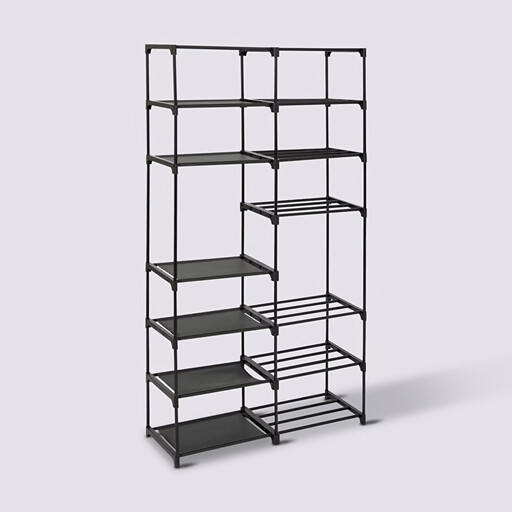
Why this fits the profile: This open model offers 16 shelves and makes good use of height. With a width of 87 cm and a depth of 30 cm, it’s suitable for a hallway or cloakroom where vertical storage is desired.
The dimensions and number of shelves are clearly stated. This means you can check in advance whether the tall unit will fit in your chosen space.
Polypropylene and steel; 16 shelves; weight of 2.59 kg; suitable for indoor use.
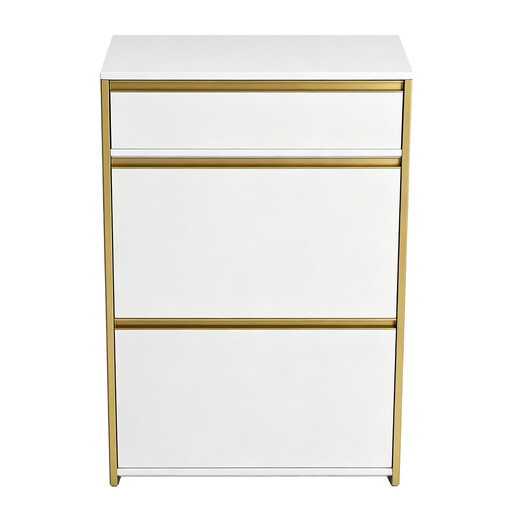
Why this fits the profile: This closed shoe cabinet suits interiors where you want shoes kept out of sight. The adjustable shelves, drawer, and top surface also make the unit useful for small items.
The depth of 24 cm can be checked in advance for a narrow hallway. The adjustable and removable shelves reduce the problem of fixed compartments with insufficient height.
Two hinged doors; four adjustable shelves; space for up to 12 pairs according to the product description; anti-tip device.
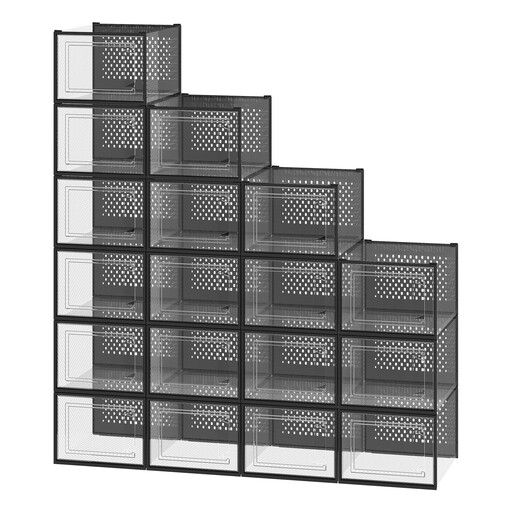
Why this fits the profile: For a large collection, individual boxes give each pair a fixed place. The transparent doors make selection easy, and the boxes can be placed vertically or side by side.
The internal dimensions of 31.2 x 22.5 x 13.5 cm are stated. Measure your shoes beforehand, especially for larger sizes or taller styles, so the boxes don’t go unused.
18 boxes; transparent front doors; stackable design; ventilation openings; PP plastic and PS front frame.
An open shoe rack is practical for shoes you wear every day. A shoe cabinet looks tidier and offers better protection against dust, but it needs space for doors or flaps. Transparent shoe boxes are especially suitable when you own many pairs or want to organise shoes by season.
For a small home, a hanging shoe organiser on a door can save floor space. Do check the maximum load and the available door width. If you want a place to sit while putting on your shoes, consider a shoe bench with storage. Then explicitly check the load capacity of the seat and the assembly instructions.
A stackable shoe rack or stackable boxes offer flexibility, but a tall stack must be stable. Place heavy shoes at the bottom and keep ventilation openings clear.
We’ve put together a full, up-to-date list of products that fully meet these strict selection criteria and comply with current European safety regulations.
In addition to the product’s dimensions, allow extra space for doors, drawers, and walking. For an open rack, depth is especially important. Also measure the skirting board, as it can prevent the unit from sitting flush against the wall.
That depends on use, construction, and load. Metal often provides a sturdy frame, while plastic is lightweight and easy to clean. Look at the joints, shelves, maximum load, and assembly instructions rather than just the material type.
Let wet shoes dry first before storing them. Place similar pairs together, note the type on the box if you like, and check that the internal dimensions fit. Keep ventilation openings clear and clean plastic surfaces with a soft, slightly damp cloth.
