
Vandaag of morgen in huis

Kwaliteit gegarandeerd

Welkomstaanbiedingen ontgrendelen: GRATIS bezorging | Tot 80% korting | Gratis 30 dagen JoyPlus-proefperiode
Download de app
A shoe rack seems like a simple purchase, until you find that the cabinet doesn’t fit in the hallway, boots won’t fit on the shelves or the unit wobbles when it’s full. Households short on storage space and families with lots of shoes often run into the same problems.
So don’t just check how many shoes the product title says it can hold. Also check the overall dimensions, construction, assembly and how you plan to use it. Read on to find out which common pitfalls are easy to overlook and which models suit different living spaces.
A shoe rack for 18 or 24 pairs sounds spacious, but its actual capacity may be lower when you’re storing wide trainers, ankle boots or shoes with thick soles. Open racks often make efficient use of space, while flaps and doors take up extra room inside.
Check whether the retailer gives a specific capacity, and make sure the shelf height suits your collection. A shoe rack for 12 pairs may be enough for everyday use, but a family may need a shoe rack for 24 pairs or a model for 30 pairs.
A slim shoe rack is handy in a small hallway, but a tall, lightweight design may be more prone to knocks or uneven loading. Check the proportions of the height and depth, the quality of the joints and whether it can be fixed to the wall.
Manufacturers often recommend an anti-tip device for tall shoe cabinets. This is especially important in homes with children or pets. Put heavier shoes on the bottom shelves and follow the assembly instructions. A freestanding shoe rack should stand on a flat, stable surface.
A wooden shoe cabinet or a cabinet made from chipboard creates a neat, enclosed look, but wet shoes and mud need to be cleaned up quickly. A metal shoe rack usually has an open design, so shoes are easy to reach from all sides. On the other hand, dust may be more visible and the shoes are less concealed.
Also check whether a product is suitable for indoor use and how it should be cleaned. Metal can usually be wiped with a soft, slightly damp cloth. With panel materials, it’s best to wipe away moisture straight away.
Measure not only the available alcove, but also the space in front of the shoe rack. A cabinet with doors or flaps needs extra room to open. A depth of around 20 to 30 cm is often practical in a hallway, but the right size depends on the walkway and your shoe sizes.
Always compare the dimensions with the product details. Here are some examples from the range:
As well as checking how many pairs of shoes it holds, look at the maximum load per shelf. This matters if you want to store heavy walking boots, wellington boots or storage boxes. Some models give these figures explicitly; for others, the recommended capacity is the main information available.
A shoe rack for 18 pairs is suitable for a medium-sized collection, while a shoe rack for 24 or 30 pairs offers more space for families. Bear in mind the shape of your shoes: wider styles take up more room than low-cut slip-ons.
An open rack makes it easy to see what you have and allows air to circulate around your footwear. A shoe cabinet with doors or flaps keeps shoes more out of sight and can create a tidier look in the hallway. A shoe bench with storage combines a place to sit with extra storage, but be sure to check the maximum weight the seat can support.
Pay attention to assembly and stability when choosing a unit made from panel materials. Product information for several cabinets states that they should be placed on a flat surface and that loose screws should be checked regularly. An FSC label on certain 5five products tells you about the source of the wood used; it doesn’t guarantee that every component is made from solid wood.
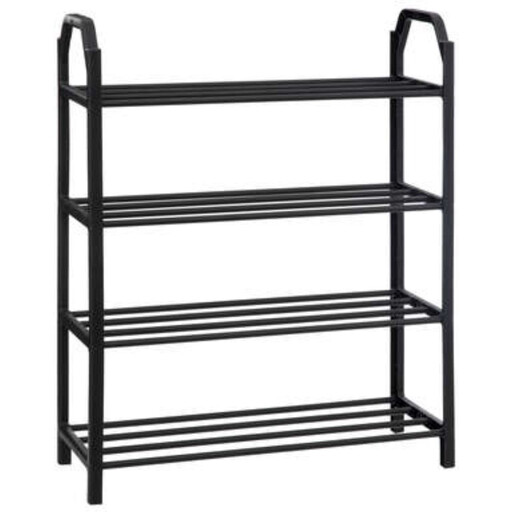
Why it suits this profile: This compact model is ideal for a small hallway, bedroom or wardrobe where you only need to keep a few pairs close to hand.
The dimensions and capacity are clearly stated: 50 x 18.5 x 64 cm, with space for 8 pairs. This helps you avoid buying a unit that’s too big for a narrow walkway.
Steel shelves, a polypropylene frame and a relatively shallow depth of 18.5 cm.
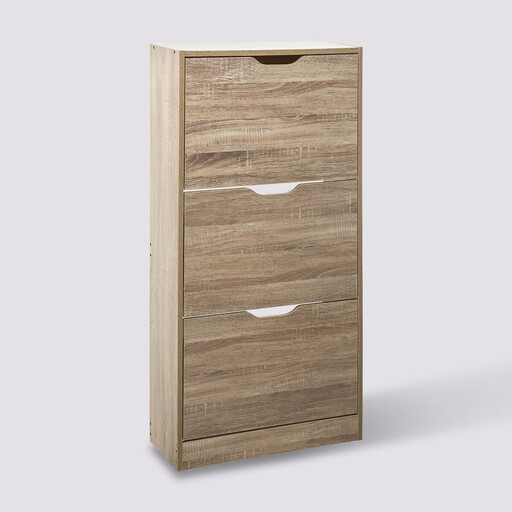
Why it suits this profile: The enclosed cabinet is a good fit for interiors where you’d rather keep shoes out of sight. According to the product information, it holds 18 pairs of shoes.
The dimensions, number of shelves and self-assembly requirements are all listed. This helps you work out in advance whether you have enough height and what assembly will involve.
Chipboard construction, six shelves, flap doors and an FSC label in the product information.
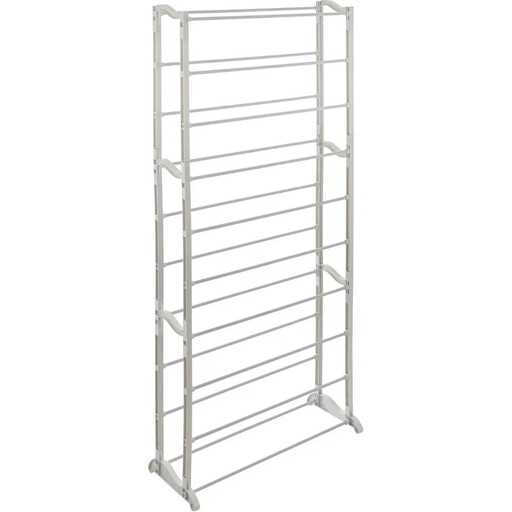
Why it suits this profile: This tall model is designed for households with a larger shoe collection, making good use of vertical space in a hallway, walk-in wardrobe or storage room.
The capacity of 30 pairs and the overall dimensions are clearly stated. As the rack is 138 cm tall, it’s still important to check its stability and position it carefully.
Metal construction, a white finish, a freestanding design and space for up to 30 pairs according to the product description.
We’ve put together a complete, up-to-date list of products that meet these strict selection criteria and current European safety regulations.
Place the cabinet on a flat surface, spread heavier shoes across the bottom shelves and use the supplied anti-tip kit if one is included. Extra wall fixings may be a good idea for a tall or slim cabinet. Always follow the manufacturer’s safety instructions.
First measure the available width and depth, as well as the clearance for the walkway. A slim shoe rack around 18 to 25 cm deep can be practical, provided its capacity suits your needs. Also check that the doors or flaps can open fully without blocking the walkway.
An open metal shoe rack is quick to wipe down and keeps shoes accessible from all sides. A shoe cabinet offers more protection from visible dust, but has extra surfaces, flaps and corners. Whichever option you choose, it’s best to remove mud and moisture straight away and check the assembly joints from time to time.
