
Vandaag of morgen in huis

Kwaliteit gegarandeerd

Welkomstaanbiedingen ontgrendelen: GRATIS bezorging | Tot 80% korting | Gratis 30 dagen JoyPlus-proefperiode
Download de app
A shoe rack may seem like a straightforward purchase, until you find that it does not fit in the hall, wobbles during everyday use or stores fewer shoes than expected. In Dutch entrances, flats and student rooms in particular, every centimetre counts. The right shoe rack for the hall should therefore suit the available space, the number of pairs of shoes you own and the way you use your entrance.
A product title promising space for a large number of shoes may sound appealing, but practical capacity depends on the type of footwear. Low-top trainers take up less room than ankle boots or high-top sports shoes. So do not just check the stated number of pairs, but also:
For example, a shoe rack for 30 pairs may be suitable for a family, but its height may take up more wall space than a compact model.
Do not just measure the spot where the rack will stand. Also take skirting boards, doors, radiators and the walking route into account. A narrow shoe rack is useful in a cramped hallway, but a tall model may be less suitable beneath a low coat rack or next to an outward-opening door.
Pay attention to the difference between width, depth and height. Product information does not always list these measurements in the same order. Always check the specifications table before ordering.
A freestanding shoe rack is regularly opened, moved or loaded with shoes that are not evenly distributed. This can cause a lightweight frame to shift. Look at:
For a tall shoe rack or hall shoe cabinet, an anti-tip feature is a useful safety measure. Always follow the manufacturer's assembly instructions and secure the furniture to the wall when recommended.
For a small hall or bedroom, a model around 30 cm deep may be sufficient. A compact shoe rack with bench combines storage space with somewhere to sit while putting your shoes on, but it does require enough width and a stable construction.
For larger households, several tiers are more practical than one wide shelf. A vertical shoe organiser makes use of the room's height. Check whether the top shelves will still be easy to reach.
A metal shoe rack generally has an open frame and is easy to wipe clean. A powder coating can protect the metal surface against normal use, but prolonged exposure to moisture is not advisable for metal either. Wooden or wood-effect shelves provide extra space for bags and accessories, but should be protected from excessive moisture.
Plastic shelves are lightweight and easy to clean. With self-assembly, it is important to secure all the connections properly. Check again after some time to see whether any joints need tightening.
A stated load capacity is a static maximum load under the conditions described in the product information. Distribute shoes evenly and do not place heavy boxes on a shelf that is not designed for them. A bench requires extra attention: check the maximum weight for the bench and the shoe shelves separately.
When buying, also check the information about the legal guarantee. Products 3 and 4, for example, state a minimum legal guarantee of two years according to the supplied product information. Your specific rights may depend on the applicable national legislation.
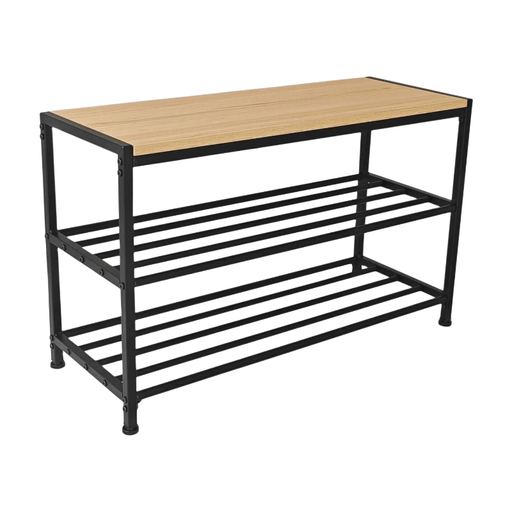
Why it suits this profile: This compact model is suitable for a hall, hallway or bedroom, with space for around six pairs of shoes and an additional top shelf.
The dimensions of approximately 80 x 30 x 49.2 cm make it easy to measure the space beforehand. The open design means you are not relying solely on an attractive closed appearance.
Black powder-coated metal, a wood-effect top shelf, freestanding positioning and a stated capacity of six pairs.
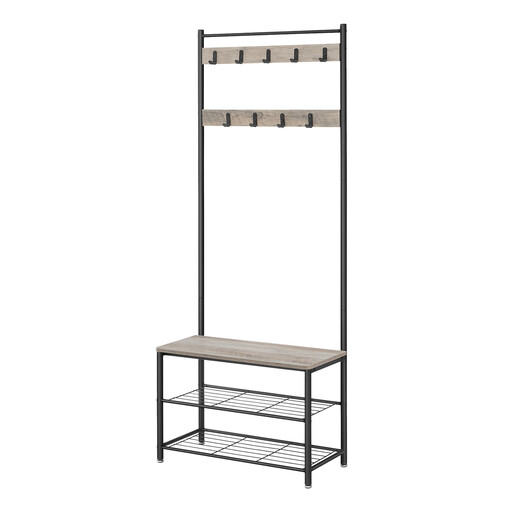
Why it suits this profile: This hall organiser combines a coat rack, shoe organiser and bench for households wanting to keep their entire entrance neat and organised.
The product information lists adjustable feet and an anti-tip kit. Because it is 177 cm high, you should check the available wall space and mounting requirements beforehand.
Nine metal hooks, a bench with a stated load capacity of 136 kg and mesh shelves with a stated capacity of 10 kg per shelf.

Why it suits this profile: With a stated capacity of 30 pairs, this model is aimed at families or households with a larger shoe collection.
The capacity and measurements are clearly stated. Place the rack on a level surface and consider wall mounting if there is a risk of it tipping over.
Dimensions of 65,5 x 24,5 x 138 cm, a metal construction and a vertical design for storing plenty of shoes with relatively little depth.
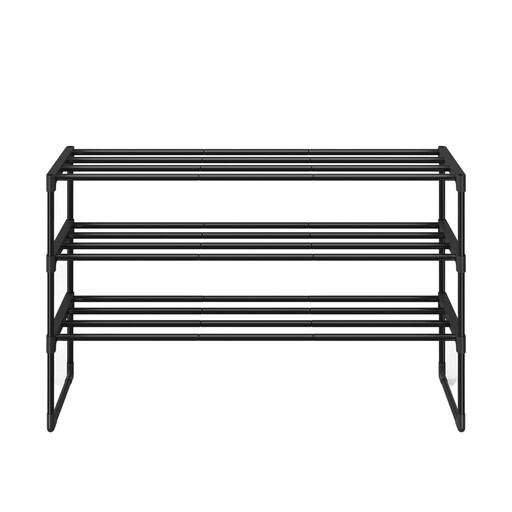
Why it suits this profile: Measuring 30 x 92 x 55 cm, this model is designed for a narrow hall, cupboard or living room and can be stacked or positioned upside down according to the product description.
The flexible configuration means you are not tied to a single layout. However, check the total load capacity of 30 kg and the stated capacity of 10 kg per tier.
Metal tubes, plastic connectors, tool-free assembly according to the product description and a stackable design.
We have put together a complete, up-to-date list of products that fully meet these strict selection criteria and the applicable European safety regulations.
Use this quick checklist before adding a model to your basket:
An open rack is often practical for shoes you wear every day. A closed shoe cabinet for the entrance keeps the area looking tidier, but requires more attention to ventilation and the available internal dimensions. For a bedroom, a lightweight freestanding shoe rack may be more convenient because it can easily be moved.
Measure the total width, depth and height of the space. Also leave enough room to open doors and take shoes out of the rack. In a narrow hallway, a model around 24 to 30 cm deep may be suitable, while a shoe rack with bench requires more floor width.
Place the rack on a level surface, distribute the weight evenly and tighten all the connections securely. For tall models or an entrance used by children and pets, wall mounting is advisable when the manufacturer supplies an anti-tip kit or mounting points.
Its lifespan depends on the material, assembly, load and maintenance. A powder-coated metal frame is suitable for normal indoor use, but clean off moisture and dirt promptly. Use a soft, slightly damp cloth and dry metal or wood-effect parts afterwards. Check periodically that the screws and joints are still secure.
