
Vandaag of morgen in huis

Kwaliteit gegarandeerd

Welkomstaanbiedingen ontgrendelen: GRATIS bezorging | Tot 80% korting | Gratis 30 dagen JoyPlus-proefperiode
Download de app
A shoe rack seems like a straightforward purchase, until you discover that it does not fit in the hallway, offers too little space or becomes unstable as soon as you store several pairs on it. Particularly with cheaper models, product photos do not always provide enough information to make the right choice. Before buying, check the dimensions, capacity and construction.
A shoe rack with lots of tiers may seem spacious, but its total capacity depends on the width and depth of each shelf. High-top shoes, ankle boots and larger sizes take up more room than low-top trainers. Also check whether the stated capacity refers to pairs of shoes or individual shoes.
A narrow shoe rack is useful in a flat or small hallway, but a difference of just a few centimetres can already cause problems with doors, skirting boards or walkways. Do not measure only the width, but also the depth and height. With a tall model, take sloping ceilings, wall cabinets and the possibility of positioning the rack safely into account.
A lightweight metal shoe rack is easy to move, but may be less stable when it is tall and narrow. With a shoe cabinet or tall shoe rack, it is important to check whether wall mounting is recommended or included. Place every model on a level surface and tighten all connections securely after assembly.
First, consider where the shoe rack will be placed:
Also check the distance between the shelves. A low shelf is suitable for trainers and flip-flops, while boots and taller shoes need more clearance. Adjustable shelves offer greater flexibility here.
A metal shoe rack often has an open design and is relatively lightweight. This can be practical in a rented property or if you regularly change the layout. Pay attention to the thickness of the tubes, the quality of the connectors and the stability of the feet.
A plastic shoe rack is generally easy to clean and suitable for use in a wardrobe or under the bed. However, check the maximum load. According to the product information, the 5Five Plastic Shoe Rack Spacy has a capacity of up to three pairs of shoes. This makes this type particularly suitable as an individual shoe riser or compact organiser, rather than a complete rack for a large family.
A chipboard shoe cabinet usually provides enclosed storage and can also serve as a piece of furniture. Pay attention to the assembly instructions, whether the shelves are adjustable and whether an anti-tip device is included. A shoe bench combines storage space with a seat, but requires more floor space than a simple open rack.
Before ordering, check:
For metal, use a soft, slightly damp cloth and dry the surface afterwards. Plastic can usually be cleaned with a mild cloth. Do not place a plastic model near an open flame or strong heat source. Never use a shoe rack as a step or seat unless the product has been expressly designed for that purpose.
The following models have been selected based on verifiable details such as size, material, capacity and function.
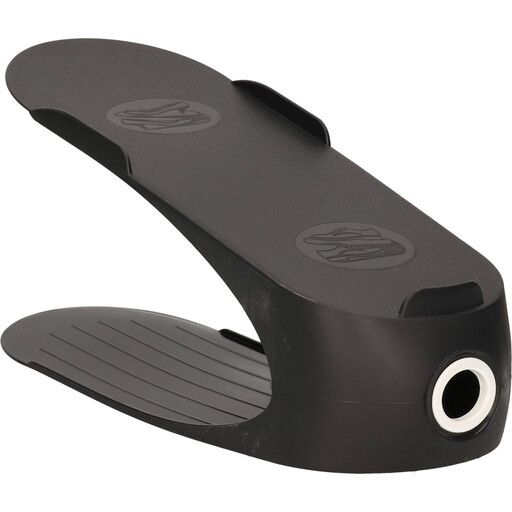
Why it suits this profile: This compact plastic model is designed to hold up to three pairs of shoes and fits inside a wardrobe, under a bed or against a wall.
The limited capacity is clearly specified, so you will not accidentally buy this model as a large shoe rack.
Polypropylene, 29.5 x 11.1 x 14 cm and no professional installation required.
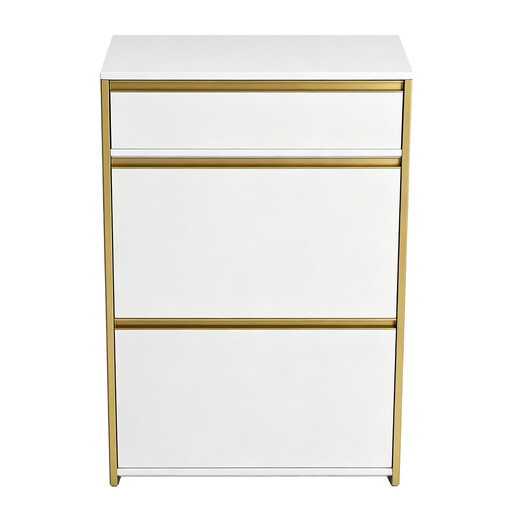
Why it suits this profile: This enclosed shoe cabinet is ideal for anyone who wants to keep shoes out of sight and needs extra storage space in the hallway or living room.
The dimensions of 60 x 24 x 104.5 cm and the stated capacity of up to 12 pairs make it clear how much space you will need in advance.
Adjustable and removable shelves, two doors, a drawer and an anti-tip device according to the product description.
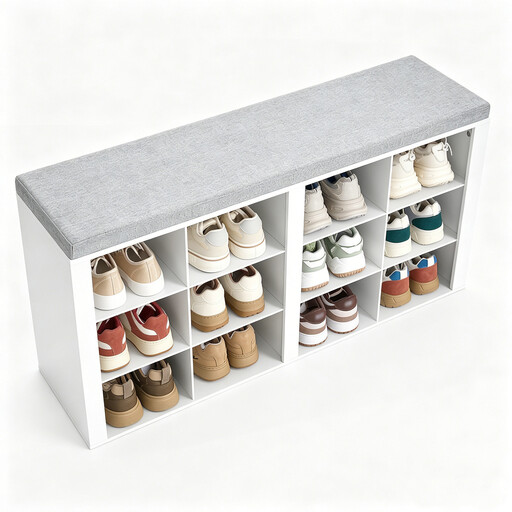
Why it suits this profile: This shoe rack with bench is designed for households that want to store shoes while also being able to sit down to put them on.
The product description states a load capacity of 150 kg and adjustable shelves for different types of shoes. Always check the assembly and fixings.
Dimensions of 30.5 x 104.5 x 49.5 cm, twelve compartments and removable upholstery according to the product information.
We have put together a complete, up-to-date list of products that fully meet these strict selection criteria and the applicable European safety regulations.
Measure the clear space between the wall, door and furniture. For a narrow hallway, a model around 25 to 30 cm deep is often more practical than a wide shoe cabinet. Also check that coats, doors and skirting boards will not come into contact with the rack.
Its lifespan depends on the material, assembly, load and usage. Retighten loose connections, distribute shoes evenly across the shelves and do not exceed the stated capacity. A metal shoe rack can last a long time with normal indoor use, while plastic models are mainly suitable for lighter storage.
A shoe bench can be useful if you need a permanent seat for putting on your shoes. Bear in mind that a shoe bench takes up more floor space than a tall, narrow shoe rack. Therefore, measure both the width and depth of the available space beforehand.
