
Vandaag of morgen in huis

Kwaliteit gegarandeerd

Welkomstaanbiedingen ontgrendelen: GRATIS bezorging | Tot 80% korting | Gratis 30 dagen JoyPlus-proefperiode
Download de app
A shoe rack may seem like a simple piece of furniture, but the wrong choice can quickly leave you with a cluttered hallway, wobbly shelves or shoes that don’t fit. In Dutch homes, where entrances are often narrow, dimensions, stability and ventilation are especially important.
Look out for these common pitfalls before you order:
Measure the available space in three directions: width, depth and height. A shoe rack in the hallway shouldn’t block the way through. If you’re choosing a shoe cabinet with doors, allow extra room in front for them to open.
For a narrow entrance, a model around 18 to 25 cm deep could be a good option. An open shoe rack with a depth of 30 cm will usually offer more room for larger shoes, but it also takes up more of your walkway. Check the skirting board, door frames and plug sockets too.
Look beyond phrases such as “large storage capacity”. Check the stated number of pairs and compare it with your own collection. A shoe organiser for 12 to 30 pairs can suit a range of households:
Pay attention to the clearance between shelves too. A multi-tier shoe rack isn’t automatically suitable for boots or high-top trainers. Adjustable shelves offer more flexibility.
A metal shoe rack often has an open design that lets air circulate around your shoes. Steel or metal tubing can be suitable for everyday use, but always check the stated load capacity for each shelf.
For wood or engineered wood, the finish matters. Product information may mention moisture-resistant or easy-to-clean surfaces. Treat this as a product specification, not a guarantee against all moisture problems. Clean wet shoes and mud as soon as possible.
For tall furniture, place it on a level surface and use the supplied or a suitable wall fixing if recommended. Children shouldn’t climb on a shoe rack or hang from open shelves.
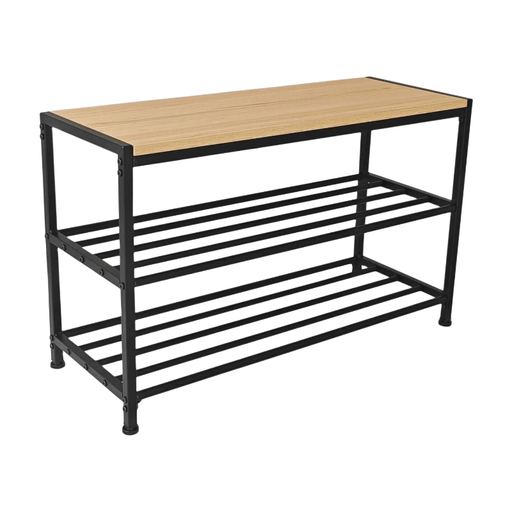
Why it suits this shopper: This compact shoe rack is ideal if you want to organise a small collection of everyday shoes in your hallway, bedroom or corridor.
The capacity is clearly stated as 6 pairs, and the dimensions are 80 x 30 x 49.5 cm. This makes it easier to check in advance whether the rack will fit in your available space.
Black powder-coated metal frame, wooden top shelf and open design. The top shelf gives you space for keys or small accessories.
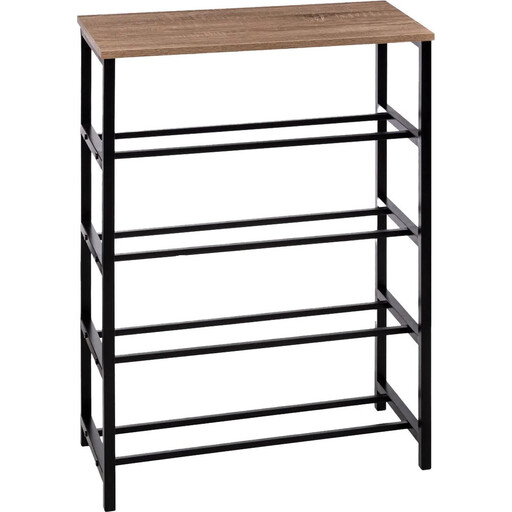
Why it suits this shopper: A good choice if you want to combine shoe storage with a furniture-style look in your entrance or living room.
The product information gives a capacity of 12 pairs and a depth of 30 cm. Because of its tall, slim design, the unit must be secured to the wall with anti-tip fittings, as instructed.
Steel frame, two storage shelves and an engineered wood top. The dimensions are 63 x 30 x 90 cm; FSC certification is mentioned in the product information.
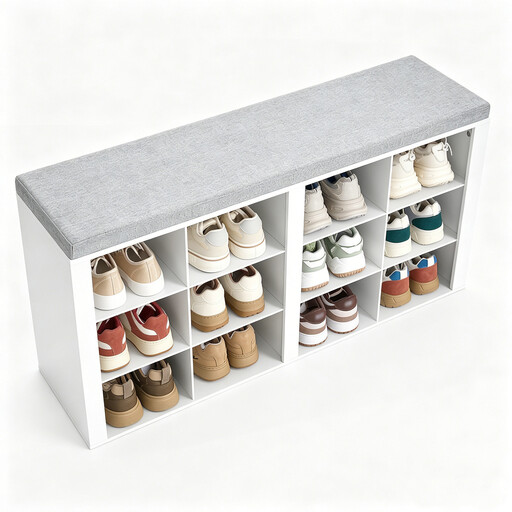
Why it suits this shopper: This shoe rack with a bench combines shoe storage with a place to sit while you put on your shoes in the hallway.
The shelves are height-adjustable, according to the product information. This gives you more room for different types of shoes than fixed compartments would.
Measures 104.5 x 30.5 x 49.5 cm, with 12 compartments and a removable seat cushion cover. The stated load capacity is 150 kg, according to the product information.
We’ve put together a full, up-to-date list of products that meet these strict selection criteria and the applicable European safety requirements.
It depends on the number of shelves, the width of each compartment and the type of shoes. For a household, a model for 12 to 18 pairs is often a practical starting point. Families with lots of shoes could consider a shoe cabinet for 24 to 30 pairs. Measure wide trainers and boots separately before you order.
Place the rack on a level surface, spread heavier shoes across the lower shelves and check all the connections after assembly. Wall anchoring is a sensible precaution for a tall or slim model, and the product information may specifically require it. Only use fixings that are suitable for your type of wall.
An open metal shoe rack lets air circulate around your shoes and is easy to clean. A closed shoe cabinet keeps shoes out of sight and limits dust settling on them. Neither option replaces regular cleaning or giving wet shoes time to dry.
