
Vandaag of morgen in huis

Kwaliteit gegarandeerd

Welkomstaanbiedingen ontgrendelen: GRATIS bezorging | Tot 80% korting | Gratis 30 dagen JoyPlus-proefperiode
Download de app
A shoe rack seems like a straightforward purchase, until the hallway is full of pairs that do not fit, the rack wobbles or shoes disappear behind one another. For households, students and families, the combination of capacity, dimensions and stability is particularly important. A narrow shoe rack can save space, but may not have enough room for boots. A large shoe cabinet looks tidy, but takes up more floor space.
Also be wary of marketing terms such as “space-saving” or “extra sturdy”. Descriptions like these mean little without specific dimensions, material information or a stated load capacity. Use the following checks to avoid a disappointing purchase and choose shoe storage that suits your home and the way you use it.
A shoe rack for 30 pairs of shoes sounds spacious, but the actual capacity depends on shoe sizes and styles. High-top trainers, ankle boots and children’s shoes all take up different amounts of space. Check whether the number of pairs is a guideline and whether the shelf spacing is suitable for your collection.
A tall, narrow design makes good use of vertical space, but has a smaller footprint. This means it can wobble more easily on an uneven floor. Place a tall shoe rack on a level surface and check whether an anti-tip feature or wall-fixing hardware is included. If this is not specified, check the information on the product page.
An open metal shoe rack provides ventilation and lets you see everything at a glance, but the shoes remain visible in the hallway. A shoe cabinet hides the contents more effectively, but may be less suitable for very large shoes or damp shoes that need to air first. A shoe box protects individual pairs from dust, but requires more handling when taking shoes out and putting them away.
Do not just measure the width of the space; check the depth and height too. Leave a few centimetres of clearance around the unit for skirting boards, doors and opening a cabinet door. A model with limited depth is often useful in a hallway. For a wardrobe or under the bed, a low shoe organiser may be a better fit.
When choosing a tall rack, check the space between it and the ceiling. A shoe rack measuring 138 or 155 cm can hold many pairs, but will not fit every alcove. Also check whether it can be assembled in the intended location.
Think about how you will use it:
A stackable shoe rack offers flexibility, but check that the components are actually designed to be stacked. With individual plastic shoe stackers, follow the stated maximum load.
A metal shoe rack often has an open design and is easy to wipe clean. Pay attention to the connections between the tubes, shelves and plastic fittings. A rack with a wooden or wood-effect top can provide extra storage space for keys, bags or accessories.
Plastic is lightweight and suitable for shoe boxes or compact organisers. With transparent boxes, always check the internal dimensions; the fit can vary between shoe styles. Clean with a soft, slightly damp cloth and dry metal or wooden components immediately. Do not use abrasive products.
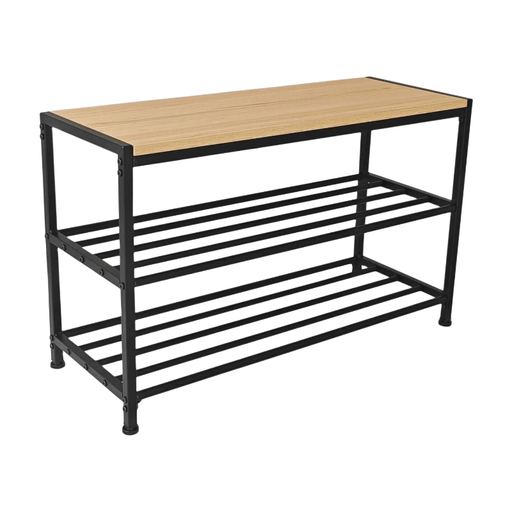
Why it suits this profile: Its compact size and capacity for 6 pairs make it suitable for a small hallway, bedroom or student room. The wooden top can be used for keys or accessories.
The capacity and dimensions are clearly stated, so you do not have to rely solely on a general space-saving claim.
Powder-coated metal frame, engineered-wood top and open design. Dimensions: 80 x 30 x 49,2 cm.
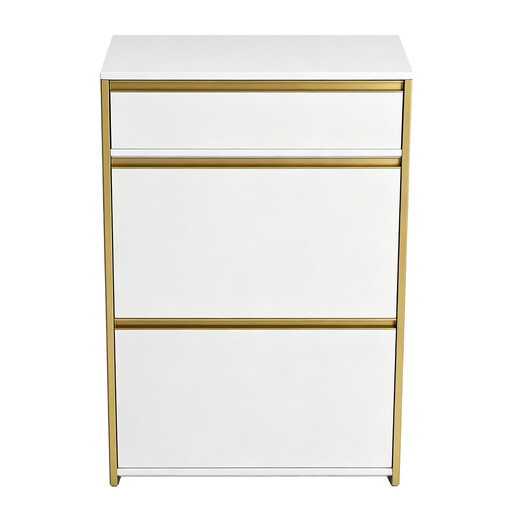
Why it suits this profile: This shoe cabinet is ideal for anyone who wants to keep shoes out of sight while also looking for a piece of furniture for the hallway or living room.
The adjustable, removable shelves allow you to customise the layout. With a depth of 24 cm, the model remains relatively compact.
Dimensions of 60 x 24 x 104,5 cm, four shelves and stated space for up to 12 pairs. An anti-tip feature is included.

Why it suits this profile: For families or larger shoe collections, this freestanding shoe rack offers multiple levels and a stated capacity of 30 pairs.
The precise dimensions of 65,5 x 24,5 x 138 cm make it easy to measure the available space in advance. With a tall model, placing it on a level surface remains important.
Metal construction, white colour, freestanding design and relatively limited depth. Self-assembly is required; wall-fixing is recommended where there is a risk of tipping.
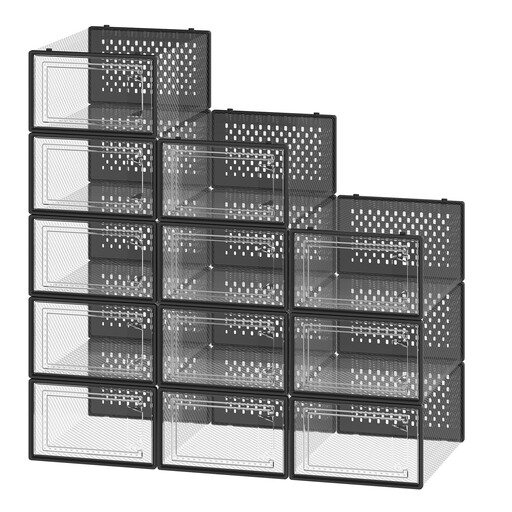
Why it suits this profile: These shoe boxes are ideal for sneaker owners who want to keep pairs visible and stored separately in a wardrobe or storage wall.
The transparent front makes it easier to find your shoes than in a closed, unsorted cabinet. Measure your shoes in advance, as the boxes have fixed internal dimensions.
Set of 12, stackable design, plastic housing and transparent doors. Each box measures 33,5 x 23,2 x 14,3 cm.
Before assembling the rack, check that all parts are included. Assemble it loosely first, then tighten the connections evenly. Do not place it on a thick rug if this affects its stability. Do not use a shoe rack as a seat or step, unless the product information explicitly allows this.
For families, a fixed layout works well: everyday shoes at the bottom, less frequently worn pairs at the top and boots on a shelf with sufficient height. If you are looking for a shoe rack for a wardrobe, low stackers or individual shoe boxes may be a good choice. An over-the-door organiser with pockets makes use of the door, but check beforehand that the door still closes properly and that the weight is suitable.
We have put together a complete, up-to-date list of products that fully meet these strict selection criteria and the applicable European safety regulations.
Measure the available width, depth and height. Compare these measurements with the product dimensions and leave extra room for skirting boards, doors and any wall-fixing hardware. With a tall cabinet, the distance to the ceiling is also important.
Metal is easy to clean, but prolonged exposure to moisture can affect metal components. Allow wet shoes to dry first and wipe away water immediately. Check the care instructions for the specific model.
Sort shoes by use, season or family member. Use shoe boxes for pairs you want to protect and an open shoe rack for everyday footwear. Leave shelf space for taller styles, such as ankle boots, so you do not have to rearrange the layout constantly.
