
Vandaag of morgen in huis

Kwaliteit gegarandeerd

Welkomstaanbiedingen ontgrendelen: GRATIS bezorging | Tot 80% korting | Gratis 30 dagen JoyPlus-proefperiode
Download de app
Shoes scattered around the hallway: a common sight in many households. It's not just messy, but also impractical. A good shoe rack seems like the simple solution, but the market is flooded with models that start to wobble, sag, or simply don't fit after a few months. Before you invest in a new shoe storage solution, it's wise to know what to look for.
As a Product Recommendation Officer at Joybuy, I see which products are popular on a daily basis, but also what issues buyers encounter. Many shoe racks look promising online but hide design flaws that only become apparent after purchase. These are the three most common pitfalls:
To avoid a bad buy, it's helpful to look beyond just the price and appearance. By checking three key points, you can make a choice that suits your situation and will last for years.
A shoe storage rack that promises to hold "15 pairs of shoes" is often calculated based on the smallest possible shoe size. A realistic estimate is to assume about 70% of the advertised capacity for adult shoes.
The material determines not only the look but also the durability and maintenance.
The right solution depends on your needs. An open rack offers quick access and good ventilation. A closed cabinet looks neater. For those who really want to protect their shoes, separate shoe boxes are a good option. These transparent, stackable boxes keep your shoes dust-free, and you can immediately see which pair is inside. They function as a modular shoe organiser.
Based on functionality, material, and design, we have selected a number of options that suit different needs and households.
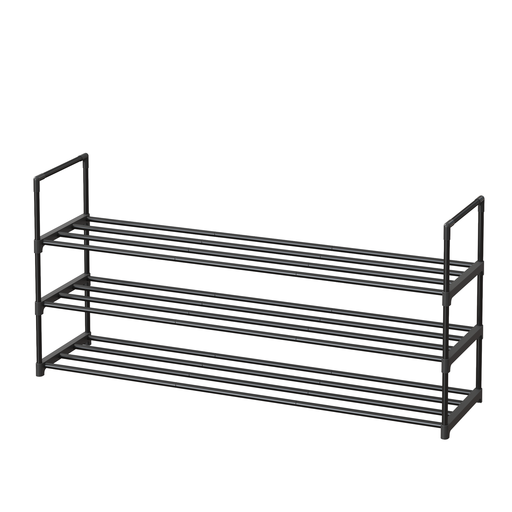
Why This Fits Their Persona: Ideal for student rooms or small apartments. This rack is compact, affordable, and still offers sufficient space. The ability to stack makes it a flexible solution that can grow as you need more storage space.
The construction of metal tubes is more stable than all-plastic alternatives, avoiding the "Wobbly Tower" pitfall. The open design makes it immediately clear how much space you have for your shoes.
Stackable design for vertical expansion. Assembly is simple and requires no tools.
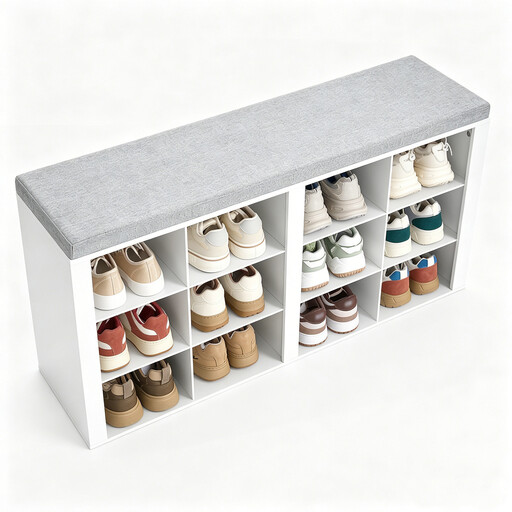
Why This Fits Their Persona: This shoe bench is an all-in-one solution for a busy family hallway. It not only provides organised storage compartments but also a comfortable place to sit while putting on shoes. Convenient for both children and adults.
As a sturdy cabinet, this model is inherently stable. The adjustable shelves tackle the "Doesn't-Quite-Fit" frustration, as you can adjust the height for boots or children's shoes. The material (particleboard) is more robust than non-woven fabric.
Multifunctional: storage and seating in one. The cushions are removable for easy cleaning.

Why This Fits Their Persona: For those who see a shoe rack not just as storage, but as part of their interior design. This modern shoe cabinet hides shoes behind sleek doors, ensuring a permanently tidy look in the hallway or bedroom.
This is a proper piece of furniture with a sturdy wooden structure and metal legs, which eliminates instability. Because the shoes are hidden behind doors, the visual clutter of imperfectly fitting shoes is no longer an issue.
Stylish and minimalist design that fits into many interiors. Provides space for 22-25 pairs of shoes, completely out of sight.
We have compiled a complete, up-to-date list of products that meet these selection criteria and current regulations.
The stated capacity is usually an estimate based on narrow women's shoes or slippers. For larger sizes, trainers, or hiking boots, a good rule of thumb is that about 70-80% of the advertised number will fit. Measure the width of a pair of your own shoes and compare it to the total width of a shelf to make a realistic estimate.
This depends on your priorities. An open hallway shoe rack provides good ventilation, allowing wet shoes to dry faster. You also have a direct overview and access. The downside is that it can look messy more quickly. A closed shoe cabinet provides a much calmer look and protects your shoes from dust. However, ventilation is poorer, so it's advisable to let shoes dry thoroughly before storing them.
Most metal shoe racks are designed for indoor use. Even if they have a coating, they can rust when exposed to rain and moisture for extended periods. Always check the manufacturer's product description. If it is not explicitly stated that it is suitable for outdoor use, you can assume it is not.
