
Vandaag of morgen in huis

Kwaliteit gegarandeerd

Welkomstaanbiedingen ontgrendelen: GRATIS bezorging | Tot 80% korting | Gratis 30 dagen JoyPlus-proefperiode
Download de app
Shoes cluttering the hallway is a common problem. A good shoe rack seems like a simple solution, but the reality is often more challenging. Many models look promising online but turn out to be wobbly, too small, or impractical after just a few months. As a Joybuy Product Recommendation Officer, I'll help you see through the marketing jargon and make a choice that fits your home and lifestyle.
Before making a purchase, it's important to recognize the most common pitfalls. This will prevent you from wasting money on a product that doesn't meet your expectations.
To avoid a bad purchase, it's wise to look at a few objective specifications. These details determine whether a shoe organiser is a good long-term investment.
The material is the foundation of a sturdy shoe rack. The most common options are:
Always check the maximum weight capacity per shelf, expressed in kilograms. A shelf that can hold 10 kg is significantly more robust than one with a 2 kg limit.
Measure the available space accurately: the width, depth, and height. A narrow shoe rack of 20-25 cm deep is ideal for a hallway, while you might have more space in a walk-in closet.
Next, consider which type of system best suits your needs:
Don't be fooled by the advertised number of pairs. Look at the width of the shelves and the distance between them. Do you have a lot of boots or high-top sneakers? Opt for a rack with adjustable shelves or a model with sufficient vertical space. A stackable shoe rack offers the flexibility to expand your storage in the future as your shoe collection grows.
Based on these criteria, we have selected a number of products that suit different needs and living spaces.
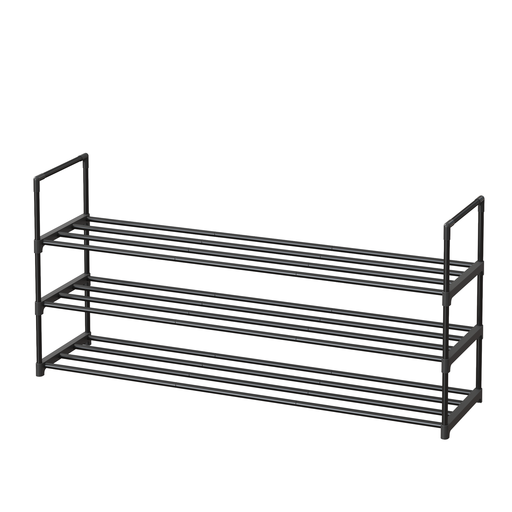
Why This Fits Their Persona: For households where shoes are always lying around, capacity and sturdiness are essential. This rack offers space for approximately 18 pairs of shoes and is built for intensive daily use.
The construction of metal tubes and high-quality plastic connectors is designed for a load capacity of up to 10 kg per shelf. This prevents the sagging and instability seen in weaker models.
The rack is stackable. You can place two racks on top of each other for double the capacity without taking up extra floor space. Assembly is simple and requires no tools.
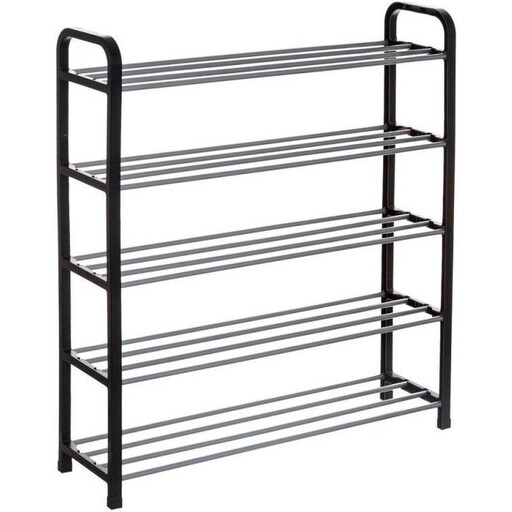
Why This Fits Their Persona: Perfect for those living in an apartment or with a narrow hallway. This rack is specifically designed to store many shoes on a very small footprint.
This model directly addresses the 'wrong dimensions' pitfall. With a depth of only 20 cm, it fits behind a door or in a tight nook where standard racks are too bulky. You measure, you buy, and it fits.
Maximum vertical storage. The five tiers provide space for about 15 pairs of shoes, allowing you to utilize the height of the room instead of the width.
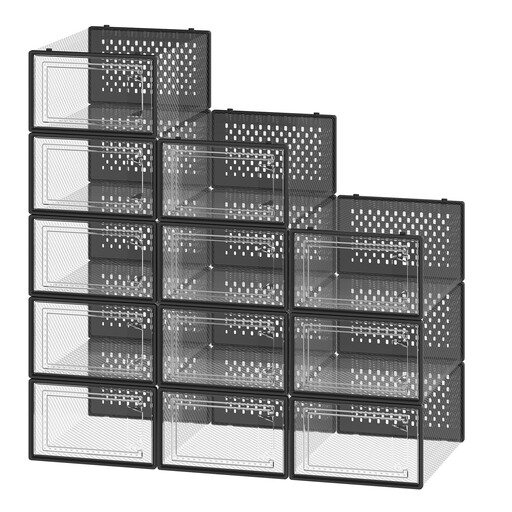
Why This Fits Their Persona: For those who not only want to store their sneakers but also protect and display them. These boxes keep your collection dust-free and organised.
These boxes bypass the poor materials trap. Instead of an open rack with fragile fabric, each box provides a sturdy, individual polypropylene case that protects shoes from dust, moisture, and crushing.
The transparent doors allow you to find the right pair instantly without searching. Ventilation holes help prevent odours and keep the shoes fresh.
We have compiled a complete, up-to-date list of products that meet these selection criteria and current regulations.
Yes, provided you use it correctly. Ensure the rack is on a flat, stable surface. When stacking, it's important to follow the manufacturer's instructions and place the heaviest shoes on the bottom shelves. This lowers the centre of gravity and increases stability. Also, check that the model is designed for safe stacking, often with specific connectors.
The stated number is usually an estimate. The actual capacity depends on the type and size of your shoes. Large hiking boots or boots take up more space than sandals or sneakers. A good rule of thumb is to assume 2 to 4 fewer pairs than the maximum number indicated by the manufacturer, especially if you have larger shoe sizes.
An open shoe rack offers no protection from dust. If this is a concern, there are a few alternatives. A shoe cabinet with doors is an effective solution. Another option is to use shoe storage boxes. These allow you to keep your shoes dust-free pair by pair and then place the boxes on an open rack or in a closet for an organised system.
