
Vandaag of morgen in huis

Kwaliteit gegarandeerd

Welkomstaanbiedingen ontgrendelen: GRATIS bezorging | Tot 80% korting | Gratis 30 dagen JoyPlus-proefperiode
Download de app
A shoe rack seems like a simple purchase until it doesn’t fit in your hallway, wobbles or holds fewer pairs than you expected. Space is often limited, particularly in compact homes, student accommodation and family homes. So a good shoe storage solution needs to be more than attractively priced: it should suit your shoe sizes, available floor space and day-to-day needs.
When comparing a shoe rack, shoe cabinet or other shoe storage, look out for these three common pitfalls:
Measure the spot where you plan to put the shoe rack, taking skirting boards, doors and walkways into account. For a hallway shoe rack, depth is particularly important. In a small hallway, a slim shoe rack around 18 to 25 cm deep may be more practical than a wider model.
Check the height, too. A tall model makes use of vertical space, but it needs to stand securely and mustn’t obstruct the walkway. A freestanding shoe rack needs a level surface. It’s also a good idea to secure taller shoe cabinets to the wall to prevent them tipping over.
A shoe rack with several tiers offers more storage, but not every shelf will fit high-top trainers, ankle boots or children’s shoes. So check:
A product description might claim space for eight or sixteen pairs, but wide sports shoes take up more room than flat shoes. Put heavier shoes on the bottom and don’t exceed the stated weight capacity.
Metal usually has an open design and is easy to wipe clean. Plastic, such as polypropylene, is lightweight and practical if you need to move it regularly. Engineered wood gives a shoe cabinet a furniture-like look, but needs more care around moisture. Cardboard shoe boxes are lightweight and space-saving, but are less suitable for wet shoes.
Ventilation matters if your shoes are still damp after wearing them. A closed shoe cabinet keeps dust out more effectively, but don’t leave wet shoes in it for long periods. Let footwear dry first, following the manufacturer’s care instructions.

Why it suits this type of buyer: This compact freestanding shoe rack is ideal if you’re looking for a simple solution for a hallway, bedroom or student room. At 18.5 cm deep, it takes up very little floor space.
The exact dimensions make it easy to check the fit in advance. Bear in mind the stated maximum load of 1 kg and use the rack in accordance with the product instructions.
Steel shelves, a polypropylene frame, dimensions of 50 x 18.5 x 64 cm and space for up to eight pairs, according to the product description.
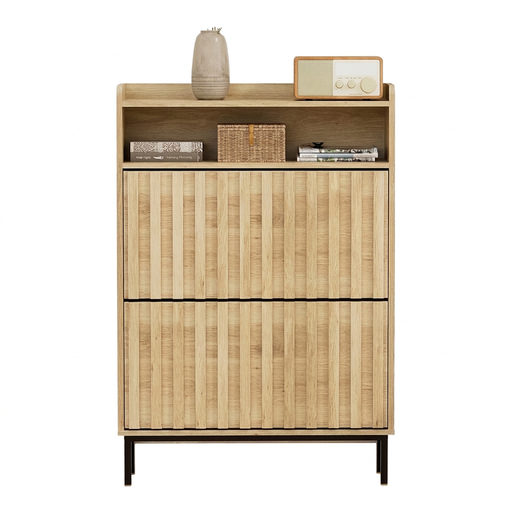
Why it suits this type of buyer: The tilt-out compartments and natural wood-effect finish are ideal for households that want to keep shoes out of sight without using a deep cabinet.
The dimensions of 80 x 24 x 117 cm are clearly stated. Use the recommended anti-tip fittings and don’t overload the compartments.
Two tilt-out compartments, an open storage compartment, a slim depth of 24 cm and legs that lift it off the floor.
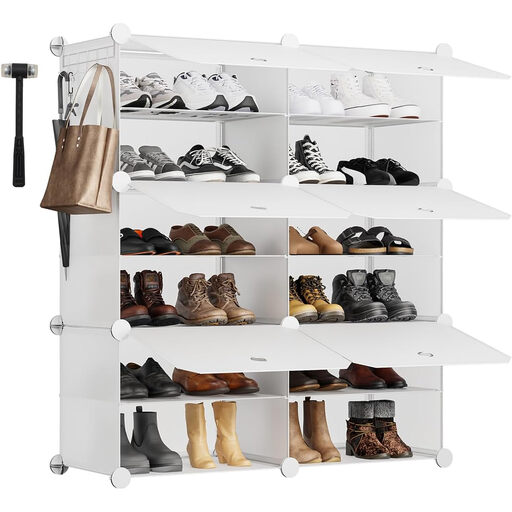
Why it suits this type of buyer: Families with a larger shoe collection get six compartments and a stated capacity of up to 24 pairs. The modular PP design suits a hallway, wardrobe or utility room.
A load limit of 5 kg per compartment and several anti-tip fittings are specified. Secure a tall cabinet to the wall and place heavier shoes at the bottom.
Moisture-resistant PP panels, six compartments, ventilation and an assembly mallet included, according to the product information.
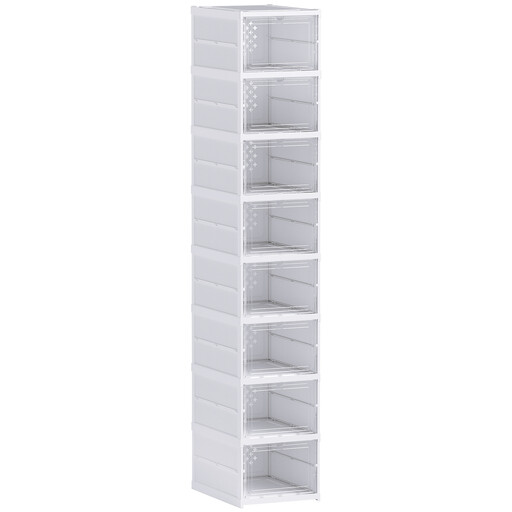
Why it suits this type of buyer: This tall, slim model is 26 cm wide and 35 cm deep. It makes the most of vertical space in a small hallway, cupboard or entranceway.
The transparent flaps help keep dust off your shoes. Check that a height of 140 cm will fit your space and place the unit on a stable surface.
Eight tiers, transparent flaps, ventilation openings at the back and a folding design made from plastic with ABS.
We’ve put together a complete, up-to-date list of products that meet these strict selection criteria and the applicable European safety regulations.
It depends on the width of the shelves, your shoe size and the shape of your footwear. Don’t just check the advertised number of pairs: look at the internal width and the distance between the tiers, too. High-top shoes and wide sports shoes need extra space.
Place the rack on a level surface, distribute the weight evenly and put heavier shoes at the bottom. It’s a good idea to secure a tall shoe cabinet to the wall. Always follow the assembly instructions and use anti-tip fittings if they’re supplied or recommended.
An open shoe rack gives you quick access and allows air to circulate around your footwear. A shoe cabinet with doors or flaps keeps shoes more out of sight and helps limit dust. Choose open storage for everyday use and ventilation; opt for closed storage if a neat, uncluttered look matters more.
