
Vandaag of morgen in huis

Kwaliteit gegarandeerd

Welkomstaanbiedingen ontgrendelen: GRATIS bezorging | Tot 80% korting | Gratis 30 dagen JoyPlus-proefperiode
Download de app
A shoe cabinet may seem like a straightforward purchase, until the doors won’t open properly, your boots don’t fit or the available space turns out to be smaller than expected. In Dutch hallways, where every centimetre counts, it’s especially important to look beyond appearance. The right shoe storage should suit your space, your footwear and your everyday routine.
A slim shoe cabinet may seem ideal for a small hallway, but the usable space inside can be limited by back panels, doors or fixed shelves. So don’t just check the width. Also look at:
Measure the space at home and leave room to move around the cabinet. In a narrow hallway, a cabinet that’s 24 cm deep may be more practical than a wider model that gets in the way.
A claim such as “holds 24 or 30 pairs” depends on the type of footwear. Low-top trainers take up less space than ankle boots, high heels or wide walking boots. So think about whether you mainly want to store everyday footwear, children’s shoes or a mixed collection.
A shoe cabinet for lots of shoes works best when the compartments are efficiently arranged and you don’t have to store shoes at an angle or double them up.
A shoe cabinet with doors keeps shoes out of sight, but ventilation and ease of access matter too. An open shoe rack is easy to reach, but leaves your whole collection on display and offers less protection from dust. Also check that it’s stable. A tall cabinet should stand on a level surface and be secured to the wall in accordance with the product instructions if there’s a risk of it toppling over.
For a hallway shoe cabinet, depth and clearance are usually the deciding factors. A vertical model makes use of the height available, while a low shoe cabinet with a bench also gives you somewhere to sit while putting on your shoes. If you’re considering a shoe cabinet for the living room, check that it has a neutral enough look and perhaps room for ornaments, books or a plant.
Adjustable shelves are useful if you own different types of footwear. You can make a compartment taller for boots and shorter for trainers. Removable shelves offer extra flexibility if you later want to use the cabinet for other things.
Many models are made from chipboard, metal, plastic or a combination of these materials. Look out for:
A brand’s claims about materials describe the properties of that particular product. So don’t take terms such as “durable” or “moisture-resistant” to mean it’s fully protected against water.
Before buying, check whether tools, fittings and clear instructions are included. If you have a tall shoe rack, securing it to the wall is sensible if children or pets are around. Don’t use the cabinet as climbing furniture, and observe the stated load capacity for each shelf.
In the EU, consumers are entitled to a legal guarantee of at least two years, but additional terms may vary by product and applicable national regulations. Keep the product information and assembly instructions.

Why it suits this type of buyer: According to the product specifications, this open shoe rack holds 30 pairs and is 24.5 cm deep. It’s a good option if you want to organise lots of shoes neatly without spending too much.
The open design means you won’t discover after assembly that your shoes are difficult to reach. Do check its stability, and secure the rack to the wall if there’s a risk of it toppling over.
Holds up to 30 pairs according to the product information; metal frame with plastic components; modern white finish.
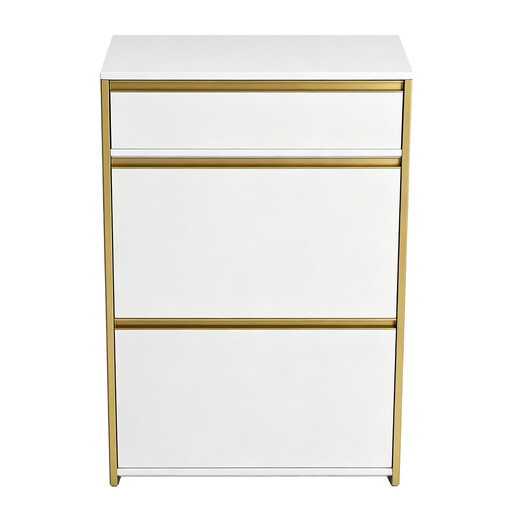
Why it suits this type of buyer: A compact, enclosed cabinet for anyone who wants a tidy hallway with room for shoes and smaller items. Its white finish and gold details also make it a good choice as a slim cabinet in the living room.
The product description lists four adjustable, removable shelves, so you can customise the layout. It holds up to 12 pairs, so check whether that’s enough for your collection.
Dimensions: 60 x 24 x 104.5 cm; adjustable shelves; drawer and top surface for accessories or ornaments; anti-tip feature according to the product description.
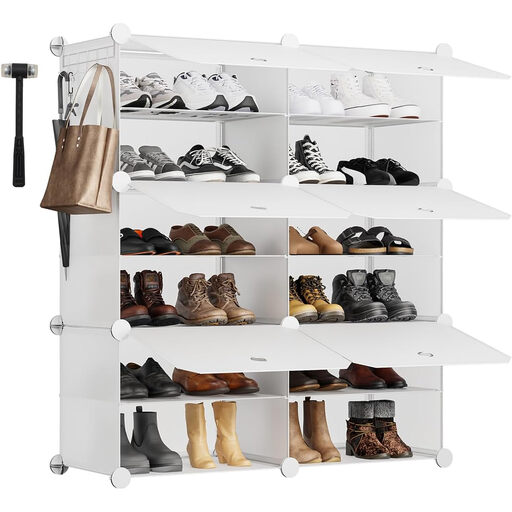
Why it suits this type of buyer: This shoe cabinet is designed for families and larger shoe collections. According to the product information, its six compartments hold up to 24 pairs, making it suitable for a hallway, utility room or walk-in wardrobe.
According to the product information, the PP panels can be wiped clean with ease. Ventilation helps keep the cabinet aired, while several anti-tip features provide extra stability.
Holds up to 24 pairs according to the description; load capacity of 5 kg per shelf; moisture-resistant PP panels and assembly hammer included.
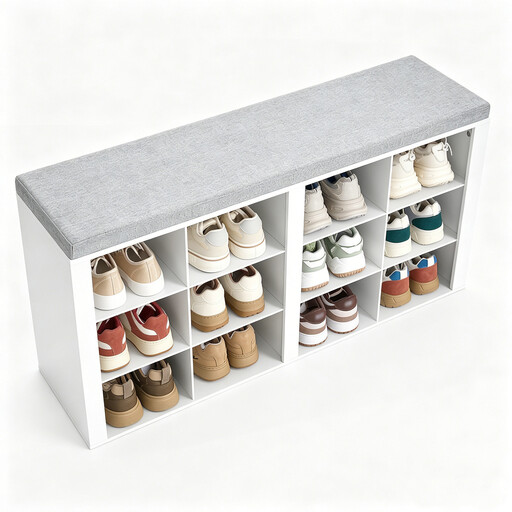
Why it suits this type of buyer: This shoe cabinet with a bench combines storage with a place to sit. It’s a practical choice for a hallway where children or adults want to put their shoes on by the front door.
According to the product description, the shelves are adjustable to suit different types of footwear. The removable cushion covers are easier to clean than fixed upholstery.
Dimensions: 30.5 x 104.5 x 49.5 cm; 12 compartments; removable covers; stated load capacity of 150 kg.
We’ve put together a complete, up-to-date list of products that meet these strict selection criteria and the applicable European safety regulations.
It depends on the available clearance and the type of footwear. Measure your hallway and compare it with the product depth. A model around 24 to 31 cm deep can save space, but check that your shoes fit straight inside and that the doors can open fully.
Its lifespan depends on the material, assembly, load and exposure to moisture. Tighten the fittings properly after assembly, distribute shoes evenly and avoid leaving the cabinet in damp conditions for long periods. Clean plastic and metal with a soft, damp cloth, then dry the surface.
A shoe rack gives you quick access and often offers better ventilation. A closed cabinet keeps shoes out of sight and protects them better from dust. An open rack is practical for everyday use in a busy hallway, while a shoe cabinet with doors is often a better fit for a tidy living room or entrance.
