
Vandaag of morgen in huis

Kwaliteit gegarandeerd

Welkomstaanbiedingen ontgrendelen: GRATIS bezorging | Tot 80% korting | Gratis 30 dagen JoyPlus-proefperiode
Download de app
Tired of tripping over a mountain of shoes in your entryway each morning? A tidy hall is the first impression of your home, but scattered shoes can quickly make it look messy. The right shoe storage solution is therefore essential. But what's the best fit for your situation? An open rack, a closed cabinet, or a multifunctional piece of hallway furniture?
As a Joybuy Product Recommendation Officer, I'm here to guide you. In this article, I'll provide practical tips for finding the perfect storage solution and highlight several popular choices that suit different needs and spaces.
Before making a decision, it's wise to consider a few key factors. This will help you avoid buyer's remorse and find a piece of furniture that truly complements you and your home.
The available space is often the most critical factor. Hallways can vary greatly in size.
How many pairs of shoes do you need to store? Count the shoes your whole family wears regularly. Choose a model with slightly more capacity than you currently need to make room for new additions or guests' shoes.
The material defines the aesthetic. Metal and wood offer an industrial or rustic look, while a sleek white or coloured unit appears more modern. A closed shoe cabinet conceals shoes completely, ensuring a clutter-free impression.
Some units offer more than just storage. A shoe bench, for example, is incredibly convenient: you can sit on it comfortably while putting on or taking off your shoes. A drawer at the top of the cabinet is ideal for storing keys, gloves, or other small items.
To give you a clearer idea, we've selected three distinct solutions. Each model has its own unique features and is suited for different needs.

This shoe rack from Sekey is a no-nonsense solution focused on capacity and flexibility. It combines a metal frame with non-woven fabric shelves, making it both lightweight and sturdy. It's designed to be stackable, allowing you to expand your storage space vertically.
This rack is ideal for anyone with a large shoe collection who is looking for a functional, affordable solution. Its stackable design makes it particularly suitable for those with limited floor space who want to build vertically, for instance, in a storage room, utility room, or spacious hallway.
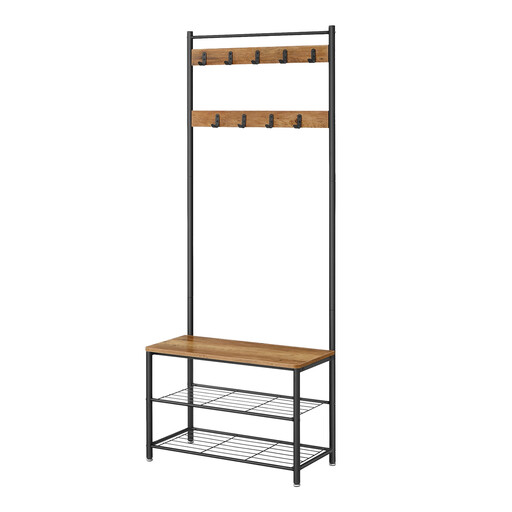
This 3-in-1 hall tree from Ochama is a complete solution for your entryway. It combines a coat rack, a shoe bench, and a shoe rack into a single piece of furniture. The industrial style, featuring a mix of rustic walnut-coloured wood and a black steel frame, fits well in many modern interiors.
This piece is perfect for anyone wanting to create an organised and welcoming entryway. It's a practical choice for families or anyone looking for an all-in-one solution for storing shoes, coats, and bags in the hall.
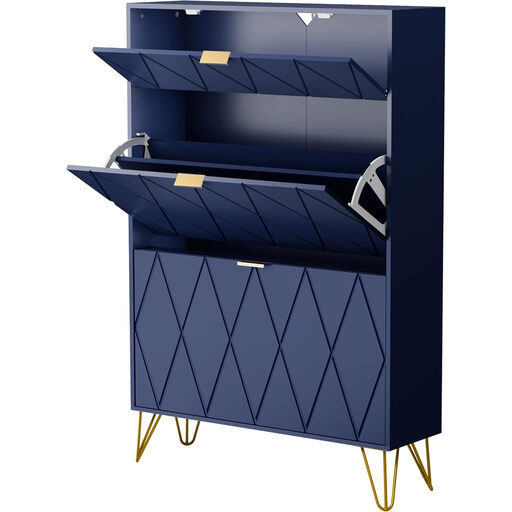
This shoe cabinet from UEV combines functionality with a striking design. Its blue colour, gold handles, and clean lines make it a stylish statement piece. Thanks to its shallow depth, it's an excellent slim shoe cabinet for tight spaces.
This cabinet is intended for those who prioritise a tidy appearance and want to store shoes out of sight. It's an ideal solution for narrow hallways where style and efficient use of space must go hand in hand.
Didn't find your ideal solution here? No problem. Every hallway is different and requires a unique approach. For more inspiration, you can browse our wider collection. For example, discover various metal shoe racks and other storage options that might be a better fit for your needs.
A slim shoe cabinet, particularly a model with tilt-drawers where shoes are stored at an angle, often has a depth between 20 and 30 cm. A standard shoe cabinet, where shoes stand upright, is typically 30 to 40 cm deep. Always measure the available space in your hallway before making a purchase.
This depends on your priorities. An open shoe rack provides good ventilation, allowing damp shoes to dry faster. A closed shoe cabinet creates a calmer and tidier look because the shoes are not visible. It also offers better protection from dust.
The capacity varies greatly by model. A simple rack might hold 6 to 9 pairs, while larger cabinets or systems can have space for 20 pairs or more. The product description almost always indicates the capacity. Keep in mind that boots and high-top shoes take up more space than flats or sneakers.
