
Vandaag of morgen in huis

Kwaliteit gegarandeerd

Welkomstaanbiedingen ontgrendelen: GRATIS bezorging | Tot 80% korting | Gratis 30 dagen JoyPlus-proefperiode
Download de app
Scattered shoes in the hallway: a familiar sight in many households. A good shoe cabinet seems like the simple solution, but the reality is often more challenging. A model that looked perfect in the photo turns out to be wobbly, too small for your boots, or quickly becomes a source of unpleasant odours. Before you invest in a new shoe storage solution, it's smart to know what to look for. We'll discuss the most common pitfalls and help you make the right choice.
A tidy hallway starts with avoiding a bad purchase. Many shoe cabinets look great online but have hidden flaws. These are the three problems we encounter most often:
To avoid the problems above, there are a few specifications you should always check. These aren't marketing terms, but practical features that make all the difference.
The material determines the lifespan and sturdiness of your shoe cabinet.
Measure not only the available space in your hallway but also your largest pair of shoes.
The choice between an open shoe rack and a closed shoe cabinet with doors depends on your preference.
Not every shoe cabinet is suitable for every situation. Below are some popular choices, matched to different living needs.
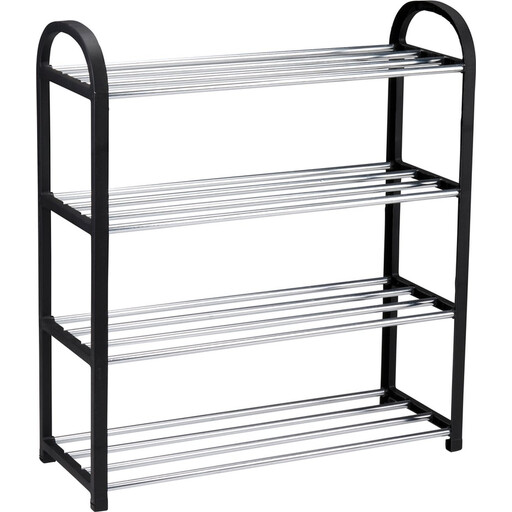
Why This Fits Their Persona: Ideal for those seeking a simple, no-nonsense solution for a small hallway, student room, or utility room. Takes up hardly any space due to its shallow depth.
The open design guarantees maximum ventilation, avoiding the pitfall of unpleasant odours. The simple construction is stable enough for its intended use (up to 8 pairs of lighter shoes).
Extremely narrow: With a depth of just 18 cm, this rack fits in the tightest spaces. Lightweight and easy to assemble: Can be put together without tools.
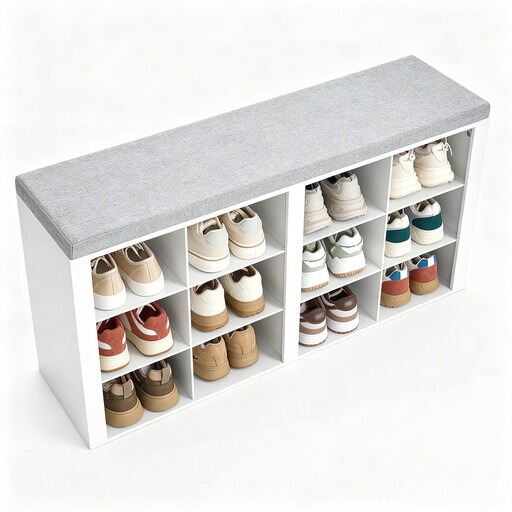
Why This Fits Their Persona: Perfect for those who prioritise functionality. This shoe bench not only offers storage but also a comfortable seat in the hallway. Convenient for families with children or the elderly.
The adjustable shelves tackle the problem of impractical dimensions; you can adjust the height for boots or high heels. The construction is designed for a load capacity of 150 kg, which prevents the pitfall of instability.
Multifunctional: Serves as both a shoe organiser and a bench. Flexible layout: The shelves are height-adjustable for different types of shoes.
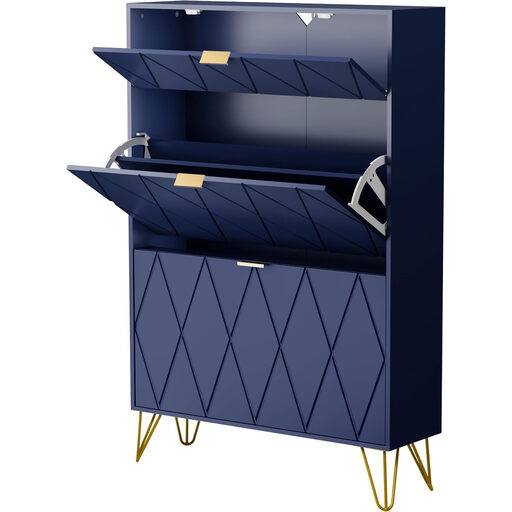
Why This Fits Their Persona: For those who see the hallway cabinet not just as storage, but as part of their interior design. The striking blue colour and gold details make this a real statement piece.
The flap system is a clever solution to the pitfall of impractical dimensions in a narrow hallway. The construction of MDF and metal legs offers more stability than a simple rack.
Unique design: The combination of blue with gold accents provides a luxurious look. Space-saving: The narrow design (24 cm deep) with flaps is ideal for a narrow hallway.
We have compiled a complete, up-to-date list of products that meet these strict selection criteria.
This depends entirely on your shoe size. A good rule of thumb is to measure your largest pair of shoes and add a few centimetres. For an average shoe size (8-10), an internal depth of 30-33 cm is often sufficient for a cabinet where shoes are placed straight. For a narrow shoe cabinet with a flap system, a depth of 24 cm may be enough, as the shoes are stored at an angle.
The most important step is to always let your shoes dry completely before placing them in a closed cabinet. Preferably, choose a shoe cabinet with doors that has ventilation holes in the back. This promotes air circulation. Additionally, you can place moisture and odour absorbers or sachets with cedarwood or lavender in the cabinet to keep the air fresh.
A good shoe bench is certainly sturdy enough. However, it is important to check the manufacturer's specifications. Pay attention to the maximum load capacity. For example, a model like the HaluPeit shoe bench has a stated load capacity of 150 kg, which is more than enough for daily use by one or two adults. Avoid models where this information is missing.
