
Someone with limited storage space
Do you iron a few shirts at a time and need to be able to put the appliance away easily after use? The Dutch Consumers’ Association lists limited storage space as a reason to consider a standard steam iron.


If you iron a few shirts at a time and have little storage space, a standard steam iron with an easy-to-manoeuvre tip is a sensible choice. The Dutch Consumers’ Association also recommends a standard iron if you do not iron many items in one go. A steam generator may suit larger, regular ironing sessions, but you’ll need space for its separate tank and the complete system. Don’t confuse a steam shot with continuous steam, and always follow the care label for the collar and fabric.
Do you iron a few shirts at a time and need to be able to put the appliance away easily after use? The Dutch Consumers’ Association lists limited storage space as a reason to consider a standard steam iron.
If you need to work around collar edges, seams and buttons, pay attention to the shape of the soleplate tip and how easy it is to manoeuvre. Braun and Tefal highlight precision tips for detailed ironing on specific models.
For longer ironing sessions, you may want to consider how often you’ll need to refill the tank and how much space a separate tank will take up. The Dutch Consumers’ Association suggests a steam generator for people who regularly iron larger loads.
Best for: ironing a few shirts at a time, limited storage space and detailed work on collars.
The trade-off: the water tank is built into the iron, so you may need to refill it sooner during a longer session.
Best for: regularly ironing larger loads, if you have room for the whole system.
The trade-off: the separate tank makes the complete appliance bulkier to set up and store.
| What to consider | What should you check? | Who is this most relevant to? |
|---|---|---|
| Storage and moving the appliance | Check the dimensions and weight of the complete appliance, not just the handheld iron. | In an upper-floor flat, I want to be able to take the appliance out and put it away easily; around 40% of consumers prioritise limited storage space. |
| Precision around collars | Check that the soleplate tip can reach around collar edges and buttons, and that the temperature and steam settings suit the care label. | If I want to iron seams and collar edges precisely, I focus on manoeuvrability and suitable settings; around 40% of consumers prioritise precision. |
| Steam and refilling | Compare continuous steam and steam shot as separate figures; also consider the tank and the space needed for the complete system. | When I have a larger pile of laundry, I want to stop less often to refill the tank; around 20% of consumers prioritise longer ironing sessions. |
A steam shot and continuous steam output are different figures. When ironing collars, the reach of the tip, the fabric and the right setting matter too.
Compare the stated steam figures separately, and check the soleplate tip and settings on the exact model.
Even a generator described as compact has a separate tank. This means the complete system takes up more space than the iron alone.
Measure your available storage space and check that there’s room for the tank and the complete appliance.
A manufacturer’s warranty is in addition to your statutory rights against the retailer. The Dutch government explains that there is no fixed statutory warranty period in the Netherlands; what you can expect from a product depends on the product and the circumstances.
If you’re offered an additional warranty, check exactly what extra cover it provides.
The information below relates to specific product ranges and manufacturer specifications; it does not represent independent tests of collar-ironing performance.
The TexStyle ranges include steam irons with a precision tip for detailed ironing.
The Easygliss Plus FV5736 and Ultimate Pure FV9851 are steam irons with different stated features.
Philips offers standard steam irons, such as the 3000 Series DST3031/20, as well as steam generator systems, such as the PerfectCare Compact Essential GC6842/30.
This selection includes everything from steam irons to a portable garment steamer. Check each model to see whether it is designed to press collars flat and will fit in your available storage space.
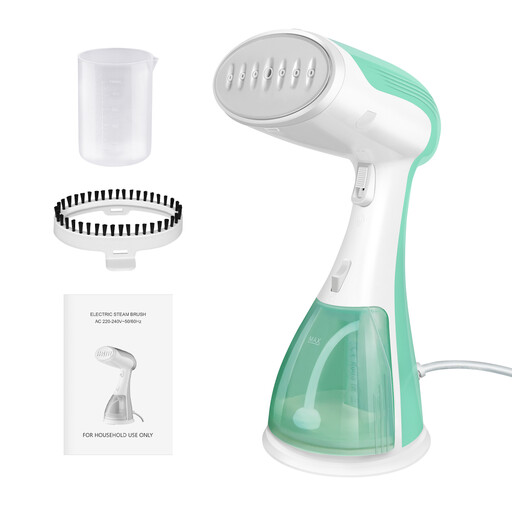 No image available
The product name describes a portable garment steam iron; check whether its soleplate and controls are suitable for pressing collars flat.
The product name specifies 1500 W.
 No image available
The name specifies dual voltage; check that the voltage setting is suitable for home use and that the model can press collars flat.
 No image available
If you need to work around buttons, check the shape of the soleplate tip and make sure the temperature setting suits the care label.
The product name specifies 2000 W.
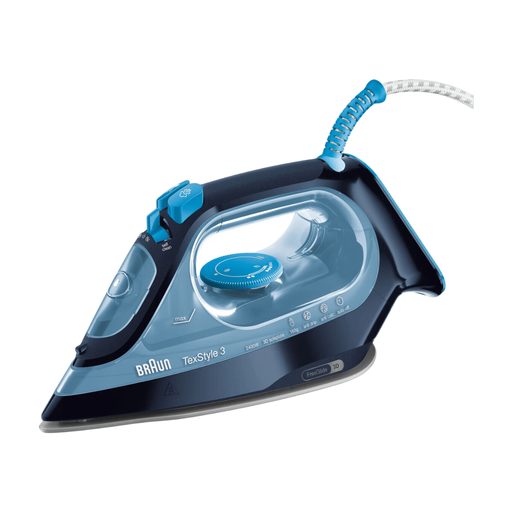 No image available
For ironing collars, compare the soleplate tip and settings on this specific SI3050; details about another model do not automatically apply to this version.
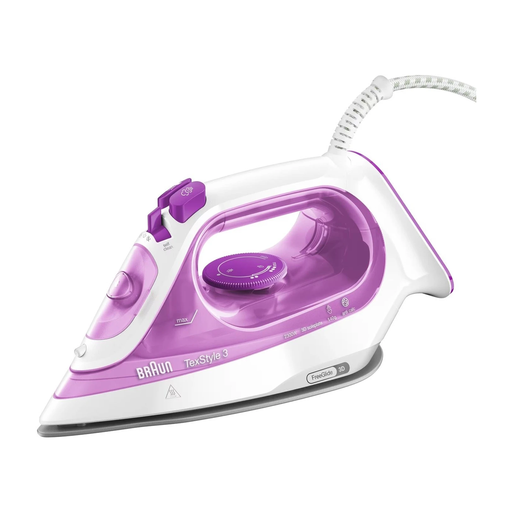 No image available
Braun describes the SI 3030 as having a precision tip for collars and seams, and lists a 270 ml tank. The stated 45 g/min applies in turbo mode, not for continuous steam.
The manufacturer’s specifications describe this model’s features; they are not the result of an independent collar-ironing test.
Not necessarily. The Dutch Consumers’ Association recommends a standard steam iron if you don’t iron many items in one go or have limited storage space. A generator may be more appealing for larger loads, provided you have room for the separate tank and the complete system.
Follow the care label and adjust the temperature and steam to suit the fabric. The Dutch Consumers’ Association warns that too much heat can damage fabric or make it shiny; let the ironed area cool and dry.
The Dutch Consumers’ Association advises waiting until the iron is hot enough before using steam, and not using steam too frequently in quick succession. Also check the manual for your exact model.
According to EUR-Lex, Directive 2014/35/EU applies to electrical equipment designed for 50–1,000 V AC. Equipment within the scope of the directive and offered on the EU market must meet the applicable requirements and carry a CE marking; check the information for the specific model.
Report the fault to the retailer. The Dutch government explains that there is no fixed statutory warranty period in the Netherlands; what you can reasonably expect from the product depends on the product and the circumstances. A manufacturer’s warranty is in addition to this.