What should you consider when choosing?
Compact or travel steam iron
A good fit if: you mainly iron one or a few collars and storage space is limited.
The trade-off: the small tank means you’ll need to refill sooner if you have more ironing to do.
Standard steam iron
A good fit if: you regularly iron whole shirts as well as collars, and have space for the appliance and an ironing surface.
The trade-off: extra features for longer ironing sessions don’t necessarily mean the appliance will be as compact as possible to store.
Handheld garment steamer
A good fit if: you want to tackle light creases without setting up an ironing board.
The trade-off: steaming isn’t the same as pressing a collar flat with a soleplate. Philips highlights thicker cotton and linen shirts as a particular limitation.
| What to consider |
What should you check? |
Who should consider this? |
| Pressing a collar precisely |
Check the shape of the soleplate tip and whether you can use the appliance on a stable, heat-resistant surface. |
If I mainly want a sharply pressed collar, I look for precise contact around the edges and buttons. Around 36% of consumers say collar precision is their top priority. |
| Limited storage space |
Compare the appliance’s dimensions when stored, along with its handle and tank capacity. |
If cupboard space is limited, I want an appliance that can be put away compactly without a large separate tank. Around 29% of consumers prioritise storage space. |
| The right setting for the fabric |
Read the care label and check the temperature controls and whether you can turn off the steam. |
If my shirts have different care labels, I want to be able to adjust the settings to suit the fabric. Around 21% of consumers see fabric suitability as their top priority. |
| Ironing several shirts |
Compare tank capacity and continuous steam output; these are different from the steam boost. |
If I iron several shirts one after another, I don’t want to have to refill the tank unnecessarily often. Around 14% of consumers prioritise longer ironing sessions. |
The percentages shown group consumers by their main reason for buying; don’t treat them as statistics for the Dutch market. For reference, Severin lists a 0.05-litre tank for the BA 3234, while Tristar lists a 0.06-litre tank for the ST-8152. Tank capacity is therefore an important trade-off with both compact examples if you’re ironing more than a few collars.
Check the care label too. Philips says that a crossed-out iron symbol means the garment must not be ironed. Descaling a steam iron depends on the model: Tefal recommends following the instructions for the exact appliance.
Joybuy products
This Joybuy selection includes standard steam irons, a handheld steamer and a steam generator. First decide whether you want to press a collar flat or mainly reduce creases. Before buying, also check the product information and CE marking if the appliance falls under the applicable rules for electrical products.
 No image available
Tefal Easygliss Plus FV5736 steam iron
A standard steam iron for anyone who wants to press collars with a soleplate and adjust the temperature and steam settings too.
View on Joybuy
 No image available
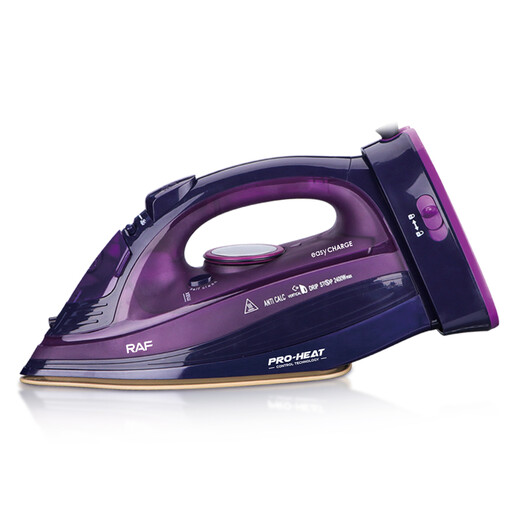
RAF R.1210B Cordless Steam Iron, Purple
A portable steam iron for anyone who wants to tackle a collar with a soleplate; the product description mentions a precision tip for collars and around buttons.
2400 W; tank capacity 320 ml; steam output 15–25 g/min; ceramic soleplate.
View on Joybuy
 No image available
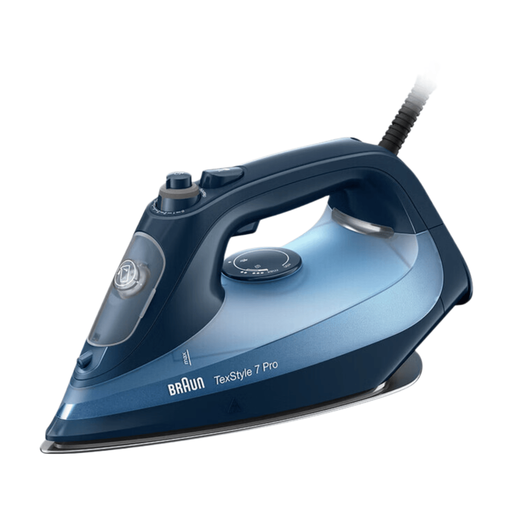
Braun TexStyle 7 Pro SI7160 steam iron, blue
A standard steam iron for anyone who wants to tackle collar details and adjust the temperature and steam settings to suit the fabric.
View on Joybuy
 No image available
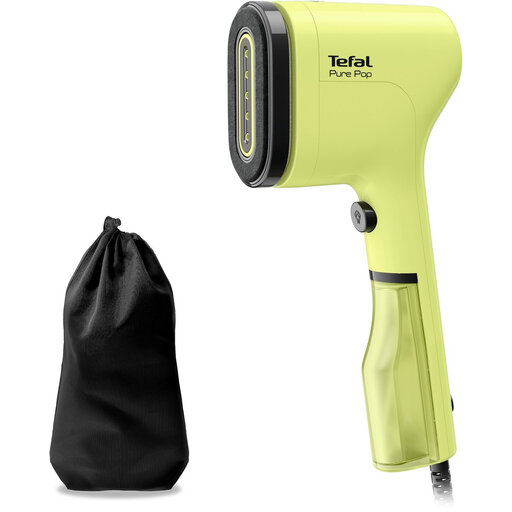
Tefal DT2025 handheld garment steamer
A handheld steamer for anyone who wants to tackle light creases without setting up an ironing board. A steamer won’t give the same result as an iron, particularly on thicker cotton or linen shirts; Philips makes the same distinction for garment steamers.
View on Joybuy
 No image available
Philips 3000 Series PSG3000/20 steam generator
A steam generator with an iron for anyone who irons several garments in one go and has room for the larger setup.
2400 W; water tank 1,4 L; Steam Boost 350 g.
View on Joybuy
Frequently asked questions
Can I tackle a collar without a large ironing board?
Yes. Philips says you can use a handheld steamer on a collar laid flat. If you want to press the collar using direct heat, use a stable, heat-resistant surface and follow the instructions. Steaming won’t necessarily give the same result as ironing.
Which temperature and steam setting should I use for my shirt?
Follow the care label and adjust the appliance settings accordingly. A crossed-out iron symbol means you must not iron the garment; don’t use steam if the label rules it out.
How can I prevent limescale marks from a steam iron?
Descale the appliance according to the instructions for the exact model. Tefal warns that the process varies by model, and that vinegar or descaling products can cause damage when rinsing a steam tank. Don’t treat this as a universal instruction for every appliance.
What if the iron develops a fault after I buy it?
In the Netherlands, you’re entitled to a product that works properly when you buy it, and the seller must provide a solution if there’s a problem, according to the Dutch government. A manufacturer’s guarantee is in addition to your statutory rights and doesn’t replace them.
Is CE marking required for an electric iron in the Netherlands?
The Netherlands Food and Consumer Product Safety Authority states that CE marking is compulsory for electrical products covered by the Commodities Act Decree on Electrical Equipment. The marking is a declaration by the manufacturer and, by itself, isn’t proof of independent product testing. Check the information for the specific appliance.


