
For the occasional collar
You want to tidy up a shirt collar just before heading out, but have little room for an appliance. Braun highlights the precision tip on the TexStyle 3 SI 3030 for working around collars and hems.


If you only need to iron a shirt collar now and then and have little storage space, a compact iron with an easy-to-reach tip and adjustable temperature is a sensible first choice, provided you have a flat, heat-resistant surface to iron on. A folding travel iron takes up little room, although some models have a small water tank. A handheld steamer is best for light creases and won’t give you the same crisp finish as an iron on thick cotton or linen collars.
You want to tidy up a shirt collar just before heading out, but have little room for an appliance. Braun highlights the precision tip on the TexStyle 3 SI 3030 for working around collars and hems.
You’ll be moving the iron between rooms and value a compact size for transport more than a large water tank. Severin and Tristar describe compact travel irons with small reservoirs.
You also want to iron full shirts regularly after the move. In that case, tank capacity and comfort during longer ironing sessions matter as well as the overall size.
Choose this if: you want to iron the whole shirt as well as the collar and have room for a suitable ironing surface.
Consider: the size, ease of handling and tank. A steam iron does need a flat surface to iron on.
Choose this if: you want an appliance that’s easy to take with you and usually iron for short periods.
Consider: the Severin BA 3234 and Tristar ST-8152 have small reservoirs. Check the plug and any voltage settings on the version you’re buying, too.
Choose this if: you mainly want to tackle light creases and don’t want to use an ironing board.
Consider: Philips explains that steaming won’t give the same result as ironing, particularly on thick cotton or linen or when you want a sharply pressed collar.
Choose this if: you’ll often iron larger loads of laundry after the move, rather than just the occasional collar.
Consider: this system takes up more room than a standard steam iron. The Consumentenbond points to limited storage space as a reason to consider a standard iron.
| What to consider | What to look for | Who is this most important for? |
|---|---|---|
| Ironing collars precisely | Check whether the tip of the iron can reach narrow areas around collars and buttons. Braun highlights a precision tip on the SI 3030; this is not a comparison of ironing results. | If I mainly want to neaten one collar just before heading out, I look for precise detail work. Around 38% of consumers say collar precision is their main requirement. |
| Limited space | Check the dimensions, plug, voltage settings and tank capacity of the exact model. Severin lists a foldable handle on the BA 3234. | When moving, I want an appliance that’s easy to take with me and store in a small space. Around 31% of consumers prioritise minimal storage space. |
| Protecting your clothes | Check the care label and make sure the temperature and steam settings are suitable for the garment. Philips advises following the care label. | If I’m not sure which setting is right for my shirt, I want to be able to follow the care label first. Around 16% of consumers put fabric protection first. |
| Ironing several shirts | Compare tank capacity, size and maintenance requirements. A steam generator needs more storage space than a standard steam iron, according to the Consumentenbond. | If I want to iron several shirts in a row after moving, having to refill less often matters more. Around 15% of consumers say longer ironing sessions are their main requirement. |
Removing creases and pressing a crisp crease are two different jobs. Philips explains that a handheld steamer isn’t a replacement for the same ironing result, particularly on thick cotton or linen.
Decide first what kind of finish you want. If you need a sharp press, check that you also have a suitable, flat ironing surface.
To get a sharply pressed collar, you may still need an iron and a suitable ironing surface.
A small travel iron can be handy to take with you, but some models have limited reservoir capacity. Severin lists 0,05 l for the BA 3234 and Tristar lists 0,06 l for the ST-8152.
A travel iron is best suited to short sessions. Check the tank capacity, plug and voltage settings for the exact version you’re buying.
A small tank may mean more frequent refills during longer ironing sessions.
Limescale can block the steam vents, and the maintenance required for a steam iron depends on the model.
Follow the descaling instructions for the specific version. The Consumentenbond also recommends emptying the tank after use.
Allow time for the maintenance specified in the instructions.
The TexStyle 3 SI 3030 is worth considering if you’re looking for a precision tip for collars.
The BA 3234 is a travel steam iron with a foldable handle.
The ST-8152 is a folding travel iron with an adjustable thermostat.
The Easygliss Plus FV5736E0 is a standard steam iron for anyone who also wants to iron full shirts.
The 1000 Series DST1030/20 is a standard steam iron. A garment steamer is a different option if you want to work without an ironing board.
This selection ranges from compact steam irons for precise collar work to a steam generator for anyone considering longer ironing sessions as well.
 No image available
A compact option to consider if you want to take an iron with you for short collar-ironing sessions.
The product name mentions dual voltage. Check how the voltage selection works on this version and whether it’s suitable for your power supply.
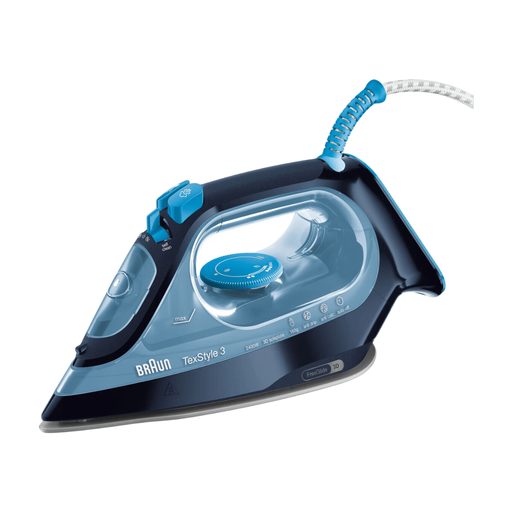 No image available
Worth considering if you’re looking for a standard steam iron for precise ironing around collars and other hard-to-reach areas.
Braun mentions a precision tip in the product description. Check the other settings and usage instructions for this version.
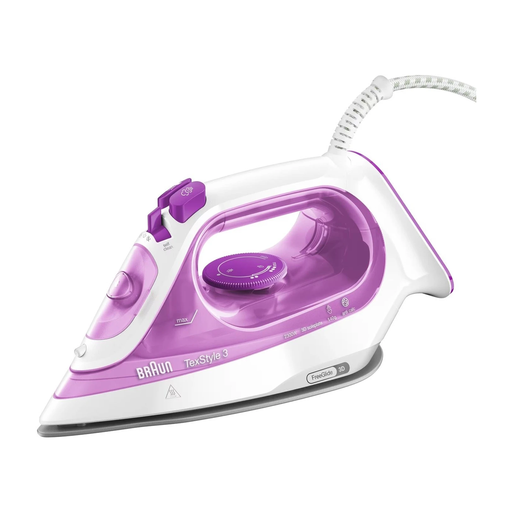 No image available
An option to consider if you’re looking for a standard steam iron mainly for collars and hems.
Braun lists a precision tip and a 270 ml reservoir for this model. Make sure you have a flat, heat-resistant surface to iron on.
 No image available
An option to consider if you want a steam iron for detailed work on hard-to-reach areas.
The product description mentions a precision tip. Check that the controls and other features suit your shirt and ironing surface.
 No image available
Worth considering if you want to iron for longer as well as tackle collars. A steam generator needs more storage space than a standard iron.
The product name lists 2400 W, a 1,4 l reservoir and a 350 g steam boost. Place both the iron and the base on a flat, stable, heat-resistant surface.
Check the care label first: it tells you the permitted temperature and whether you can use steam. Philips recommends ironing a shirt collar first. Don’t use steam if the label says not to.
A suitable handheld steamer can be handy for light creases, but Philips says steaming won’t give the same result as ironing when you want a sharply pressed collar, especially on thick cotton or linen.
Follow the descaling method and water instructions for the exact model. The Consumentenbond recommends emptying the tank after use and explains that limescale can reduce steam performance.
No. A CE mark is not an independent quality mark or a guarantee of safety, according to the Netherlands Enterprise Agency. Manufacturers of electrical appliances covered by the applicable EU requirements must comply with those requirements and affix the required CE mark, according to the Dutch government’s Ondernemersplein. Check the product identity, instructions for use and applicable conformity information for the specific product you’re considering.