Who should consider this?

Photographing shiny scarves

If bright spots dominate the fabric or embellishments, controlling the lighting is just as important as choosing a camera. Shopify Netherlands highlights reflections and bright spots as considerations when photographing shiny products.

Photographing knitting details

If you want to show individual stitches, yarn and finishing, it’s worth considering the lens’s magnification and working distance too. Adobe describes a controlled environment and good lighting as key parts of product photography.

Managing a scarf collection

When photographing several colours or styles, a repeatable setup and consistent white balance can make images easier to compare. Canon Netherlands highlights setting the white balance as an important consideration in challenging lighting conditions.

What should you look for?

Your existing camera or smartphone

When to choose this: If you mainly photograph whole scarves and your current device captures enough detail for the crop you want, try a fixed setup and adjust the angle of the light first.

The trade-off: You can put off buying a new camera, but the settings available and level of detail depend on the device you already own.

Mirrorless camera with a standard lens

When to choose this: This could suit you if you want to create consistent product photos and usually frame the whole scarf or larger sections of it.

The trade-off: A standard zoom is versatile, but check that its magnification is sufficient for individual stitches. The angle of the light still matters for shine.

Mirrorless camera with a macro lens

When to choose this: Consider this option if close-ups of stitches, yarn or finishing make up a significant part of your photography.

The trade-off: A dedicated macro lens needs a compatible mount and space for the camera and lighting. Magnification alone won’t guarantee good lighting or colour.

What to consider What should you check? Who is this important for?
Controlling reflections Test different angles for the light and product using a fixed setup. Nikon mentions a polarising filter for reflections on water and glass, but this doesn’t guarantee an effect on every type of yarn. If I want to reduce bright spots on shiny fibres without losing the look of the shine, I’ll start by adjusting the setup. Around 33% of consumers list controlling reflections as their top buying concern.
Capturing stitches and yarn Check the maximum magnification, lens mount and practical distance from the scarf and lighting. If I want to show individual stitches or yarn, I need to know whether the lens can capture the crop I want. Around 27% of consumers put knitting details first.
Comparing colours Check whether you can set the white balance and use your preferred shooting and editing workflow. Compare images in the same light with the actual scarf. If I want to present several colours or styles side by side, a consistent approach matters to me. Around 20% of consumers list colour consistency as their top buying concern.
Complete setup Check what you already own and whether the camera body on offer actually comes with a lens. If I want to make the most of my existing equipment and keep the overall setup manageable, I’ll compare the body, lens and lighting together. Around 20% of consumers prioritise the cost and configuration of the complete setup.

Buying pitfalls

  • Assuming a higher-end camera will solve problems with shine

    Bright spots and distracting reflections also call for attention to the surroundings and the position of the light. A new body won’t change your setup by itself.

    First, take some test shots with a fixed setup and adjust the angle of the light. Then consider which camera feature you still need.

  • Assuming every kit zoom can capture individual stitches in detail

    Sony lists the Sony E PZ 16-50 mm OSS II as having a maximum magnification of 0.215×. Nikon lists the Z MC 50 mm f/2.8 and Fujifilm the XF30mmF2.8 Macro as 1:1; these figures describe different lenses.

    First decide how tight you want the crop to be, then check the magnification, mount and space available for lighting.

  • Comparing camera bodies as if they all come with the same lens

    There can be different versions: a camera body and a kit with a lens aren’t automatically the same complete setup.

    Check which lens is included with each version, then compare the complete combination you need.

Camera brands to consider

Canon

The EOS R50 is an APS-C camera with an RF mount. For close-ups, the RF 35mm F1.8 MACRO IS STM is a separate lens worth considering.

  • Canon specifies 24.2 effective megapixels for the EOS R50 and a maximum magnification of 1:2 for the RF 35mm F1.8 MACRO IS STM.
  • EF-M lenses aren’t compatible with the EOS R50. Canon doesn’t specify sensor-shift image stabilisation for this body.

Sony

The α6400 uses an E-mount. The standard zoom in the kit mentioned and a separate macro lens offer different options for wider crops and close-ups.

  • Sony specifies 24.2 effective megapixels and RAW shooting for the α6400.
  • Sony lists a maximum magnification of 0.215× for the E PZ 16-50 mm OSS II; the separate E 30 mm F3.5 Macro is listed as 1:1. Check which lens comes with the version you choose.

Nikon

The Z50II is a camera body you can compare with the separate NIKKOR Z MC 50mm f/2.8 if capturing small knitting details is important to you.

  • Nikon lists a 1:1 macro ratio for the NIKKOR Z MC 50mm f/2.8. The Z50II has a tilting screen, according to Nikon.
  • The video product-review mode mentioned by Nikon isn’t evidence that it will make still photos of scarves sharper.

Fujifilm

The X-S20 is available as a body or in kit versions; the XF30mmF2.8 R LM WR Macro is a separate lens for close-ups.

  • Fujifilm specifies a 26.1 MP sensor and in-body image stabilisation for the X-S20. The manufacturer lists the macro lens mentioned as 1:1.
  • A body-only version doesn’t automatically include a lens. Check what’s in the kit you choose and compare it with your preferred shooting distance.

Joybuy cameras for this photography task

This Joybuy selection includes cameras whose product titles mention photography, as well as vlogging and zoom models. For knitted scarves, check above all that the lens and the crop you want are suitable. A stated video or zoom feature doesn’t, by itself, prove that a camera can take suitable close-ups.
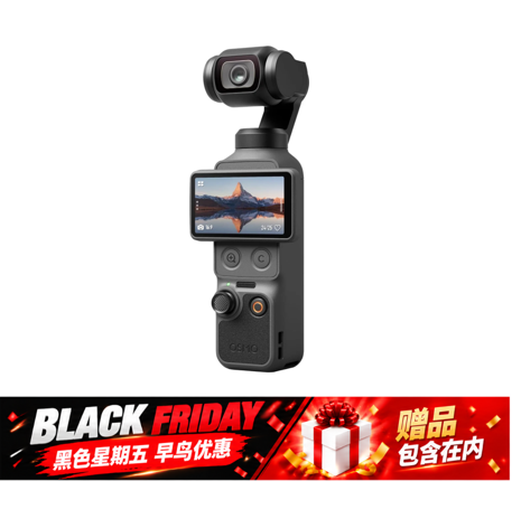
DJI Osmo Pocket 4 Standard Combo

DJI Osmo Pocket 4 Standard Combo

If you’re considering one camera for both photography and video, check in advance that it can capture the crop you want of the scarf.

The product title lists a 1″ CMOS sensor, 4K/240fps video, 2× lossless zoom and 107 GB of built-in storage.

View at Joybuy

Komery W6 digital camera

Komery W6 digital camera

If you want to try different framings of a scarf, check that the zoom and focusing distance suit the smallest details you want to show.

The product title lists 12× optical zoom, 64 MP and Wi-Fi.

View at Joybuy

DJI Osmo Pocket 3

DJI Osmo Pocket 3

If you’re also considering vlogging, it’s worth checking separately whether the camera can capture the still-image crop you want of the stitches and yarn.

The product title lists a 1″ CMOS sensor, 4K/120fps video, three-axis stabilisation and a 2″ rotating touchscreen.

View at Joybuy

Sony ZV-E10 with 16-50mm Zoom Black lens

Sony ZV-E10 + 16-50mm Zoom Black

The listed zoom lens is useful for wider crops of a scarf; check separately that its magnification is sufficient for close-ups of stitches.

The product name lists a 16–50 mm zoom lens.

View at Joybuy

Sony Alpha A6100 with 16-50mm f/3.5-5.6 OSS II lens

Sony Alpha A6100 + 16-50mm f/3.5-5.6 OSS II

If you’re comparing camera kits for scarf photography, check whether the included zoom lens provides enough magnification for the detail crop you want.

The product name lists a 16–50mm f/3.5-5.6 OSS II lens.

View at Joybuy

Frequently asked questions

Do I need to buy a different camera to reduce shine?

Not necessarily. First try a controlled lighting setup and adjust the angle between the light, camera and scarf. A polarising filter may help with certain reflections, but Nikon’s information about water and glass doesn’t guarantee that it will work on every type of shiny yarn.

How can I keep a series of scarf photos consistent?

Use a fixed camera and lighting setup, and pay attention to the white balance. Compare the colours with the actual product. RAW editing gives you more room to make adjustments, but it doesn’t replace a carefully controlled setup.

What extra purchases should I check when buying a camera body?

Check whether the version includes a lens and whether its magnification suits your detail shots. Also take into account which parts of the lighting setup you already own; a camera body isn’t automatically a complete product photography setup.

Do I always have 14 days to change my mind when buying a camera online in the Netherlands?

For an online purchase as a consumer, there is generally a statutory 14-day cooling-off period after delivery, subject to legal exceptions. ACM ConsuWijzer distinguishes between consumer purchases and purchases made mainly for business purposes. If you’re buying for business use, don’t assume this consumer protection automatically applies.

Is a manufacturer’s warranty the same as the statutory guarantee?

No. For a consumer purchase, your statutory guarantee is separate from any manufacturer’s warranty. ACM ConsuWijzer states that the seller is responsible if a product doesn’t meet what you could reasonably expect when used normally. Different rights may apply if the product is bought mainly for business use.
