A phone with a supported macro feature or a compact camera with a close-up mode is an easy way to try taking shell photos. A mirrorless camera with a suitable macro lens gives you more choice over magnification and setup. Choose based on the smallest details you want to show, and also check the working distance, the lens included in the bundle and the space available for even lighting.
Who is this choice relevant to?
Seller of small, detailed shells
You want to capture ridges, openings and other small features clearly, alongside the whole shell. So compare the close-up function or magnification of the exact camera and lens combination, as described by OM Digital Solutions, Canon Nederland and Nikon Nederland.
Seller with a wide variety of shells
You want to take a series of product photos with consistent colour, framing and lighting. A fixed tabletop setup and a preset white balance can help you repeat the process. Nikon Nederland discusses the importance of consistent lighting and white balance.
New online shop photographer
You want to check whether a phone or camera you already own can take both overview and detail shots before buying a camera or an additional lens. Apple Support describes the macro feature on supported iPhones; check whether it is available on your exact device.
What should you consider when choosing?
Phone with a macro feature
Choose this when: you want to try overview and detail shots first, using a device you already own. Apple Support describes automatic macro switching via the ultra-wide camera on supported iPhone models.
Trade-off: check that your device supports the feature. Taking photos very close up can also leave less room for lighting.
Compact camera with a close-up mode
Choose this when: you want to photograph small textures without changing lenses. The OM SYSTEM TG-7 manual describes close-ups from 1 cm and focus bracketing.
Trade-off: at very close range, there is little room for lighting, so try photographing both the smallest details and your shells as a whole.
Mirrorless camera with a macro lens
Choose this when: you want to tailor magnification, lens and tabletop setup to different shells. Canon Nederland specifies a maximum magnification of 1:2 for the RF 35mm F1.8 MACRO IS STM; Nikon Nederland states 1:1 for the NIKKOR Z MC 50mm f/2.8.
Trade-off: magnification depends on the specific lens; it is not automatically a feature of the camera body or every kit. Also check how much space is left in front of the lens for lighting.
| What to consider |
What to check before buying |
Who should pay particular attention? |
| Small shell details |
Compare the documented close-up mode or maximum magnification of the exact combination, and take a test shot of your smallest shell. |
If you want to show ridges or openings clearly, focus on finding a detail crop that works for you. Around 33% of consumers who photograph shells for an online shop prioritise detail above all else. |
| Colour and surface |
Check whether you can adjust the white balance, and assess test shots under the lighting you plan to use for your product photos. |
If light-coloured or shiny shells need to look consistent across a series of photos, a fixed approach to colour and lighting is especially important. Around 27% of consumers prioritise true-to-life colour. |
| Sharpness across the whole shell |
Review a test shot and check whether the exact camera supports focus bracketing if a single shot is not sharp enough. |
If you want to photograph lots of shells in the same way, look for a repeatable focusing method. Around 20% of consumers prioritise this consistent approach. |
| Complete setup |
Check the exact camera body, the lens included, the lens mount and any additional parts you may need. |
If you want to get started with as few extra parts as possible, you’ll want to know what you can already use and what else you need. Around 20% of consumers prioritise a simple setup that meets their needs. |
Things to look out for when buying
-
Comparing camera bodies alone
The magnification Canon Nederland quotes for an RF macro lens applies to that specific lens. A body with a different lens will not automatically offer the same close-up capabilities.
Before buying, check the full bundle name, the lens mount and the magnification of the lens actually included.
-
Confusing focusing distance with working distance
Sony Nederland lists a focusing distance of 9.5 cm for the E 30mm F3.5 Macro, measured from the sensor, and a working distance of just 2.4 cm in front of the lens. This working distance determines how much room is left for lighting.
Compare the working distance at the magnification you want, and check where you can position your light source.
-
Assuming macro mode will keep the whole shell in focus
In close-up shots, part of a shell may fall outside the depth of field. Focus bracketing takes shots at different focus distances; combining them may involve extra steps.
Review test shots at the size you plan to display them. Use stacking only if your exact camera or workflow supports it and a single shot is not enough.
Focus bracketing and combining images can take extra time.
Camera brands to consider
Apple
A possible starting point is an iPhone that supports the macro feature.
- Apple Support describes automatic macro switching via the ultra-wide camera on supported models.
- The feature is not available on every iPhone. Also check that your setup leaves enough room for lighting.
OM SYSTEM
The TG-7 is a compact camera option for close-ups without a separate lens.
- The OM Digital Solutions manual describes close-ups from 1 cm and focus bracketing.
- At such a short distance, test whether your lighting and framing still work well.
Canon
An EOS R50 with a suitable RF macro lens is an option if you want to choose a separate lens.
- Canon Nederland specifies an RF mount for the EOS R50 and a maximum magnification of 1:2 for the RF 35mm F1.8 MACRO IS STM.
- The lens specification does not automatically apply to every EOS R50 kit; check which lens is included in the bundle.
Nikon
A compatible Z camera with the NIKKOR Z MC 50mm f/2.8 is a separate macro lens option.
- Nikon Nederland lists 1:1 magnification for this lens and around 5 cm of space between the front of the lens and the subject at the closest focusing distance.
- Check that the lens is compatible with your camera body and that the available space suits your lighting setup.
Sony
The E 30mm F3.5 Macro is an APS-C E-mount option for a compatible Sony camera.
- Sony Nederland specifies 1:1 magnification and a focusing distance of 9.5 cm, measured from the sensor.
- The working distance in front of the lens is 2.4 cm. Check that the camera or lens does not block the light in your setup.
Products at Joybuy
These Joybuy product picks are related to cameras and product photography. For shell photos, take a test shot to check whether the included lens captures the level of detail you want and leaves enough room for lighting.
 No image available
Komery W6 digital camera, 12× optical zoom, 4K, WiFi, 64 MP
Take a test shot of your smallest shell to see whether it captures the details you want.
The product name lists 12× optical zoom, 4K, WiFi and 64 MP.
View at Joybuy
 No image available
DJI Osmo Pocket 3
Use a test setup to see whether this model suits the framing and level of detail you need for shell photos.
The product name lists a 1-inch CMOS sensor, 4K/120fps video, 3-axis stabilisation, fast focusing and a 2-inch rotatable touchscreen.
View at Joybuy
 No image available
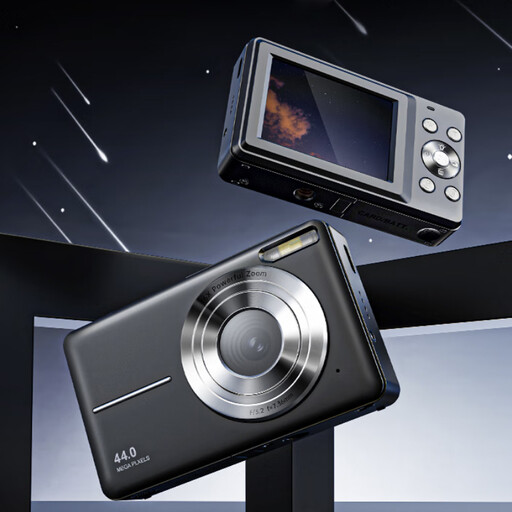
Songdian pocket camera, 4K, 44 MP, 16× zoom, black
Check a test shot to see whether the camera captures the smallest shell details the way you want.
The product name lists 4K, 44 MP and 16× zoom.
View at Joybuy
 No image available
Sony ZV-E10 with 16–50mm zoom lens, black
Check whether the included lens captures the detail crop you want for your shells in a test shot.
The product name lists a Sony ZV-E10 with a 16–50mm zoom lens.
View at Joybuy
 No image available
Sony Alpha A6100 with 16–50mm f/3.5–5.6 OSS II
Take a test shot to check whether the included lens gives you the framing you want for small shells.
The product name lists a 16–50mm f/3.5–5.6 OSS II lens.
View at Joybuy
Frequently asked questions
Do I need a 1:1 macro lens for every shell?
No, the magnification you need depends on the detail you want to show. First, try cropping a test shot of your smallest shell: Nikon Nederland lists 1:1 for the NIKKOR Z MC 50mm f/2.8, while Canon Nederland specifies a maximum of 1:2 for the RF 35mm F1.8 MACRO IS STM.
How can I make sure the whole shell is in focus?
First, check the focus with your camera in a stable setup. If the shell’s depth is not sharp in a single photo, focus bracketing followed by stacking may help. Canon Nederland describes this method as taking a series of shots at different focus distances and combining them. Check that your exact camera or software supports the steps involved.


