What should you look for when choosing?
First decide whether you mainly want to point things out live or save pages. Then compare how clearly details can be seen, the framing you need and how the device connects to your setup.
| What to consider |
What should you check? |
Who this matters most to |
| Showing small notes clearly |
View the smallest relevant notes and annotations on the participant’s screen. Compare the stated video resolution and focusing capabilities, not just the megapixel count. |
If I want to show small notes or pencil markings, the framing needs to remain legible for the pupil. Around 36% of consumers prioritise being able to read fine details. |
| Live teaching |
Check UVC support, your video conferencing software and the video settings you plan to use. CZUR lists 10 fps at 3264 × 2448 in MJPG for the Shine 800 A3 Pro. |
During a live lesson, I want to be able to select the camera in my video conferencing software without interrupting the lesson. Around 29% of consumers give live compatibility top priority. |
| Page size and positioning |
Measure your largest score and the space available on your desk; compare these with the stated capture or scan area and the model’s setup. |
If I’m showing a large sheet or two pages from a limited desk space, I want to know what will fit within the capture area. Around 21% of consumers prioritise page size and positioning. |
| Saving or annotating |
Check which export formats, software and operating systems suit the way you work. Don’t assume that text OCR can convert musical notation. |
If I want to save or annotate teaching materials for later, the software needs to suit the way I work. Around 14% of consumers give capturing or annotating top priority. |
Joybuy products for live teaching and scanning
These product picks are suited to showing a live view from a desk and capturing large, flat pages. For online lessons, also check whether your video conferencing software recognises the camera you want to use.
 No image available
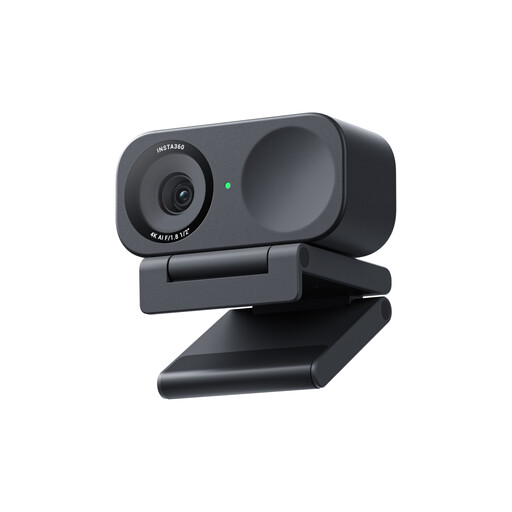
Insta360 Link 2C Standard Bundle, Graphite Black
For a live view from a desk; check for yourself that your video conferencing software recognises it and that your score is legible.
The product name lists a 4K webcam, a 1/2-inch sensor, HDR and auto-framing. According to the product description, the model is not compatible with ARM-based Windows systems.
View at Joybuy
 No image available
CZUR Shine 800 A3 Pro
For capturing large, flat score pages; check separately whether you can also use it as a live camera.
The product name lists A3, OCR, Windows and macOS. The OCR description does not confirm that musical notation can be converted into editable notation.
View at Joybuy
Frequently asked questions
What should I check before connecting a visualiser for an online music lesson?
Check whether your video conferencing software recognises the camera as a video source, then view the score on the screen your pupil will be using. IRIS and IPEVO describe UVC support for the models mentioned; this doesn’t automatically confirm compatibility with every combination of device, operating system and app.
Can an overhead scanner’s OCR convert my musical notation?
Not on the basis of the specifications mentioned. CZUR lists OCR and export to text-based file formats, but this doesn’t confirm that the software can recognise or convert musical notation.
What are my rights if a document camera I bought online isn’t suitable?
For online consumer purchases in the Netherlands, you generally have a 14-day cooling-off period after delivery, subject to legal exceptions; ACM ConsuWijzer explains this period. You are also covered by the legal guarantee if the product doesn’t meet what you could reasonably expect under normal use. The seller must then offer a solution in line with the applicable terms.
Can I show copyrighted sheet music during an online lesson or share a recording?
This depends on how it is used and the circumstances. The Dutch government states that permission is generally required to use and distribute copyright-protected work; a private copy is for personal use and must not be distributed or made public. Auteursrecht.nl describes an educational exception, subject to conditions, for education provided by the government or a non-profit legal entity. You’ll need to assess separately whether those rules apply to your specific display, copy or recording.
Can I record a lesson where pupils are identifiable?
Don’t assume that you can. The Dutch Data Protection Authority advises educational institutions to avoid recordings featuring identifiable pupils or students as a rule; according to its recommendations, such recordings may only be made in exceptional circumstances where there is a well-founded need. These recommendations apply to educational institutions; private lessons require a separate assessment.


