
Someone handling bound scores
You regularly scan music books and want to protect the spine while checking the notes near the fold. This matches the uses described by CZUR and ScanSnap for their book scanners.


Choose a contact-free scanner with page flattening if you mainly scan bound scores without pressing down on the spine. For loose sheets, an A3 document camera may be enough, while an A4 flatbed suits smaller originals that can lie flat. Check the size of your largest score, the space available at the shared desk and compatibility with your computer. If you want editable notation, you’ll need dedicated music recognition software: text OCR doesn’t convert notes into MusicXML.
You regularly scan music books and want to protect the spine while checking the notes near the fold. This matches the uses described by CZUR and ScanSnap for their book scanners.
You want to capture loose scores up to A3 and clear the scanning area after use. CZUR positions the Shine 800 A3 Pro for flat, loose pages.
You want to edit or play back the notes after scanning. Alongside a scanner, you’ll need music recognition software, such as OMR software that can convert sheet music into an editable format. Koninklijke Visio describes this, including conversion to MusicXML.
Choose this option if: you often scan bound or delicate scores and don’t want to press down on the spine. CZUR describes this use for the ET series, while ScanSnap lists page flattening as a feature of the SV600.
Bear in mind: you’ll need a dedicated space for the device and scanning mat. Test whether the fold correction works well enough for your music.
Choose this option if: you mainly scan flat, loose A3 scores and want to put the device away after use. CZUR positions the Shine 800 A3 Pro for flat, loose pages.
Bear in mind: A3 capture doesn’t automatically mean small notes will be easy to read, and it won’t replace book correction for bound scores.
Choose this option if: you mainly scan A4 originals that can lie flat on the glass. Plustek describes the OpticBook 4800 as a book-edge flatbed, while Epson positions the Perfection V39II as a compact A4 flatbed.
Bear in mind: an A4 scanning area can’t capture a larger sheet in one go. Originals also need to be placed on the glass.
| Consideration | What to check before buying | Who is this most important for? |
|---|---|---|
| Bound scores without pressure on the spine | Check that the capture area is large enough for the open book and that the model offers page flattening. | I want to scan bound scores without pressing the spine against a flatbed, and be able to check the notes near the fold. Around 33% of consumers prioritise preserving bound music above all else. |
| Capturing large loose scores in full | Measure the largest sheet and compare it with the stated capture area of the exact model. | When I use large, loose scores, I want to capture them in full within the scanning area. Around 27% of consumers prioritise large loose sheets above all else. |
| Sharing a scanner and software at a desk | Check the folded dimensions, connections and installation requirements for the computers being used. | At a shared desk, I want to be able to put the scanner away after use and know in advance which software or camera permissions each computer needs. Around 20% of consumers prioritise keeping the desk clear and sharing computer access. |
| Readable scans or editable notation | Decide whether you need an image or PDF, or output from OMR software such as MusicXML. | I want to edit or play back the notes, not just keep an image of the page. Around 20% of consumers prioritise editable music notation above all else. |
CZUR positions the Shine 800 A3 Pro for flat, loose pages and distinguishes it from the ET models, which offer page correction for books. An open book therefore needs to be checked differently from a loose A3 sheet.
Measure both loose sheets and the pages of an open book. Choose page flattening if bound scores are your main use, and check the notes near the fold with a test scan.
If the fold curves, test scans, multiple captures or post-scan correction can take extra time.
Text OCR and recognition of musical symbols produce different types of output. A scan or image-based PDF contains the notes as an image and doesn’t make them editable automatically.
Decide in advance whether you want to read and archive the music, or edit and play back the notes. You’ll need OMR software to work with musical data; check the recognised notes before using them.
Having a shared desk doesn’t automatically give you permission to distribute scans of copyrighted sheet music. The Government of the Netherlands distinguishes between a copy for personal use and distribution or publication; Auteursrecht.nl notes that permission from the rights holders is required for copies intended for a whole choir.
Keep your own scans separate from shared files, and check the relevant permission or licence before sharing copyrighted scores with others.
CZUR distinguishes between its ET book scanners, which offer page flattening, and the Shine 800 A3 Pro, designed for flat, loose sheets.
The ScanSnap SV600 is a contact-free model for books, delicate originals and loose documents up to A3.
The IRIScan Desk 6 Pro is an A3 document and book scanner with output options including images and PDFs.
The Perfection V39II is a compact A4 flatbed for smaller originals that can lie flat.
The OpticBook 4800 is a book-edge flatbed for books and other bound originals up to A4 size.
The products below range from an A3 camera for flat, loose sheets to A4 flatbed and document-feed options. Check the scanning size for each model and make sure its scanning method suits bound scores.
 No image available
Suitable for flat, loose scores if you want to put the device away after use at a shared desk; CZUR doesn’t position this model as an equivalent solution for bound books.
Capture size: A3. The design is foldable. The product name lists OCR and compatibility with Windows and macOS.
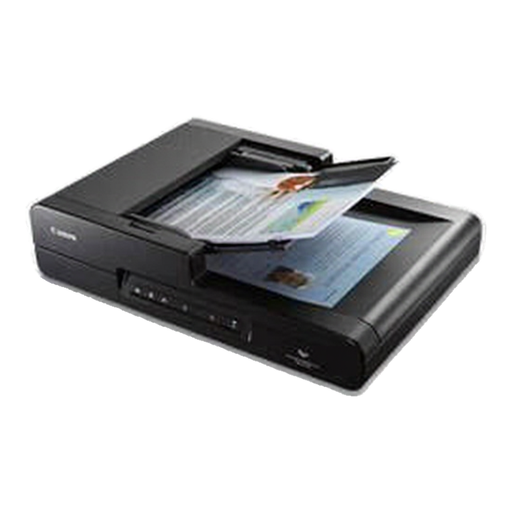 No image available
The combination of a flatbed and automatic document feeder suits workflows involving both book material and loose documents.
The stated scanning size is A4. The product information lists a 50-sheet ADF and double-sided scanning.
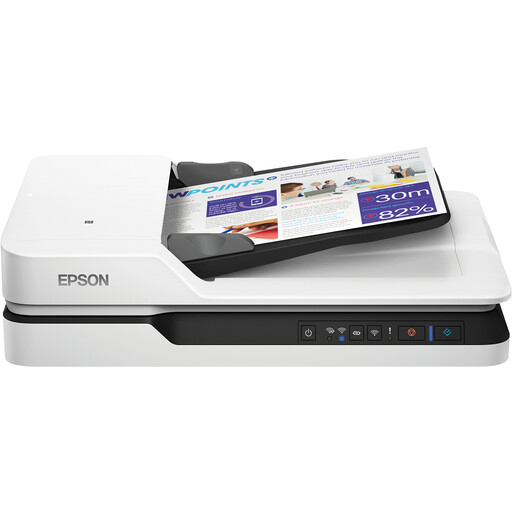 No image available
An A4 flatbed option for smaller book pages and loose originals that can lie flat; its size limits its use with larger scores.
Stated scanning resolution: 1200 × 1200 DPI. The product information lists wireless and USB connectivity, as well as double-sided scanning.
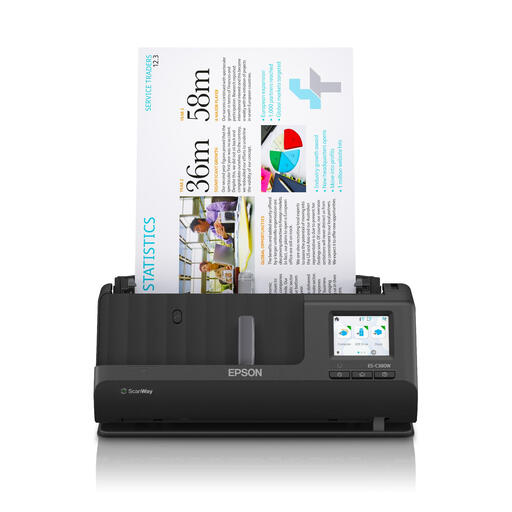 No image available
Suitable for loose A4 scores and booklets up to 5 mm thick when several users want to share a document feeder at a desk.
Stated maximum resolution: 600 × 600 DPI. The product information lists network and cloud features, as well as a compact U-path. According to this information, automatic double-sided scanning isn’t available.
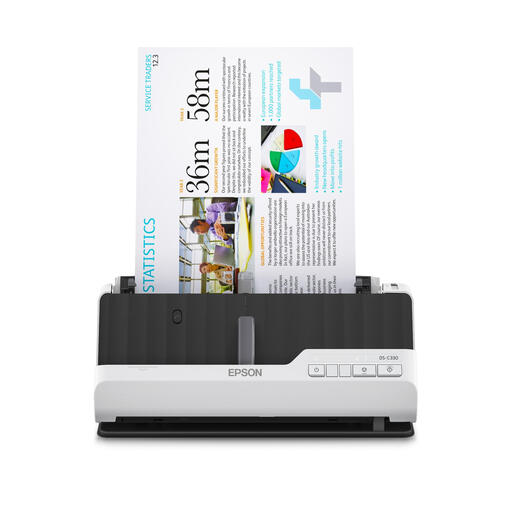 No image available
A compact feed option for loose A4 scores and booklets up to 5 mm thick; check that this feeding method suits the material you want to scan.
Stated resolution: 600 × 600 DPI. The product information lists paper protection and common file formats.
No. Text OCR alone won’t convert music notes into editable music data. You’ll need OMR software for formats such as MusicXML or MIDI, and you should check the recognised notes before using them.
Check the software and any camera permissions on the computers that will be used with the scanner. For the IRIScan Desk 6 Pro, IRIS provides installation instructions for Windows and macOS. This is specific to that model and doesn’t automatically apply to every scanner.
A shared workspace doesn’t in itself give you permission to distribute copyrighted scans. The Government of the Netherlands describes a home copy for personal use, but not distribution or publication. Auteursrecht.nl states that permission from the rights holders is required for copies intended for a whole choir; check the rights or licence before sharing files.
Contact the seller: according to the Government of the Netherlands, they must offer a solution if a product is faulty. The Netherlands has no fixed statutory guarantee period; what you can expect from a product depends, among other things, on the product, its price and the information provided. A manufacturer’s guarantee is in addition to your statutory rights.