
Teacher with bound music books
You want to capture pages without pressing the binding flat unnecessarily. CZUR describes book-flattening technology for the ET series; when testing a scan, pay particular attention to the correction around the spine.


For bound music books that you don’t want to press flat, an overhead scanner with book-curvature correction is a good fit. If you’ll mainly be scanning loose A4 sheets, a compact flatbed may be more practical. First, measure your largest score and check in a test scan that small notes remain legible. Also check whether you’re allowed to install the required software on the school computer. A scan or text OCR won’t automatically turn music into editable notation, nor does it grant general permission to share copyrighted sheet music.
You want to capture pages without pressing the binding flat unnecessarily. CZUR describes book-flattening technology for the ET series; when testing a scan, pay particular attention to the correction around the spine.
You scan loose sheets that may be larger than A4, so you’ll need to compare the capture area of the specific model. CZUR positions the Shine 800 A3 Pro for flat sheets up to A3.
You mainly scan loose A4 sheets and want to be able to put the scanner away between uses. Epson says the Perfection V39II has a built-in stand for compact storage.
Best suited to: scanning mainly bound music books without pressing the pages against glass.
Bear in mind: check the correction around the book spine, how clearly it captures small notes and how much space it takes up.
Best suited to: pages that fit within the scanning area, when you can position the book carefully.
Bear in mind: according to Plustek Europe, the Plustek OpticBook 4800 has a scanning area of 216 × 297 mm; larger scores won’t fit in a single scan.
Best suited to: when large, flat loose scores matter more than bound books.
Bear in mind: CZUR positions the Shine 800 A3 Pro for flat sheets, not as an equivalent book scanner with flattening technology.
Best suited to: scanning mainly loose A4 scores when storage space is limited.
Bear in mind: a stand for compact storage doesn’t increase the A4 scanning area.
| Key consideration | What to look for | Who is this important for? |
|---|---|---|
| Bound pages around the spine | Check the book thickness and flattening capabilities, then see whether notes near the spine are legible in a test scan. | People scanning music books want to capture pages without pressing the binding flat unnecessarily; around 36% of consumers prioritise scanning bound books. |
| Large loose scores | Measure the largest sheet and compare its dimensions with the model’s supported capture area. | People who want to save large loose sheets in a single capture should focus on the maximum size; around 29% of consumers prioritise this need. |
| Legibility and editable notation | Test small notes and accidentals on a representative page; check separately whether specialist music recognition is needed. | People who want to read scans or edit musical notation later need to know what the scan and any recognition software can do; around 21% of consumers prioritise this need. |
| Space and installation | Measure the space needed for use and storage, and check whether installation on the school computer is allowed. | People who need to put a scanner away between lessons or use a shared computer should factor in space and installation; around 14% of consumers prioritise these practical requirements. |
PDF or text output isn’t the same as musical notation that you can edit or transpose.
Decide in advance whether you only need a legible scan or editable notation too. If you need the latter, test the complete workflow using a representative page.
Editable notation may require separate music-recognition software; remember to allow time to check the conversion too.
A camera designed for flat sheets won’t automatically correct the shape of bound pages. CZUR positions the Shine 800 A3 Pro for loose, flat sheets and the ET series for book scans with flattening technology.
Choose according to what you scan most often: loose sheets or bound books.
The rules for scanning and sharing copyrighted sheet music depend on the educational context and how it will be used.
Before sharing, check which arrangement applies to your institution, the specific work and your intended distribution.
The ET24 Pro is designed for bound books, with flattening technology; the Shine 800 A3 Pro is for flat, loose sheets. They serve different purposes within the range.
The IRIScan Desk 6 Pro is an overhead option for A3 documents, with a choice of output formats.
The OpticBook 4800 is a book-edge flatbed scanner for books with pages that fit within A4.
The Perfection V39II is a compact flatbed scanner for mainly loose A4 scores.
These Joybuy products are suited to scanning loose scores in A3 or A4 format. Bound music books call for a different option: a scanner with suitable book-curvature correction.
 No image available
Suited to loose, flat scores when A3 format matters; CZUR doesn’t position this model as a book scanner with flattening technology.
The product title lists A3, text OCR and compatibility with Windows and macOS. Text OCR is not the same as converting a scan into editable musical notation.
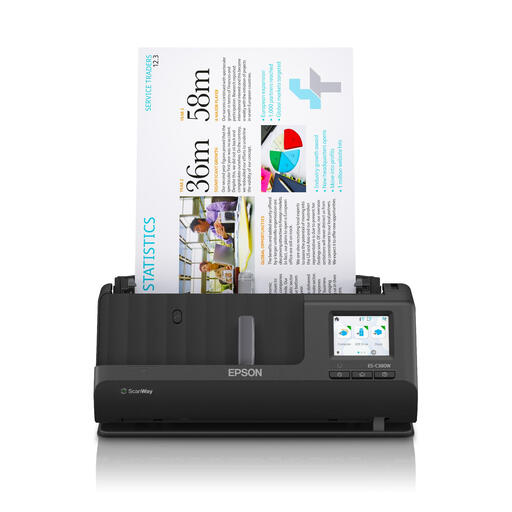 No image available
Suited to loose A4 scores when you don’t need to capture a bound book from above.
The product title lists A4, ADF, sheet-fed and 600 × 600 DPI. Check that your largest score fits within A4.
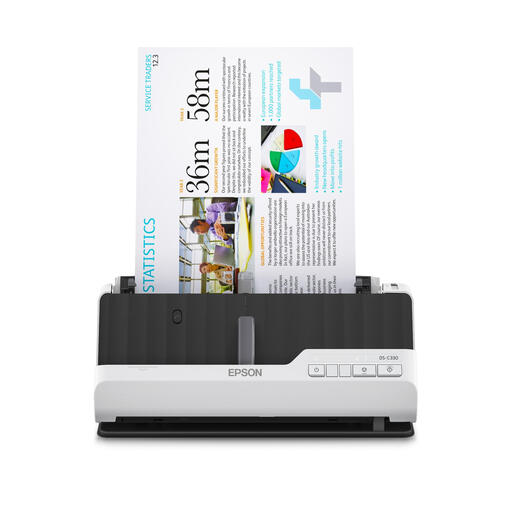 No image available
Suited to loose A4 scores when a feed scanner fits your workflow and storage space.
The product title lists A4, ADF, sheet-fed and 600 × 600 DPI. This isn’t an overhead scanner for bound books; larger scores won’t fit as a full A4 scan.
Not without limits: the Education and Copyright guidance for primary and secondary education describes an arrangement for educational purposes covering one song from a songbook or one set of song lyrics; permission is needed in advance for anything more. Which arrangement applies depends on the educational context and how the material is used. According to this guidance, the arrangement doesn’t cover public sharing on social media.
No. Text OCR won’t automatically convert a scan into editable musical notation. You’ll need specialist optical music recognition for that. Flat describes recognition for printed standard notation, but doesn’t list handwritten music as supported; check the results before relying on them.
Check whether installation is allowed and whether the operating system is compatible with your chosen scanner. IRIS says the IRIScan Desk 6 Pro requires installation on Windows or macOS and camera permission.
Decide what output you need: an image or PDF to read, or editable musical notation. Ask at school who is responsible for installation and support, and test any music-recognition software using a representative page, as you’ll need to check the converted notes.