If you mainly scan bound music books, compare a folding overhead scanner with a flatbed scanner featuring a book edge. For loose A4 sheet music, a compact A4 flatbed scanner may be enough. As well as the scanner, measure the space needed for an open score and check that your largest sheet will fit in a single scan. A searchable PDF is not the same as editable music notation.
Who is a sheet music scanner suitable for?
Musicians with a small desk
If you want to scan sheet music and put the device away afterwards, consider both its storage dimensions and the space needed for the page when it’s open. CZUR describes a folding arm for the Shine Ultra series; Epson lists a stand for the Perfection V39II.
Musicians with bound music books
With a bound book, positioning at the spine and the legibility of a test scan matter just as much as scan speed. CZUR and Ricoh describe book-correction features; Plustek specifies a book edge for the OpticBook 4800 (eBookScan).
Users with large scores
If you want to capture large sheets or open spreads, check the scanning area of the exact model you’re considering. CZUR, IRIS and Ricoh list models that support formats up to A3.
What should you look for in a sheet music scanner?
The right choice depends mainly on what matters most to you: desk space, bound pages, the size of your score or editable notation.
| What to consider |
What should you check? |
Who might prioritise this? |
| Storage and desk space |
Measure the space for the scanner and for the largest open page or scan mat. Also check how the exact model is stored. |
If I want to put the scanner away after each session, I need to know how much space the open page takes up while scanning. Around 36% of consumers put storage and desk space first. |
| Bound pages |
Check the model’s book correction or book edge, then assess a test scan for notes near the spine, shadows and distortion. |
With a bound music book, I want to be able to check the notes near the spine. Around 29% of consumers give capturing bound pages top priority. |
| Largest score size |
Measure the largest sheet and, where relevant, the open spread. Compare both with the scanning area of the model you’re considering. |
If my score is large, I want to know whether it will fit in a single scan. Around 21% of consumers prioritise scanning larger sheets. |
| PDF or editable notation |
Decide whether you want a scan archive or need to edit the notes. If it’s the latter, check which notation types are supported and compare the result with the original. |
If I want to edit the notes, I need more than a PDF scan. Around 14% of consumers give editable music notation top priority. |
Which buying mistakes can you avoid?
-
Looking only at the scanner base dimensions
A folding overhead scanner still needs space for the open page or scan mat. A flatbed scanner that can be stored upright still needs its glass plate when you’re scanning.
Before choosing a model, measure the scanner and the largest original in the position you’ll use for scanning.
An awkward set-up could mean spending extra time positioning everything at every scan session.
-
Confusing OCR with music notation recognition
PDF output or standard text recognition won’t automatically make notes editable. Flat describes separate music recognition and states that handwritten music and tablature aren’t supported.
First decide whether you want a readable scan archive or editable notation. If you need the latter, test it with your own type of score.
Editing notes may require a separate software step, followed by checking and correcting the conversion.
-
Assuming A3 support guarantees that every open score will fit
A supported scan format doesn’t mean that every sheet or open spread will fit within the scanning area. Manufacturers list formats for each model.
Measure the original and compare its dimensions with the scanning area of the exact model you’re considering.
If an original is larger than the scanning area, you may need to take several scans and join them together manually.
-
Sharing a personal scan with a music society without checking first
The Rijksoverheid describes a private copy for personal use and states that it must not be distributed or made public. The KNMO treats copying and the digital management of sheet music by societies separately.
Keep personal use separate from use within a society, and get permission for the latter where necessary.
Which brands and models are worth comparing?
CZUR
The Shine Ultra and Shine Ultra Pro are folding overhead scanners for documents and books.
- CZUR lists a folding arm and support for formats up to A3 across the series.
- The stated resolutions vary by model. The Pro’s higher stated A3 resolution doesn’t prove that music notes will be easier to read; assess a test scan.
IRIS
The IRIScan Desk 6 Pro is an overhead document camera for larger sheets.
- IRIS lists support for A3 and output formats including PDF.
- A stated speed isn’t a measurement for music books. Check the scanning space, cropping and legibility of the notes separately.
Epson
The Perfection V39II is an A4 flatbed scanner for those who mainly scan loose sheets.
- Epson lists USB power and a built-in stand for storing the scanner upright.
- The upright storage position doesn’t change the space needed to position a bound music book on the glass while scanning.
Plustek
The OpticBook 4800 (eBookScan) is a flatbed scanner with a narrow book edge for bound pages.
- Plustek specifies a 2 mm book edge.
- Plustek USA lists a casing measuring 19.3 × 11.4 × 4 inches and Windows support for the model described. Check the software and model with the retailer.
Ricoh ScanSnap
The ScanSnap SV600 is an overhead alternative for books and A3 documents.
- Ricoh lists book correction and turned-page detection as features.
- These features don’t independently guarantee flawless scans of small notes or a compact set-up. Check a test scan and the space required.
Joybuy scanners for sheet music and limited desk space
This Joybuy selection includes A4 flatbed and handheld scanners, as well as a folding A3 document camera. Compare the scanning method with your original and the space you have available while using the device.
 No image available
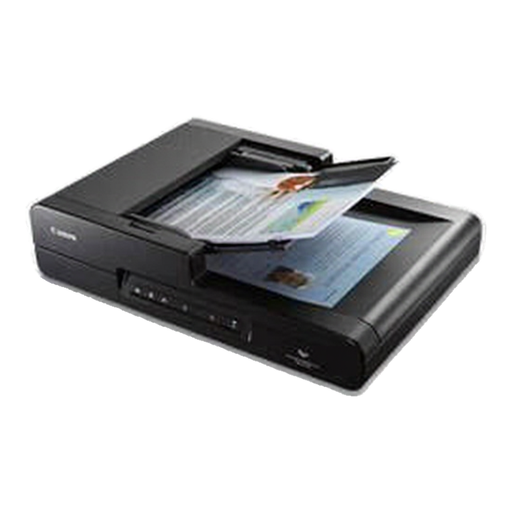
Canon imageFORMULA DR-F120 A4 Flatbed & ADF Scanner 600 × 600 DPI Black
An A4 flatbed scanner with a document feeder to consider if you scan loose sheet music and also need a flatbed.
A4; 600 × 600 DPI; black.
View at Joybuy
 No image available
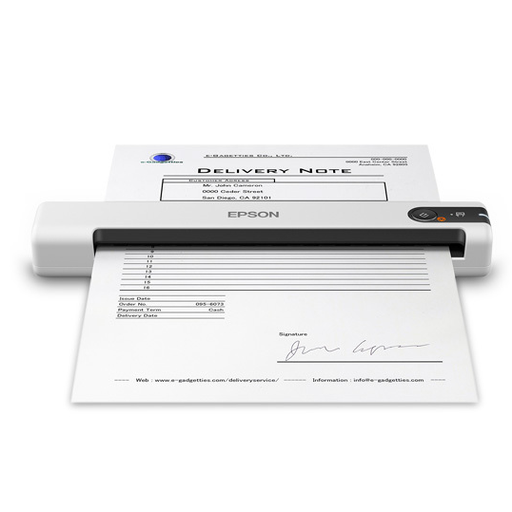
Epson WorkForce DS-70 Handheld Scanner 600 × 600 DPI A4 White
This A4 handheld scanner is an option for loose sheet music if you’d prefer a handheld scanner to a fixed flatbed.
A4; 600 × 600 DPI; white.
View at Joybuy
 No image available
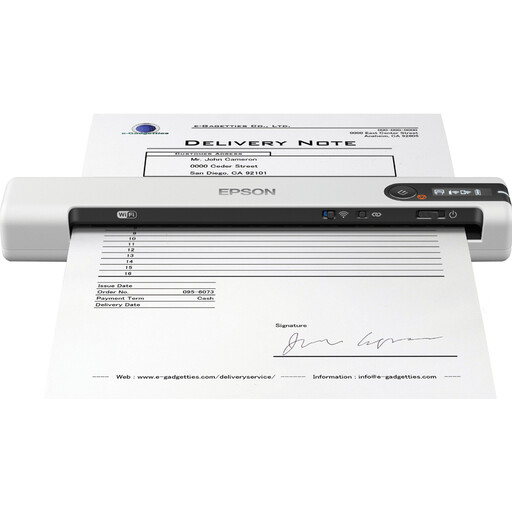
Epson WorkForce DS-80W Handheld Scanner 600 × 600 DPI A4 White
This A4 handheld scanner is worth considering for loose sheet music if you’re looking for a handheld option rather than a flatbed model.
A4; 600 × 600 DPI; white.
View at Joybuy
 No image available
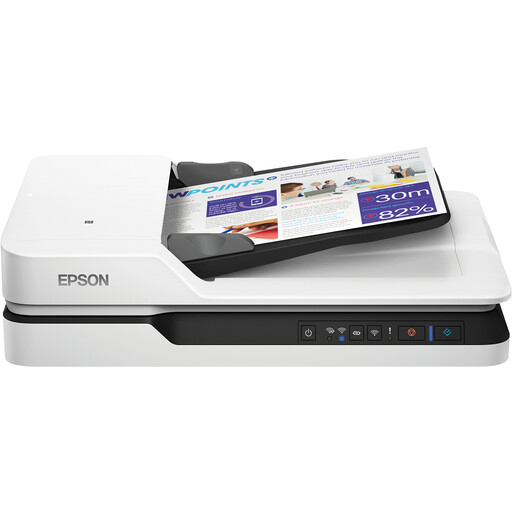
Epson WorkForce DS-1660W Flatbed Scanner 1200 × 1200 DPI A4 Black, White
An A4 flatbed scanner to compare if you mainly scan loose sheets and want a flatbed for your originals.
A4; 1200 × 1200 DPI; black and white.
View at Joybuy
 No image available
CZUR Shine 800 A3 Pro Document Camera
This A3 document camera is worth comparing if you want to capture larger loose sheets; remember to measure the available set-up space too.
A3; OCR is listed in the product name, but that doesn’t prove that music notes can be recognised or edited.
View at Joybuy
Frequently asked questions about sheet music scanners
Can I open a scanned music book straight away as editable notes?
No. A scanner’s PDF or OCR feature doesn’t mean that the notes will be editable. You’ll need separate music recognition for that. Flat says that handwritten music and tablature aren’t supported; check a conversion note by note before using it.
How do I set up an overhead scanner on a small desk?
Allow space for the largest open original beneath the camera, not just for the scanner base. You can put a folding model away after use, but check the cropping and the notes near the book’s spine with a test scan.
What should I check when buying a scanner online?
Check the seller, the software for the exact model and the returns information. The Rijksoverheid states that eligible distance purchases generally come with a 14-day cooling-off period; check whether this applies to your purchase.
Can I scan and share sheet music bought in the Netherlands?
According to the Rijksoverheid, you can make a private copy of copyright-protected work for your own use, but you must not distribute it or make it public. The KNMO describes the digital management and copying of sheet music by a music society as a separate situation, where prior permission may be required. So don’t assume that you can share a personal scan with ensemble members.


