
Volunteer handling batches of files
Regularly processes loose forms and wants to capture both sides without having to reload them each time. The National Archives describes checking for skipped pages as part of its digitisation process.


For recurring batches of loose forms, a scanner with a larger ADF, duplex scanning and double-feed detection is a better fit; Brother and Epson list these features on models including the ADS-4700W and ES-590W. Choose a more compact model if your scanning location changes, and always check delicate originals, page order and OCR output with a test batch. If the records contain personal data, decide in advance on the lawful basis, access arrangements and storage location.
Regularly processes loose forms and wants to capture both sides without having to reload them each time. The National Archives describes checking for skipped pages as part of its digitisation process.
Decides before scanning where files will be stored and who will have access if records contain identifiable information. The Dutch Data Protection Authority advises organisations to have an appropriate lawful basis and security measures in place.
Moves the scanner between locations or works with limited space, and weighs this against a lower input capacity. Brother lists USB-C power for the ADS-1800W; Epson describes the ES-C320W as a compact model.
| What to consider | What to look for when buying | Who might find this especially important? |
|---|---|---|
| Processing batches without missing sides | Compare the ADF capacity in sheets and check whether the model scans both sides and detects double feeds. | If I regularly process batches of forms, I want to capture both sides and check afterwards for missing pages. Around 29% of consumers prioritise processing batches without missing sides. |
| Storing identifiable information securely | Before use, decide on the lawful basis, who will have access and where the scanner will send the files. | When records contain names, I want to know in advance who can open the files and where they will be stored. Around 22% of consumers prioritise the secure storage of identifiable information. |
| Finding and checking scans | Test OCR with your own forms and check that pages are legible and in the right order. | If I need to find records later, I need clear files with searchable relevant text. Around 21% of consumers prioritise being able to find and check their scans. |
| Scanning in different locations | Check the power supply and connection required, as well as the ADF capacity of the exact model. | When volunteers scan in different locations, I want to be able to move the device without losing sight of its input capacity. Around 14% of consumers prioritise portability. |
| Delicate or mixed originals | Sort paper by size and condition; test anything you are unsure about separately and check which feed path is suitable. | If forms are folded or damaged, I want to know whether they can be fed safely or need to be scanned separately. Around 14% of consumers prioritise handling originals with care. |
The stated capacity does not mean a mixed batch will feed through without errors. Double-feed detection does not replace checking for missing pages or delicate originals.
Set aside anything you are unsure about, then check a test batch for both sides, page order and the number of scans.
Allow extra time to prepare and check each batch.
A scan destination does not automatically make the processing of personal data appropriate.
First, decide on the purpose, the lawful basis under the GDPR and the appropriate security measures. Then set up the scan destination and access permissions.
OCR can make text searchable, but it cannot fix skipped, incorrectly ordered or hard-to-read pages.
Test OCR with your own records, and check the scanned images and page order too.
The ADS-4700W is a desktop model worth comparing for recurring batches; the ADS-1800W is more compact and, according to Brother, can be powered via USB-C.
The ES-590W is designed for larger batches; according to Epson, the more compact ES-C320W offers both a U-turn path and a straight-through feed.
The imageFORMULA R30 is a model worth comparing for a fixed Windows or Mac scanning station, with an ADF, duplex scanning and OCR.
This selection focuses on document scanners with an ADF for batch processing; some models combine this with a flatbed for originals you want to scan separately.
 Image unavailable
The flatbed and ADF combination gives you two ways to scan documents, including material you do not want to feed through the scanner.
The product description lists a 50-sheet ADF, duplex scanning, 20 pages per minute and CaptureOnTouch 3. The stated resolution is 600 × 600 dpi.
 Image unavailable
The ADF capacity and duplex feeding make this a good fit for recurring batches from a fixed scanning station.
The product description lists a 100-sheet ADF, duplex scanning, an active roller separation system and ultrasonic detection. The network interface and flatbed are described as optional, so they are not necessarily included with this version.
 Image unavailable
The ADF is suitable for batches, while the flatbed provides a separate scanning option for material that cannot be fed through the scanner.
The product description lists a 100-sheet ADF and single-pass duplex scanning. The network interface is described as optional, so network connectivity is not confirmed for this version.
 Image unavailable
This model combines batch feeding with a slow mode which, according to the product description, is designed for delicate documents.
The product description lists a 100-sheet ADF and automatic duplex scanning. It also advises against putting stapled, paper-clipped or torn pages in the ADF.
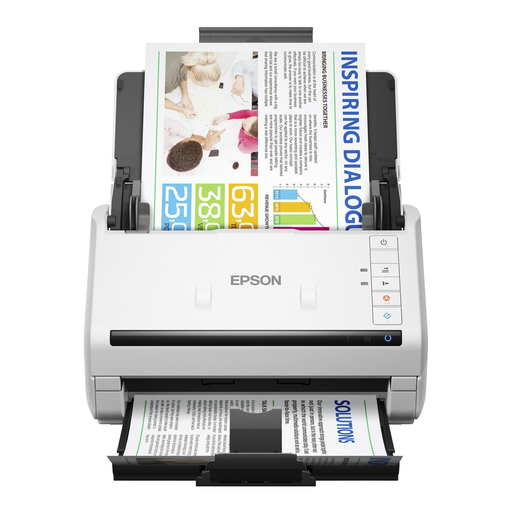 Image unavailable
The ADF and USB connection make this a good fit for batches managed from a computer workstation.
The product description lists a 50-sheet ADF, single-pass duplex scanning, USB 3.0 and compatibility with Windows and Mac. A standalone network connection is not listed.
Not without assessing the processing first. According to the Dutch Data Protection Authority, an appropriate lawful basis under the GDPR is required if records contain personal data; security measures must also be proportionate to the risks. The lawful basis for a particular record depends on its purpose and the data it contains.
Yes. Health data is special-category personal data and receives additional protection. Assess the content and processing of the records individually; do not assume that rules specifically for healthcare providers apply. The Dutch Data Protection Authority explains how health data is protected.
The GDPR does not set a single general retention period for personal data. According to the Dutch Data Protection Authority, organisations must not keep data for longer than necessary; other laws may set specific periods for certain documents. The retention period for your group’s records depends on the document and its purpose.
Start by sorting and preparing the documents, then check a test batch for image quality and skipped pages. The National Archives describes these checks as part of its own digitisation process; use them as a practical approach, not as a legal standard for a community group.
No. OCR recognises text, but does not check whether every page has been scanned or is legible. Canon lists OCR for the imageFORMULA R30, and Epson describes software for searchable PDFs. Test text recognition with your own forms, and check the images and page order too.