
Vandaag of morgen in huis

Kwaliteit gegarandeerd

Welkomstaanbiedingen ontgrendelen: GRATIS bezorging | Tot 80% korting | Gratis 30 dagen JoyPlus-proefperiode
Download de app
A chef’s knife needs to do a lot: finely slice vegetables, chop herbs, portion meat and prepare fish. Yet many people mainly buy based on a shiny product photo or phrases such as “extra sharp”. This can result in a knife that quickly becomes blunt, is uncomfortable to hold or does not suit your cutting technique.
As a Joybuy Product Recommendation Officer, I therefore start by looking at verifiable features: blade length, steel type, handle, maintenance and intended use. Below, you’ll find what to consider before buying a chef’s knife, santoku knife or cleaver.
A sharp kitchen knife is not automatically the right purchase for you. The sharpness of a new knife says little about how it will perform after prolonged use. More important are the cutting angle, steel and the way you maintain the knife.
A blade with a smaller angle can cut precisely, but it also requires careful use. Cutting on glass, stone or metal can damage the edge. A dishwasher is also unsuitable for every knife.
A 20 cm chef’s knife provides room for large ingredients and long cutting movements. In a smaller kitchen or for detailed work, however, a 16 or 17 cm blade may be easier to control. Also consider the weight and the balance between the blade and handle.
A heavy forged chef’s knife feels stable, but may not be comfortable for everyone during prolonged cutting. A lighter kitchen knife for everyday use may be more suitable for herbs, fruit and small vegetables.
A santoku knife usually has a broader, relatively straight blade. This works well for vegetables, fish and meat, particularly with an up-and-down cutting motion. A classic chef’s knife often has a curved edge that allows you to rock the blade while chopping.
A cleaver is designed for more demanding work. Do not use a bone cleaver as a fine slicing knife, and do not use a thin santoku knife for bones. The shape of the blade determines what the knife is suitable for.
For many Dutch households, these lengths are practical:
Also check whether the blade has a straight, slightly curved or particularly broad shape. A classic chef’s knife is versatile for meat and vegetables. A santoku knife is compact and broad, while a cleaver uses more mass to cut through firm ingredients.
Stainless steel is practical for everyday use, as it is more resistant to moisture and discolouration than many uncoated carbon-steel knives. X50CrMoV15 is a commonly used stainless-steel type in European kitchen knives. However, the exact hardness and sharpness depend on the heat treatment and sharpening; the steel name alone does not tell the whole story.
With a forged chef’s knife, the blade is formed from a single piece of steel. This can contribute to a sturdy construction and a well-balanced feel. A stamped knife may be lighter and can sometimes be more affordable. Neither construction is inherently suitable for every user.
When a coating or special sharpening technique is claimed, check the product information carefully. According to a brand’s own research, certain techniques may improve sharpness or durability, but such claims are not a universal guarantee. Focus especially on specific details such as blade length, material and maintenance instructions.
An ergonomic handle should sit securely in your hand without creating pressure points. If you are left- or right-handed, it is worth checking whether the shape is suitable for both hands.
In practice, maintenance has a major effect on the knife’s lifespan:
“Dishwasher-safe” does not mean that the dishwasher is always the wisest choice. Heat, detergents and contact with other cutlery can damage the edge and handle more quickly. For several models, hand washing is recommended even if machine cleaning is technically possible.
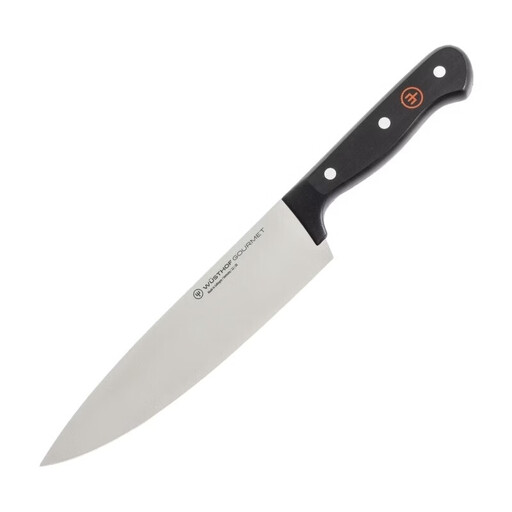
Why it suits this profile: The 20 cm blade length provides a versatile foundation for vegetables, meat and herbs. The plastic handle and lightweight design are practical for everyday cooking.
The product information specifies a clear size, stainless-steel blade and full-tang construction rather than making only a general sharpness claim. Hand washing is recommended for a longer lifespan.
20 cm blade, ergonomic plastic handle and, according to the product description, suitable for slicing, dicing and chopping. The listing mentions dishwasher use, but hand washing is still recommended.

Why it suits this profile: This 17 cm Japanese kitchen knife is ideal for cooks who want a compact, versatile santoku knife for vegetables, herbs, fish and meat.
The specifications state X50CrMoV15 high-carbon stainless steel, a synthetic handle and hand washing. This makes the material and maintenance requirements clearer than those of a product advertised only as “Damascus” or “professional”.
17 cm blade, a forged construction according to the product information and a stated sharpening angle of 14° per side. The indentations can help prevent sliced ingredients from sticking to the blade.
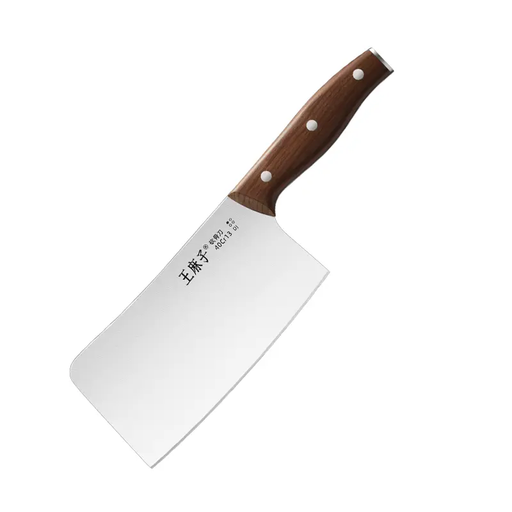
Why it suits this profile: This cleaver is designed for demanding tasks such as cutting bones, ribs and poultry. It is therefore a complement to a chef’s knife, not a replacement for fine slicing.
The product name and description make its specific purpose clear: chopping bones and poultry. This helps prevent you from putting a thin santoku knife or all-round chef’s knife under the wrong kind of strain.
Forged construction according to the product description, a sturdy design and a handle intended to provide control. Always use a suitable chopping board and keep your fingers away from the cutting line.
We have compiled a complete, up-to-date list of products that fully meet these strict selection criteria and the applicable European safety regulations.
Its lifespan depends on the steel, frequency of use, chopping board and maintenance. With normal household use, a chef’s knife can last for years if you wash it by hand, store it dry and sharpen it regularly. A blunt knife is not necessarily worn out; often, the edge can simply be restored.
A 16 cm knife is manoeuvrable and suitable for smaller ingredients and limited workspace. A 20 cm blade provides more cutting surface for large vegetables and pieces of meat. Choose the length that allows you to keep the tip and edge under good control.
A chef’s knife usually has a curved edge for rocking chopping motions. A santoku knife is often broader, shorter and straighter, and works well with a direct up-and-down cutting motion. Both can be used for vegetables, meat and fish; your cutting technique determines which shape feels more comfortable.
