
Film night organiser
You want to check in advance that your chosen adventure film and its app work on the shared TV, so you don’t buy an extra device unnecessarily.


First, check that the film and app you want work well on the shared TV; you may not need a separate streaming device after all. If you do want another device, choose one based on its controls, the connection available by the TV, and the picture and sound formats supported by the film and your equipment. Check which cables you need and what product documentation comes with the device.
You want to check in advance that your chosen adventure film and its app work on the shared TV, so you don’t buy an extra device unnecessarily.
You switch between users or phones and want to find out how profiles, recommendations and casting work in a shared space.
You check the connection by the TV and whether the screen, film and sound system support the picture and audio formats you want.
First, check the film and app you want. Then compare the controls, network connection and ports to find the right fit for your set-up.
A good fit if: the film service you want is available on this TV, works well and everyone can use the existing remote.
Consider: the range of apps varies between TVs and may change over time.
A good fit if: your TV has an HDMI port and you want a compact Wi-Fi set-up with its own remote.
Consider: check each model for the app you want, its power supply and the space available behind the TV.
A good fit if: you want a separate Google TV interface and remote, and the Wi-Fi signal by the TV is good.
Consider: check each box for the app and included items; ports vary between models.
A good fit if: you can connect a network cable by the TV or specifically want a wired network connection.
Consider: check the version and box contents; some models require you to buy an HDMI cable separately.
| What to consider | What to check before buying | Who will find this important? |
|---|---|---|
| Access to the film and app | Check whether the service and specific title you want are available on the TV or streaming device. | If I want to watch an adventure film, I want to know that the specific title and app work before choosing extra equipment. Around 25% of consumers put access to films and apps first. |
| Controls and profiles | Check device profiles and app accounts separately. To cast, your phone and receiver need to be able to find each other over the network. | If we share the TV, I want to know whether everyone can tailor the controls and recommendations to suit them. Around 20% of consumers put shared controls and profiles at the top of their list. |
| Connection by the TV | Test Wi-Fi where you watch; consider ethernet only if a network cable is available there. | If the Wi-Fi connection is unreliable by the shared TV, I want to know whether a wired connection is an option. Around 20% of consumers prioritise the connection where they watch. |
| Picture and sound | Check that the film, service, subscription, TV and any connected sound system support the format you want. | If I want to watch a film in a particular picture or sound format, I check the whole playback set-up, not just the device logo. Around 20% of consumers put picture and sound first. |
| Connections and included items | Check which cables and adaptors are included with each version and which ports your TV has. | For a straightforward set-up, I want to know in advance which items I already have and what else I need. Around 15% of consumers prioritise having everything they need for installation. |
A streaming device supporting a format doesn’t guarantee that every film is available in that format or that the rest of your set-up can display it.
Check the specific film and service, your TV and connected audio equipment before basing your choice on a format.
Google TV supports multiple user profiles, but that doesn’t determine how accounts or profiles are set up in individual film services.
Check the device profiles and account settings for each shared service separately.
The Google TV Streamer (4K) has built-in ethernet and requires an HDMI cable, sold separately. Xiaomi lists an HDMI cable in the box and Wi-Fi connectivity for the TV Box S (3rd Gen).
Compare the full model specification with the cables, ports and network connection available by your TV.
The Dutch government says that a business or organisation showing films to employees or guests needs a licence.
First establish who has access to the space. If you’re showing a film outside the home, check the rights for that specific film.
The Google TV Streamer (4K) is a box for anyone looking for Google TV, casting and built-in ethernet.
The TV Box S (3rd Gen) is a Google TV box for a set-up that can run over Wi-Fi.
The Apple TV 4K (3rd generation) is an option if you prefer Apple controls; the 128 GB version has ethernet.
The LEAP-NOVA-X is a compact Google TV stick to compare with streaming boxes.
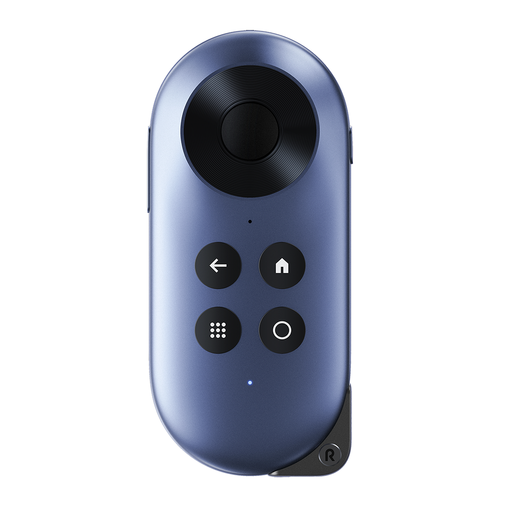
This product selection features a portable Android TV streaming device with a remote for use with a TV.
 No image available
A portable streaming device with an Android TV interface and a remote for controlling it by the TV.
The product description lists a built-in 5000 mAh battery and video streaming through a Google-certified Android TV interface.
According to the product description, Netflix is not currently supported, so check in advance whether the film app you want will work.
Wireless devices sold on the Dutch market must meet the applicable European product requirements. Check that the device has the required CE marking and EU Declaration of Conformity.
Not if the app and film you want are available on your TV and work well. The range of apps varies between televisions and may change.
No. Check the film and service, your subscription, TV and connections. For 4K UHD playback on Netflix specifically, Netflix recommends a stable connection of at least 15 Mbps. This isn’t a general requirement for every service or film.
Equipment with Wi-Fi or Bluetooth sold on the Dutch market must meet the applicable European requirements for radio equipment. Business.gov.nl says that the manufacturer must provide the required CE marking and EU Declaration of Conformity; these general requirements don’t, by themselves, establish whether a specific model complies.
For a standard online purchase of goods by a consumer, there is generally a 14-day cooling-off period from the date of receipt, subject to legal exceptions and possible return costs. Your Europe explains this right to cancel. In the Netherlands, the legal guarantee doesn’t have a fixed duration; for a faulty product, the Dutch government says the seller is responsible for providing an appropriate solution free of charge.
It depends on the space and the screening. The government says that a business or organisation in the Netherlands showing films to employees or guests needs a licence. A shared living room isn’t automatically such a venue; if you’re showing a film outside the home, check the rights for the specific film and service.