
Paper-based problem solver
You write out the comparison on paper and want every step to remain visible. A camera positioned above the page is a good option to consider.


If you mainly write on paper, start with a document camera that you can position above your work area; IPEVO describes the V4K as having an adjustable arm and UVC video. If you want to switch between your face and desk during the same conversation, consider a tilting webcam, but check that the whole page and small characters remain legible. For explaining work on a board, a movable webcam could be a good fit. In a shared studio, frame the shot as tightly as possible and check separately which camera and microphone your video-calling app is using.
You write out the comparison on paper and want every step to remain visible. A camera positioned above the page is a good option to consider.
You want to switch between your face and your working on a desk or board. First, decide which switching and mounting options your setup can accommodate.
You want to share your work without unnecessarily filming or picking up audio from housemates or colleagues.
Choose this setup: if the steps written on paper are your main focus. An adjustable arm can help you capture both the page and your writing hand.
Bear in mind: the camera won’t automatically show your face as well. Also check the resolution and frame rate if your hand moves as you write.
Choose this setup: if you want to switch between yourself and a small piece of work on your desk during a conversation. Logitech describes the Brio 500’s Show Mode as allowing you to tilt the camera downwards.
Bear in mind: being able to tilt the camera doesn’t prove that the whole page or small symbols will be legible. Test the angle and framing in your own video-calling app.
Choose this setup: if you stand at a board and want to use a preset board view or tracking. OBSBOT describes the Tiny 2 as offering tracking and a whiteboard mode.
Bear in mind: a board at a distance needs different framing from paper positioned directly beneath a lens. Check that the writing remains legible and the camera stays within the frame you want.
When choosing a camera for a shared studio, people have different priorities. Check both how legible your work appears and what your camera and microphone pick up.
| What to consider | What should you check before buying? | Who is this important for? |
|---|---|---|
| Legibility of each step | Check the framing and focus at writing distance; view a test image in the video-calling app you use. | When I share a comparison on paper, I want to be able to follow the characters and their order clearly. Around 33% of consumers name the legibility of each step as their top priority when buying. |
| Switching between your face and your work | Test whether you can capture the whole page or board and whether the camera can achieve the angle you want in your setup. | When I switch between myself and my work while explaining something, I want to see whether this works with my setup. Around 27% of consumers make this a priority. |
| Privacy and framing | Check what the camera actually captures and which microphone source the app is using. | When I want to share only my work in a shared studio, I make sure others aren’t unnecessarily captured on camera or picked up by the microphone. Around 20% of consumers name privacy as their top priority. |
| Connection and clear audio | Check that your computer and video-calling app recognise the camera and that the selected microphone works well in the room. | When I explain something live, I want the camera to be easy to use and my voice to come through clearly. Around 20% of consumers prioritise connection and clear audio. |
IPEVO specifies a maximum of 30 frames per second at Full HD for the IPEVO V4K, and up to 15 at its highest stated resolution. The resolution and frame rate are therefore separate settings.
Compare both figures for the picture mode you actually want to use, and view a test image while writing.
Show Mode on the Logitech Brio 500 lets you tilt the camera towards the desk. That alone doesn’t tell you whether your page or small symbols will be legible on screen.
Check the mounting height and framing before buying. Test the whole writing area in the app you use.
A movable camera may show a different view from one that stays pointed at your paper. In a shared studio, this could also bring other people or personal information into view.
Check the frame after changing the camera position, and make sure your use of the camera, microphone and recording follows the arrangements for your situation. The Dutch Data Protection Authority distinguishes between continuous camera surveillance in the workplace and other forms of video calling.
The V4K is a document camera for showing paper through a computer.
The Brio 500 is a webcam for switching between your face and work on your desk.
The HD Pro is a document camera for paper and video calls.
The Tiny 2 is a movable webcam for explaining work at a board.
The MX-P3 is a document camera to consider if you need a physical presentation output as well as a computer connection.
This selection includes webcams and a monitor with a webcam. If you want to show a comparison on paper or a board, check before buying that your whole work area will be visible and legible in your setup.
 No image available
The title mentions a webcam; check whether you can point the camera at your face or work area in your setup.
Specifications in the product name: 27-inch QHD IPS, 100 Hz and webcam.
 No image available
If you want to cover the lens when the camera isn’t in use in a shared studio, check that the version you choose offers the cover you need.
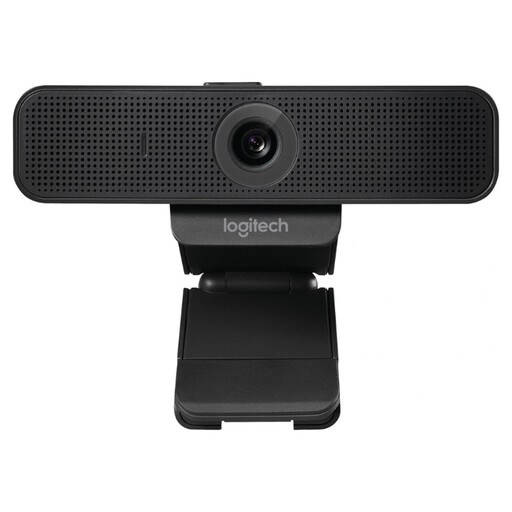
Specifications in the product name: USB webcam, 30 fps, black; model 960-001076.
 No image available
A privacy cover may be useful when explaining something in a shared space; check that the version you choose suits your needs.
The product name lists 4K UHD, 8MP, autofocus, two built-in microphones and a privacy cover. This is the EU version in black.
 No image available
If you explain something during a video call, check that you can mount the webcam in the right place and that the selected microphone setting suits the room.
The product name lists 2K QHD and a microphone with noise reduction. This is the EU version in silver.
 No image available
If you want to show both yourself and a work area in the same studio, test the framing and any changes in camera position with the camera where you plan to use it.
The product name lists a 4K webcam for PC and Mac, a 1/2" sensor, auto-framing and HDR. Version: Standard Bundle, Graphite Black.
It can if switching between the two is enough: Logitech describes the Brio 500 as having a mode for showing work on your desk. If you want both in view at the same time, check whether your video-calling software supports multiple camera sources and the view you want; Show Mode alone doesn’t confirm this.
Position the paper within the frame, select the document camera as the video source and check the focus at the actual writing distance. The HUE HD Pro has manual focus; for the IPEVO V4K, the app you use needs to recognise the UVC video source.
First, check which privacy rules apply to your situation. The Dutch Data Protection Authority states that, in education, relevant considerations include who appears on camera, recordings, informing people and data retention; a DPIA is required when processing involves a high privacy risk. The authority also distinguishes between continuous camera surveillance in the workplace and a temporary video call. Point the camera at your work and make sure any recording or sharing is appropriate for your specific situation.
No. ACM ConsuWijzer explains that Dutch consumers have a legal guarantee, in addition to any seller’s or manufacturer’s warranty, based on what they could reasonably expect from the product. If a product is faulty, the seller is your point of contact; the outcome depends on the circumstances.