
A text printer for housemates
You share a printer mainly for black-and-white course materials and want to print double-sided without paying for colour features you don’t use.


Do you mainly print black-and-white text? A monochrome laser printer is a sensible option to compare. For colour, the choice between cartridges and refillable tanks mainly depends on how often you print together. Also consider the cost of the right refills, space for paper and compatibility with everyone’s devices. None of these printer types will, on its own, keep confidential printouts private: agree that everyone collects their personal prints straight away.
You share a printer mainly for black-and-white course materials and want to print double-sided without paying for colour features you don’t use.
Several laptops or phones use the same printer in a small space. Easy access to the paper tray and collecting personal printouts both matter.
Colour helps distinguish parts of diagrams or study materials. The choice between cartridges and tanks mainly depends on how regularly you print together.
Add up everyone’s printing needs. This will help you weigh up black-and-white and colour printing, breaks between print jobs and shared use for your situation.
| What to consider | What should you check? | Who should pay particular attention? |
|---|---|---|
| Lots of text with no colour | Compare automatic double-sided A4 printing and the toner and drum replacement requirements for the exact model. | If I mainly print long sets of text, I don’t want colour features I don’t need. Around 29% of consumers give black-and-white text pages top priority. |
| A shared print station | Check that the printer connects to everyone’s devices and home network, and measure the space with the trays open. | When several residents share one printer, everyone needs to be able to reach the input and output trays. Around 29% of consumers prioritise practical shared use. |
| Long breaks between print jobs | Estimate how often everyone will print. The Consumers’ Association (Consumentenbond) points out that ink can dry out in an inkjet printer and cause blockages. | If I only print occasionally, I also want to know what long breaks mean for maintenance. Around 21% of consumers put irregular use at the top of their list. |
| Regular colour printing | Work out how many colour pages you print and compare the correct cartridges or tank refills for the model. | If you need colour to distinguish diagrams and notes, your combined colour-printing volume matters. Regular colour printing is the main requirement for around 21% of consumers. |
Running costs also depend on how much you print together and which refills are compatible with the model.
Compare the cartridges, toner and any separate drum for the exact model against your expected black-and-white and colour usage. If you don’t use an inkjet printer often, also allow for ink used during cleaning.
HP specifies manual double-sided printing for the Smart Tank 580, 5000 and 5100 series, and automatic double-sided printing for the 7000 series.
Check the full model name and look specifically for automatic double-sided printing.
With manual double-sided printing, someone has to turn the paper over, which means extra steps for longer sets of notes.
A printout can be left in view in the output tray, even if the print job was sent wirelessly.
Agree that residents will collect personal printouts straight away. If an organisation processes personal data via a printer, it must decide for itself which security measures are appropriate.
Brother offers both monochrome laser printers for text and separate colour inkjet models with scanning and copying functions.
The PIXMA TS4150i is a cartridge-based inkjet option for colour printing and scanning, while the i-SENSYS LBP243dw II is designed for black-and-white documents.
The EcoTank ET-2950 is a colour inkjet printer with refillable tanks, for residents who regularly print in colour together.
HP Smart Tank includes colour inkjet printers with refillable tanks; double-sided printing varies between series.
These options include monochrome and colour printers, with laser and inkjet models for different print volumes and shared study tasks.
 No image available
Suited to shared colour printing when you also need to scan and copy.
Lists A3 printing, automatic double-sided printing, Wi-Fi, Ethernet and USB. The product name lists 1200 x 4800 DPI and 31 ppm.
 No image available
Suited to shared colour notes when residents also want to print double-sided, scan and copy.
The product information lists automatic double-sided printing, a 35-page automatic document feeder and dual-band Wi-Fi.
 No image available
Suited to A4 study documents when colour and scanning and copying functions are useful.
The product information lists a 60-sheet paper input and USB 2.0, as well as printing, scanning and copying functions.
 No image available
Suited to shared sets of mainly black-and-white A4 study text, with automatic double-sided printing.
The product information lists Wi-Fi, Ethernet and USB.
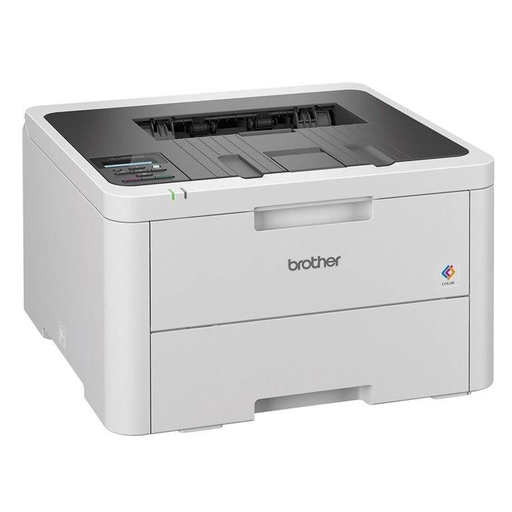 No image available
Suited to shared A4 notes that need to be printed in colour, with wireless printing for residents.
The product information lists Wi-Fi. The product name lists 600 x 2400 DPI.
Only if colour helps distinguish information on paper that you can’t make out clearly in black and white. For notes that are mainly text, a monochrome laser printer is a sensible option to compare. You could also check whether a representative page is still clear in black and white.
Check that the exact model works with residents’ devices and connection, and leave enough room for paper input and output when positioning it. Collect personal printouts straight away. If an organisation processes personal data via the printer, it must decide for itself which security measures are appropriate; there is no general legal specification requirement for every home printer.
Compare the correct cartridges, ink bottles or toner for the exact model, and check whether the drum is replaced separately on models that have one. Infrequent inkjet use can mean extra ink is used for cleaning; quoted yields don’t automatically tell you how many pages you’ll be able to print yourself.
For a consumer purchase, the seller is responsible for the statutory guarantee if the product doesn’t perform as you could reasonably expect under normal use. A manufacturer’s or seller’s warranty doesn’t replace this right; the appropriate solution depends on the circumstances.
No. According to the Dutch Government, when private individuals buy a new, similar appliance, the Dutch ‘old-for-new’ scheme applies: the seller must take back the old appliance free of charge, including for online purchases, using the applicable return method. You can also take an old appliance to another collection point or your local council.