
Housemates who cast to a shared screen
Want to find and control the shared screen from their own phones. Google Streaming Help explains why network isolation can matter.


You don’t necessarily need an extra Wi-Fi router: keep using the existing provider router if the shared screen and phones can already connect reliably. If you do buy your own router, first check that you can access the existing connection and that its settings allow you to control the screen. An isolated guest network can block Google Cast.
Want to find and control the shared screen from their own phones. Google Streaming Help explains why network isolation can matter.
First need to find out who manages the existing router and whether they’re allowed to connect their own device. ACM ConsuWijzer makes it clear that having the freedom to choose your router with a telecoms provider doesn’t automatically give you access to a connection managed by a housemate or landlord.
Want to give others access without making all their personal devices visible, while still being able to control the shared screen. Google Streaming Help explains selective sharing for Google’s own guest Wi-Fi.
Choose this if: the screen and phones are already connected reliably, and the administrator can arrange the necessary settings.
Keep in mind: settings and updates remain dependent on the provider or network administrator; VeiligInternetten recommends enabling automatic updates where possible.
Choose this if: you have permission and access to the existing connection, and want to manage the Wi-Fi settings yourself.
Keep in mind: you’ll need a suitable wired connection and will be responsible for configuration and updates yourself.
Choose this if: a well-positioned router doesn’t reach the living area and you genuinely need extra coverage.
Keep in mind: adding extra units makes setup more involved. Also check compatibility between generations and the number of Ethernet ports.
| What to consider | What to look for when buying | Who should pay particular attention? |
|---|---|---|
| Connecting your phone and screen | For Google Cast, Google Streaming Help recommends using the same Wi-Fi network and warns that AP isolation can prevent devices from communicating with each other. For other screen protocols, follow the relevant instructions. | If I want to control the shared screen from my phone, that phone needs to be able to find the screen on the network. That’s why around 33% of consumers prioritise communication between devices. |
| Connecting to the existing service | Check who manages the connection, whether you have permission and which wired connection is available. | If I’m renting and someone else manages the connection, I want to find out first whether I can connect my own router. Around 27% of consumers prioritise connecting to the existing service. |
| Privacy and sharing access | Check which devices can be reached via a guest network, and whether you can still control the shared screen from it. Google Streaming Help explains selective sharing for Google’s own guest Wi-Fi. | If I want to keep personal devices private but still let housemates use the screen, I look for settings that allow both. Around 20% of consumers give privacy the highest priority. |
| Size and maintenance | Test the connection by the screen before buying extra units. If you’re expanding your setup, also check the ports, compatibility and available update settings. | If I don’t want a bigger setup than necessary in a small home, I look for easy management and coverage that meets my needs. Around 20% of consumers prioritise a simple, suitable setup. |
Network isolation can block the local communication Google Cast needs to find the screen.
Check how the screen is controlled and which devices on the router you choose can still communicate with each other.
Having the freedom to choose your router with a provider doesn’t automatically mean you can access the connection or its settings in a shared home.
Before buying, check the physical connection, your access rights and the existing network setup. Depending on that setup, you may need extra equipment or installation work.
Extra coverage only matters if the connection is inadequate where the screen is. Mesh generations and port configurations aren’t necessarily interchangeable either.
Test the existing connection first, then check the compatibility and ports of any planned additions. Extra units or a switch may make the setup more involved.
The Archer AX55 is a useful reference for anyone looking for a standalone dual-band Wi-Fi 6 router.
The RT-AX57 is a standalone Wi-Fi 6 router for anyone who may want to consider compatible AiMesh expansion.
The FRITZ!Box 4050 is designed to work behind an existing modem and offers wired connection options.
Nest Wifi Pro is an expandable mesh router for anyone who wants to tackle a genuine coverage problem as well as connect a screen.
The products below are routers for setting up your own Wi-Fi network, including a mesh system and a model with a 4G feature. Before buying, check that the connection and settings suit your situation and allow the screen to communicate with the phones used to control it.
 Image unavailable
A standalone router for your own wireless connection, with wired connection options.
2.4 GHz Wi-Fi with Wi-Fi 4; four Fast Ethernet LAN ports.
 Image unavailable
A compact router for a simple wireless setup, with a wired network port.
2.4 GHz Wi-Fi 4; stated wireless speed of up to 300 Mbit/s and network connection of up to 100 Mbps.
 Image unavailable
A mesh system for anyone considering an expandable Wi-Fi setup that can be managed through an app.
Dual-band 2.4 GHz and 5 GHz; Wi-Fi 7; guest network and parental controls.
 Image unavailable
A standalone dual-band router for your own Wi-Fi network behind a modem with an Ethernet connection.
Wi-Fi 6; MU-MIMO, OFDMA and AiMesh compatibility.
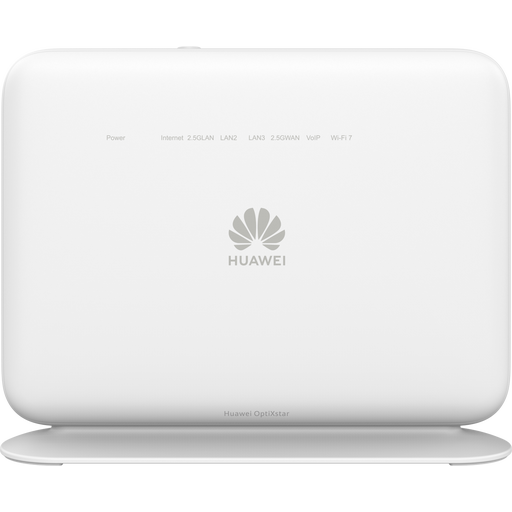 Image unavailable
A router with a 4G feature for anyone considering mobile connectivity. Check that it suits the internet connection you plan to use.
Dual-band Wi-Fi 7. A SIM card is required for the 4G connection described.
For the Android screen-sharing method with Google Cast described by Google, your phone and screen need to be on the same network. Also check whether AP isolation is preventing them from communicating. This doesn’t automatically apply to every type of smart TV or streaming protocol.
Not automatically. For its own guest Wi-Fi, Google describes a setting for sharing specific devices individually and warns that an isolated guest network can block the setup of a Cast device. Check the features of the router you plan to use.
ACM ConsuWijzer confirms that you’re free to choose your router when dealing with your telecoms provider, while noting the importance of security and updates for your own device. This doesn’t determine who manages the connection in a shared rented home or whether they can give you access to it.
When setting it up, check for firmware updates, enable automatic updates if available and change the default login details. The specific menu settings vary by model.
In the Netherlands, statutory consumer rights apply alongside any manufacturer’s or seller’s warranty. According to ACM ConsuWijzer, if a product breaks under normal use earlier than could reasonably be expected, the seller must put it right free of charge; there isn’t simply one fixed two-year limit.